The aim of this information is to provide you with guidance to manage your injury following discussion with Virtual Fracture Clinic. The information provided is adapted from that available with free access from www.fracturecare.co.uk, originally created by University Hospitals Sussex
The videos below provide more information about different types of foot fractures and how to care for your foot while it heals.
It can take up to 6-12 weeks for this fracture to heal.
Smoking will slow down your healing. We would advise that you stop smoking while your fracture heals. Talk to your GP or go to www.smokefree.nhs.uk for more information.
Pain and swelling
You may have foot pain and swelling for 3-6 months after your injury. Swelling is often worse at the end of the day.
Taking pain medication, elevating your foot and using ice or cold packs will help.
If you still have significant pain or swelling three months after your injury, please contact Fracture Clinic.
Walking and your footwear
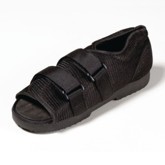
The provided footwear protects your foot and will make you more comfortable. Wear it when you are standing and walking. You can take it off at night and at rest. You need to wear it for 6 weeks after your injury.
Please inform us if you are diabetic and have any concerns.
You are allowed to put weight through your foot. You may find it easier to use crutches in the early stages.
It is important to start exercises as soon as possible – see below.
Follow up
Your clinic letter will explain whether you need a follow-up appointment.
If you have any questions or concerns about your recovery, or have not received information about an expected appointment, please contact the Virtual Fracture Clinic.
Any questions
If you are concerned about your symptoms, unable to follow this rehabilitation plan or have pain other than at the site of your injury please contact the Virtual Fracture Clinic team.
Caring for your injury: Week 1-6
Footwear
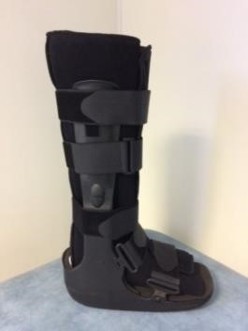
Remember to wear your footwear whenever standing and walking. You can remove it when resting, at night and to wash and dress. Wear a long sock if you’re in a boot.
This video provides you with a guide for fitting your boot: https://www.fracturecare.co.uk/general-advice/fitting-your-boot/
Cold pack
Using a cold pack will help with your pain and swelling. You can use an ice pack or bag of frozen peas wrapped in a damp towel. Put this on your foot for up to 15 minutes every few hours. Make sure the ice is not in direct contact with your skin.
Rest
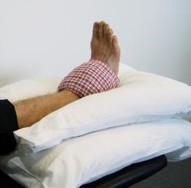
Try to rest your foot, especially in the first 24-72 hours. Raise your foot on a stool or cushions to that it is above the level of your hip. This will help to reduce your swelling.
Exercises
Early movement of the ankle and foot is important to promote circulation and reduce the risk of developing a Deep Vein Thrombosis (blood clot).
Do these exercises 3-4 times a day. Start straight away, you do not need to push into pain.
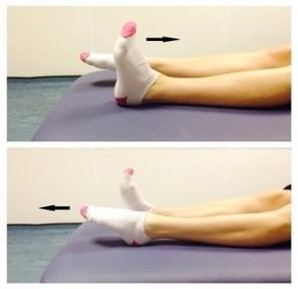
Point your foot up and down. Repeat this 10 times.
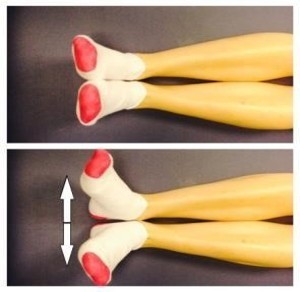
With your heels together, move your toes apart to turn the foot outwards. Repeat this 10 times. Do this movement gently within comfort.
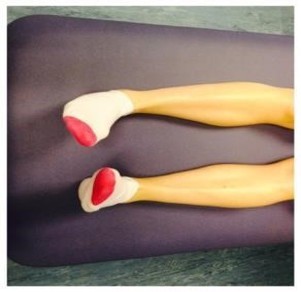
Make gentle circles with your foot in one direction and then the other direction. Repeat this 10 times.
Caring for your injury: Week 6-12
It is now 6 weeks since your injury and you can start to wean out of your footwear. Stop using it around your own home first and continue wearing it for longer distances. You should aim to be walking without your provided footwear by 6-8 weeks after injury.
It is normal to still have mild discomfort and swelling. This may continue for 3-6 months.
Activity and Exercise
Keep doing your exercises until you have recovered full movement in your foot.
Gradually increase your level of activity. You should avoid impact activity for 3 months. This includes running, jumping and dancing.
Frequently Asked Questions
I am in a boot and struggling. What do I do?
The boot has a thicker sole; this can make you feel uneven. Make sure you wear a supportive shoe or trainer on your uninjured foot. This will reduce stress on other joints. If you are struggling to wean out of your boot please contact us.
If you need more advice contact the Virtual Fracture Clinic.
I am diabetic, does this change things?
If you are diabetic and have concerns please contact us to discuss your boot. This is particularly important if you have problems with your skin.
What do I do with my provided footwear and crutches when I no longer need them?
We are not able to use boots/ shoes again. These should not be return to the hospital. Crutches can be returned to Physiotherapy.
You can use the accessibility toolbar at the bottom of your screen to:
Change the text size
Adjust the font
Modify the colour contrast
Use the translate function
If you would like this information in another format, such as Braille, audio, or easy read, please speak to a member of staff.
You can also print as well as download as PDF using the “Print this page” button at the end of the page.
Staff will print a copy for you on request
Important note
This page provides general information only. It is developed by clinical staff and is reviewed regularly every 3 years for accuracy. For personal advice about your health, or if you have any concerns, please speak to your doctor.