

Advice after your nerve block for surgery
On this page…
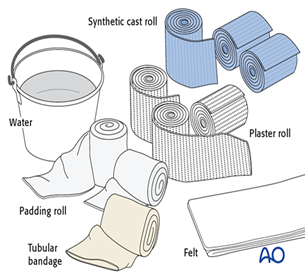
You have had a plaster cast applied for a broken bone, soft tissue injury or following an operation. This will immobilise a particular part of your body to assist the healing process.
There are different types of casts and casting materials and the type used will depend on the injury or operation you have had. The way you need to look after the cast is the same, no matter what type of cast you have or material used.
It is very important for you to move all the joints in the limb other than those included in the cast itself. Discomfort in the limb must not be a reason to prevent you from doing this. Please exercise the joint above and below the cast.
Elevate the limb as much as possible!
Arm Fractures
To help increase circulation and reduce swelling:
- Keep your arm elevated as much as possible, with your wrist held in line with your heart.
- The plaster cast keeps the fracture quite still and it is important that you move the joints above and below the plaster cast, e.g., fingers and elbow/shoulder if you have a cast on your wrist.
Leg Fractures
To help increase circulation and reduce swelling:
- Your leg should be elevated as much as possible with your big toe in line with your heart. Do not place a pillow directly under the heel of the cast, as this may cause a pressure sore to develop on the heel.
- The plaster cast keeps the fracture quite still and it is important that you move the joints above and below the plaster cast, e.g., toes and knee / hip if you have a cast on your ankle.
Follow weight bearing advice given:
- If you have a non-weight bearing (NWB) plaster cast, do not bear weight on it as this could cause further problems.
- If you have a partial weight bearing (PWB) plaster cast or a weight bearing (WB) plaster cast, you should always use your walking aids (e.g., cast shoe, crutches, frame, walking stick, etc.) according to instructions given. Please check and maintain any equipment given.
Casting Materials
Plaster of Paris:
- This will take 48 hours to dry. During this time, do not rest your cast on anything too hard/flat and if you are in a weight bearing cast, do not weight bear.
Synthetic Casting Material:
- This will take 2-3 hours to dry. During this time, do not rest your cast on anything too hard/flat and if you are in a weight bearing cast, do not weight bear.
Whilst in a plaster cast
- Do not cut, trim or reshape your cast
- Do not get your cast wet. There are waterproof covers available via the internet or at local pharmacies to allow bathing, etc. Wet wipes can be used to clean your fingers / between your toes.
- Do not put anything down inside your cast as this may injure or irritate the skin and could cause an infection.
- Do not use tape to repair your cast. The manufacturing process of casting material allows air to circulate within the cast and excessive use of tape on your cast will cause the skin to become wet and smell.
- Do not weight bear before the time advised by the Orthopaedic Technician / Medical Team.
- It is advisable not to drive any vehicle whilst in ANY plaster cast.
Contact Plaster Room or the Emergency Department (ED) if:
- The cast gets wet; soft; cracked/broken; or becomes loose or too tight;
- An item has been pushed down inside the cast.
- The cast is rubbing, causing a burning or blister like pain in a particular area, as it is possible to develop a pressure sore or blister under a cast.
- The skin surrounding the cast is sore or broken
- The limb becomes painful and/or you lose feeling, have a tingling sensation (pins and needles) or your fingers/toes become blue, cold, very swollen and this does not return to normal when the limb is elevated
- There is a discharge, wetness, or unpleasant smell coming from inside your cast.
The Plaster Room Teams will be happy to advise over the phone should you experience any issues or have concerns about your cast. Or we will arrange a convenient time for you to come to the Plaster Room for assessment.
If you are a patient of Frimley Park Hospital, please contact Frimley Plaster Room on: 0300 613 4339
(Open Monday to Friday 9.00am – 5.00pm).
If you are a patient of Wexham Park Hospital, please call Wexham Plaster Room on: 0300 615 4058
(Open: Mondays & Tuesdays 8:45am – 5:00pm;
Wednesday 8:45am – 1:00pm; and Thursdays & Fridays 8:45am – 5:00pm. Please note, Wexham Plaster Room is closed on Wednesday afternoons.)
If you require any attention outside these hours, please report to the Emergency Department (ED) at either site.
(Both the Plaster Room at Frimley Park, and Wexham Park are closed at Weekends and Bank Holidays.)
Am I at risk of a Deep Vein Thrombosis (DVT) or Pulmonary Embolism (PE)?
What are DVT and PE?
Following an injury, surgery or period of immobilisation, blood clots may form on the inside of a blood vessel and sometimes do not dissolve naturally. As veins carry deoxygenated blood away from the body’s organs and limbs back to the heart, an abnormal clot that forms in a vein may restrict the return of blood to the heart. This can result in pain and swelling as the blood collects behind the clot. This condition is called a Deep Vein Thrombosis (DVT).
In some cases, a clot in a vein may break off and travel through the heart to the lungs where it becomes wedged, preventing adequate blood flow. This condition is called a Pulmonary Embolism (PE).
These situations can be dangerous and require urgent, accurate diagnosis and appropriate treatments.
Risk factors of a DVT or PE
Having your leg in a cast does increase your risk of getting a DVT or PE, however there are other risk factors (causes of unnatural clotting) involved in this condition.
The following factors increase your risk of developing a venous blood clot:
- Previous DVT or PE
- Obesity
- Oral contraceptives
- Immobility (including prolonged inactivity, long trips by plane or car)
- Pregnancy
- Certain cancers
- Age (increased risk for people over 60)
- Smoking
- Previous surgeries or serious illnesses
- Inherited clotting disorders (family members who have had clots)
- Trauma
- Chronic inflammatory diseases
If you have any of the above risk factors, please inform the doctor who can fully assess your risk factors and advise you regarding preventative treatment for a DVT.
What are the symptoms of a DVT?
Symptoms range from barely noticeable to severe. They may be in the foot, ankle or calf, or involve the whole leg. Symptoms occur not just for a few seconds or minutes, but for hours or days.
The classic symptoms of an acute DVT are
• Pain (cramp like) in the leg, different from the pain of injury
• Heavy aching feeling, usually in the calf area
• Calf tenderness
• Swelling of the affected leg
• Warmth and redness over and above the affected area
• Discolouration (bluish, slightly purplish or reddish) over and above the affected area
• If the clot has developed higher up the leg, there may be pain in the lower back
What are the symptoms of a PE?
Symptoms range from minor to severe, depending on how big the clot is. Very small PEs can lead to no symptoms whatsoever; however, in the most severe case, it can be life threatening. Symptoms occur not just for a few seconds or minutes but for hours or days.
The classic symptoms of an acute PE are
• Chest pain, particularly when taking in a deep breath
• Shortness of breath
• Unexplained cough (sometimes coughing up blood)
• Passing out / losing consciousness
What should I do if I get a painful, swollen calf within the plaster cast or after removal of the cast?
Some limb swelling or pain is expected over the initial period following an injury/surgery to your leg. If you feel that the swelling is increasing within the plaster cast despite elevating the limb, taking pain medication as instructed and have any of the symptoms listed above, report to the Emergency Department immediately for assessment. Alternatively, NHS 111 offers health information and advice over the phone 24hrs a day.
Contact us
If you have any queries relating to this information, please contact the Plaster room service.
About this information
Service:
Plaster room
Reference:
N/047
Approval date:
1 November 2025
Review date:
1 November 2028
Click ‘show accessibility tools’ at the bottom of the page

Then click ‘select language’

Alternative formats
You can use the accessibility toolbar at the bottom of your screen to:
-
Change the text size
-
Adjust the font
-
Modify the colour contrast
-
Use the translate function
If you would like this information in another format, such as Braille, audio, or easy read, please speak to a member of staff.
You can also print as well as download as PDF using the “Print this page” button at the end of the page.
Staff will print a copy for you on request
Important note
This page provides general information only. It is developed by clinical staff and is reviewed regularly every 3 years for accuracy. For personal advice about your health, or if you have any concerns, please speak to your doctor.