

Advice after your nerve block for surgery
On this page…
What is the trochlea?
The trochlea is a groove at the end of your thigh bone (femur). Your kneecap (patella) moves up and down this groove when you bend and straighten your knee. The groove helps keep the kneecap stable.
Without the trochlea, the patella would slip off the side of the knee, a condition known as patellar instability or dislocation.
What is trochlea dysplasia?
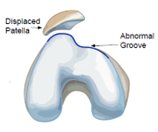
Trochlear dysplasia means the groove is too shallow or shaped abnormally. This can make the kneecap slide out of place (dislocate). It may cause pain, a feeling the knee will give way, and difficulty with activities like stairs or running.
In the long term, the abnormal movement of the patella on the femur can lead to the development of wear and tear of your joint surface known as osteoarthritis.
Figure 1: Illustration of a normally shaped trochlear groove with the patella in the correct position.
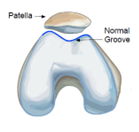
Figure 2: An abnormal groove with a displaced patella
What is trochleoplasty?
Trochleoplasty is surgery to deepen the groove so the kneecap stays in place. The surgeon lifts a thin layer of cartilage, reshapes the bone underneath, and then lays the cartilage back down. Dissolvable stitches hold it in place. The aim is better stability and less pain.
Occasionally, some patients may need additional surgical procedures such as ligament reconstruction to improve the stability of the patellofemoral joint (see below in alternative options).
Benefits and outcomes of the surgery
Around 90% of people are happy with the results. Most feel more stable, have less pain, and can be more active.
Risks
- As with any operation, there are potential risks involved but the chances of complications occurring is very low. These include:
- A very small risk associated with general anaesthetic – this can be discussed with your anaesthetists
- Wound problems such as slow healing and oozing – less than 2%
- Infection sometimes requiring antibiotics – less than 2%
- Stiffness requiring extensive physiotherapy – less than 5%
- Blood clots requiring six months treatment with blood thinning tablets, sometimes causing long-term leg swelling or severe breathing problems - less than 1%.
- It is normal to have some numbness around the scar and to have swelling of your knee after the operation. There is a chance that despite the operation the patella is still a bit unstable. If this is the case, further procedures may be required at a later stage.
What are the alternatives to a trochleoplasty?
You may choose not to have surgery and continue physiotherapy. Other surgical options include MPFL reconstruction, lateral release, or moving the patella tendon attachment — your surgeon will advise which is appropriate.
What happens before surgery?
You will be asked to attend a pre-assessment clinic. This is to ensure you are medically fit for surgery. It is important that you keep yourself as fit and healthy as possible prior to your operation.
What happens after surgery?
After the operation, you will wake up in the recovery room. You will be moved back to the ward once you are awake.
You can put weight on your leg straight after the operation. You will need to use crutches for approximately six weeks, and you may also need a knee brace. Start bending and straightening your knee as soon as possible to avoid stiffness and weakness. It is normal for pain and swelling to take time to settle.
Physiotherapy will begin immediately to help you regain movement and strength. Your rehab programme may be slightly different depending on your needs, but the main aim is to slowly build up your activity with guidance from your physiotherapist. Try to achieve more than 90 degrees of knee bend by four weeks after surgery, and start reducing your use of the brace between weeks four and six.
Typical time frames:
• 3–4 weeks off work
• Driving at 6 weeks, when walking safely without crutches and brace removed
• Return to sport from 6 months.
Will I have to stay in hospital?
Patients normally stay in hospital for one night after the operation.
Follow-up care
As well as regular physiotherapy you will also have follow-up appointments with your surgeon. Your first follow up appointment with your surgeon’s team is usually six weeks after surgery.
If you are concerned about post-operative complications please contact the ward you were discharged from
Useful Contacts
Heatherwood Hospital:
- Orthopaedic pre assessment 0300 614 7778 / 0300 614 7147
- Arthroplasty Nurse Heatherwood 07789927177
- Nurses Station Treetops Heatherwood 0300 614 4175
- Physio/OT Office Treetops Heatherwood 0300 614 4178
Frimley Park Hospital:
- Frimley Park Physiotherapy 07570 974390
- S2 Elective Ward Frimley 0300 613 3781 / 0300 613 3783
- Elective Helpline Frimley 0300 613 2556
Wexham Park Hospital:
- Ward 1 Wexham Park 0300 615 3010 / 0300615 3012
- Outpatient Physio Wexham 0300 615 3501 / 0300615 3500
- Wexham Park Physiotherapy 07717 199851
Contact us
If you have any queries relating to this information, please contact the Orthopaedics service.
About this information
Service:
Orthopaedics
Reference:
N/083
Approval date:
13 March 2026
Review date:
1 March 2029
Click ‘show accessibility tools’ at the bottom of the page

Then click ‘select language’

Alternative formats
You can use the accessibility toolbar at the bottom of your screen to:
-
Change the text size
-
Adjust the font
-
Modify the colour contrast
-
Use the translate function
If you would like this information in another format, such as Braille, audio, or easy read, please speak to a member of staff.
You can also print as well as download as PDF using the “Print this page” button at the end of the page.
Staff will print a copy for you on request
Important note
This page provides general information only. It is developed by clinical staff and is reviewed regularly every 3 years for accuracy. For personal advice about your health, or if you have any concerns, please speak to your doctor.