

Advice after your nerve block for surgery
On this page…
What is the Pancreas?
The pancreas is an organ that is positioned beneath the stomach (see the diagram below). One of its functions is to release digestive enzymes. The role of these is to break down the food and liquid we eat and drink, to help the body to absorb the nutrients.
There are three main types of pancreatic enzymes:
- Amylase - breaks down carbohydrates
- Lipase - breaks down fat
- Protease - breaks down proteins
This process of breaking down food takes place in the intestine. Once broken down the body can absorb nutrients from the food, which are needed to maintain a healthy weight and good nutritional status.
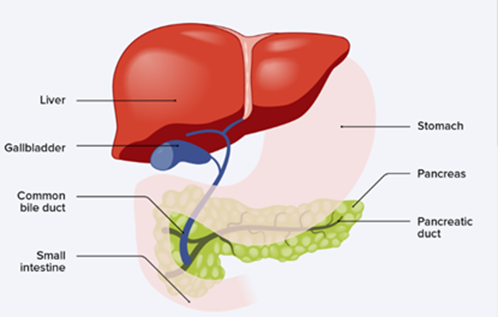
Image Illustrated by Jason Hoffman
Source https://www.medicalnewstoday.com/articles/10011#anatomy
Pancreatic Enzyme Insufficiency (PEI)
Pancreatic insufficiency means the pancreas is not producing enough enzymes for your body to digest (break down) food properly, or those enzymes are blocked from reaching your intestine. When this happens, one or more of the following symptoms can occur:
- Oily or fatty stools (stools may be surrounded by an orange oil)
- Pale, orange or yellow stools, which may float and be difficult to flush away
- Offensive smelling stools
- Wind, flatulence, bloating, abdominal pain or cramping
- Problematic blood glucose (sugar) levels
- Struggling to gain or maintain your weight
- Vitamin and mineral deficiencies
Pancreatic Enzyme Replacement Therapy
Taking pancreatic enzymes with your food will replace your body’s reduced level of its own enzymes, which will enable you to break down and absorb the food you eat. This will ensure that you get the nutrients from it and help maintain a healthy weight and prevent nutritional deficiencies.
Pancreatic enzyme replacement therapy involves taking pancreatic enzymes, usually in the form of a capsule. The most common enzymes are called Creon®. Pancreatic enzyme capsules are available in different strengths. Your dietitian or doctor will advise you on which pancreatic enzyme presentation you should take and the dose.
Please note that all pancreatic enzyme preparations are pork-based. Most religious leaders give consent for people to take them as there is no alternative. Please discuss this with your dietitian or religious leader if you have any concerns.
Pancreatic enzymes can be damaged by high temperatures. It is therefore recommended to keep them below 25°C/ 77°F. Do not store them in warm places such as the windowsill, glove box of a car, trouser pockets or in direct sunlight. When you take your enzymes out of the house, take what you expect to need for the day rather than a whole pot.
How Many Pancreatic Enzymes Do I Need?
Your dietitian or doctor will advise you on how many capsules to take. The number you need depends on your anatomy, food choices and how much you eat and drink. Your dietitian or doctor will calculate your dosage. It is advised all patients start on at least 50,000 units with meals and 25,000 units with snacks/nutritional supplements
Your starting dose with:
breakfast, lunch & evening meal: …………………………
and with a snack or milky drink: ……………………….....
Most people need to increase their dose from this starting dose until your symptoms are improved, and you are maintaining your weight. This will be assessed by your dietitian, doctor or specialist nurse. Your health care professional can also discuss with you how to adjust your enzyme dose when eating out, having a higher fat or take-away meal.
You do not need to change what you eat because you have pancreatic enzyme insufficiency, you just need to take enough capsules to give your body the enzymes it needs to digest what you eat and drink.
Foods That Need More Enzymes to Digest Them Adequately
- Fried foods, such as fried eggs, crisps, chips, sausages
- Any deep-fried foods, such as samosa, pakora, battered fish, poppadum
- Pastries, croissants, doughnuts, pasties, most takeaways
- Foods containing cheese or chocolate
How and when Do I Take My Pancreatic Enzymes?
For the pancreatic enzymes to be effective, you must take them with all meals, drinks and snacks that contain fat, protein and starch. Take them just before you begin eating or with the first few mouthfuls of food, as they only work when mixed with food.
It may be necessary to split your enzyme dose if you are having a large meal with more than two courses, or if your meal lasts more than half an hour. Remember to include puddings, glasses of milk or supplement drinks when deciding how many enzymes you need to take.
Most enzymes should be swallowed whole, your doctor or dietitian will inform you if your enzymes differ from this. Take your enzymes with a cold drink; hot drinks can reduce how effective they are.
Never chew the capsules or mix them with your meal. If you are struggling to swallow the capsules, capsules can be opened and the contents added to a spoonful of cold acidic food such as fruit puree, apple sauce, jam or fruit yoghurt and swallowed immediately. They should then be washed down with a cool drink to ensure that no granules remain in the mouth to prevent ulceration/
It is important to ensure you are well hydrated whilst taking these enzymes. Most people need 8-10 drinks per day, more when hot or exercising. If you are concerned you may be dehydrated discuss this with your dietitian, doctor or nurse.
When are Pancreatic Enzymes Not Needed?
- If you miss a meal, enzymes should not be taken on an empty stomach.
- With drinks that are less than half milk such as tea, non-milky coffee, fruit juice/squash and fizzy drinks.
- If you take a very small quantity of food, for example an individual small chocolate or one small biscuit.
- The following foods do not require enzymes:
- Fruit and dried fruit (except avocado and coconut)
- Vegetables (except potato and beans/ pulses)
- Honey, jam, marmalade, syrup or sugar
- Jelly
- Boiled or chewy sweets
- Ice lollies
What Happens if I do not Take Enough Enzymes?
If you do not take enough enzymes to break down your food, you will not be able to absorb the nutrients, which can result in weight loss and low vitamin levels.
Malabsorption of nutrients may result in the following symptoms: bloating, cramping, wind, and frequent, loose or oily stools. Your stools may also become orange, yellow or pale brown; they may be smelly and float, making them difficult to flush away.
If you continue to have symptoms despite increasing enzyme dosage speak with your doctor or dietitian.
Can I Take Too Many Enzymes?
There is no maximum dose of pancreatic enzymes. If you occasionally take too many enzymes, you should not have any problems. If you do take more than your body really needs, you can get irritation of the anus (bottom). Please discuss with your dietitian or doctor if you notice this symptom.
Speak to your dietitian if you are not sure your enzyme dose is right for you.
The most common side-effects of pancreatic enzymes are nausea, bloating and abdominal discomfort, but these are also symptoms of not taking enough enzymes. If you experience these after taking enzymes discuss this with your dietitian, doctor or specialist nurse.
Lifestyle Recommendations
One of the causes of pancreatic enzyme insufficiency is pancreatitis. The National Institute for Health and Care Excellence (NICE) advise that people whose pancreatitis was caused by alcohol should stop drinking alcohol, and in those with recurrent acute or chronic pancreatitis, that is not alcohol-related, alcohol may exacerbate symptoms.
It is also advised for people with chronic pancreatitis to stop smoking as this is one of the known risk factors.
Please let your nurse, doctor or dietitian know if you would like smoking cessation support.
It is advised to take an A-Z multivitamin and mineral supplement to support nutritional status.
Further information and support
Pancreatic Insufficiency support group - www.
Further information on pancreatitis:
Guts UK! (www.
NHS Website (www.
Contact us
If you have any queries relating to this information, please contact the Dietetics service.
About this information
Service:
Dietetics
Reference:
HH/018
Approval date:
1 September 2023
Review date:
1 September 2026
Click ‘show accessibility tools’ at the bottom of the page

Then click ‘select language’

Alternative formats
You can use the accessibility toolbar at the bottom of your screen to:
-
Change the text size
-
Adjust the font
-
Modify the colour contrast
-
Use the translate function
If you would like this information in another format, such as Braille, audio, or easy read, please speak to a member of staff.
You can also print as well as download as PDF using the “Print this page” button at the end of the page.
Staff will print a copy for you on request
Important note
This page provides general information only. It is developed by clinical staff and is reviewed regularly every 3 years for accuracy. For personal advice about your health, or if you have any concerns, please speak to your doctor.