

Advice after your nerve block for surgery
On this page…
Introduction
The information in this booklet is designed to help you, your relatives and carers understand more about gastrostomy tubes.
You may find it useful to use the blank pages at the back of this book to note down any questions you may have as you read through the book.
Informed Consent
It is important that you fully understand your proposed treatment, including any alternatives, as well as the risks and benefits.
You need to make sure you feel satisfied that you have been given sufficient information to help you make the most appropriate decision for you.
It is also important that you understand that you can change your mind at any time even once you have signed the consent form for the procedure.
What is a Gastrostomy?
Gastrostomy means making an opening into the stomach. A gastrostomy tube is a thin tube which is placed through the skin directly into the stomach in order that food, fluids and medication can be safely administered.
Why do I need one?
Due to your medical condition, you may be unable to take in sufficient food or drink, therefore it is thought that a Gastrostomy tube may be of benefit to you.
In some circumstances, medical staff may predict that in the future your medical condition may impact on your ability to swallow or take in enough food and drink to maintain your nutrition. Therefore, sometimes it is thought necessary to place a gastrostomy tube.
In any of these circumstances, not having adequate nutrition and fluid would result in you losing weight, becoming dehydrated and negatively affecting your health. This may impact on your ability to cope with any proposed medical treatment or combat any complications such as infection.
Will it improve my medical condition?
Being fed using a gastrostomy or any other type of feeding tube helps to provide good nourishment, improve sense of well-being, increase energy levels and improve resistance to infection. It will not however alter the progression of any underlying medical condition.
If you are having difficulty with swallowing, for example after a stroke or because of a condition such as Motor Neurone Disease, the tube itself will not reduce the risk of aspiration (fluids going into the lungs). However, by providing nutrition and fluids directly to your stomach, it is a safer method of providing your nourishment than taking foods by mouth.
If you are struggling with excessive saliva, please speak to the Doctors looking after you, as there may be some medications that could help with this.
What happens if I decide not to have one?
There may be an alternative if you decide you do not wish to have a gastrostomy, but this will depend on your medical condition. Please ask your doctor to discuss alternatives with you.
It may be that you decide you do not wish to be tube fed at all. If this is your decision, we will of course fully support you in this decision.
You will need to have discussed this fully with your doctors and other members of the multidisciplinary team looking after you to be sure that you understand what this means for you.
How is a Gastrostomy put in?
There are 2 main ways in which we can insert a gastrostomy tube, but both have the same end result.
Percutaneous Endoscopic Gastrostomy (PEG)
Placed under sedation using an endoscope (a flexible tube with a camera which is passed into your stomach)
Radiological inserted Gastrostomy (RIG)
Placed using x-ray imaging.
The most appropriate method will be discussed with you. If you have any questions, please speak with a member of the team involved in your care.
What to expect during the procedure
In all cases you will be instructed not to have any nutrition for 12 hours before the procedure. If you take Warfarin, you will be asked to stop this before the procedure. Once the nursing and medical staff have completed all the relevant checklists and paperwork, you will be taken on your hospital bed to the relevant department.
Before any of the procedures start, your blood pressure, pulse and oxygen levels will be recorded and a small plastic needle called a cannula, will be placed in the back of your hand or lower part of your arm This is to give you pain relief and sedation. You will also be given antibiotics through this needle; this is to reduce the chance of infection occurring.
Percutaneous Endoscopic Gastrostomy (PEG) Placement
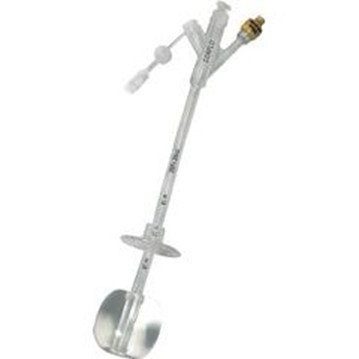
This procedure takes place in the Endoscopy Department using a camera called an endoscope.
Initially you will be required to lay on your left side, this is so the endoscope can be more easily placed into your stomach. You will then be given an injection of sedative to make you more relaxed and sleepy. A mouthpiece will then be placed between your teeth in order to protect the endoscope as well as your teeth. The scope will then be passed through the mouthpiece and into your stomach. After this you will be placed on your back in order that the doctor can better access your stomach.
Air is then passed down the tube to inflate the stomach to allow a clearer view. It is then possible to find the best location to place the feeding tube.
The skin on your tummy is cleaned using an antiseptic fluid and then numbed with the local anaesthetic and a small cut is made, through which the feeding tube is placed.
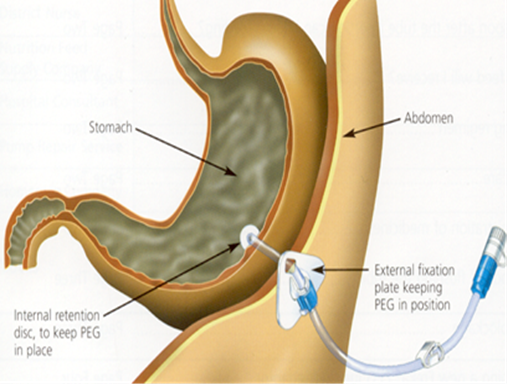
The gastrostomy tube is then passed through your mouth and out through the cut which has been made in your stomach. The feeding tube is held in place by a small disc, which sits against the inside of your stomach, and an external clip to stop it moving in and out of your stomach.
You will feel sleepy when you return to the Endoscopy recovery area and nursing staff will continue to check your blood pressure, pulse, oxygen levels and respiratory rate and administer and any pain relief you may require.
Radiological inserted Gastrostomy placement
Balloon Gastrostomy
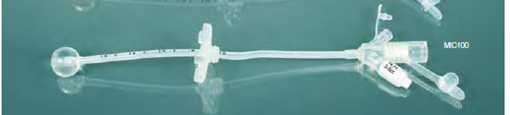
If this is the procedure deemed most suitable then this will be carried out in the radiology (x-ray) department. The nursing staff will again check your blood pressure, pulse and oxygen levels before starting the procedure.
A small flexible tube, called a nasogastric tube, will be passed up your nose, down your throat and into your stomach. This is to inflate the stomach and allow for easier insertion of the tube. You may have had a similar tube in previously to provide tube feeding.
Your abdomen will be cleaned using an antiseptic fluid and numbed using a local anaesthetic.
The radiology doctor will use x-ray to decide on the most suitable point for inserting the tube. The doctor will insert two or three sutures into the abdomen called gastropexy sutures which keep the stomach held up against the abdominal wall. A cut will then be made through which a needle will be passed to gain access to your stomach.
Once this access has been established the doctor is then able to widen the tract to allow a feeding tube to be placed. During this time, you may feel some pressure, but it should not be painful.
What to expect after the procedure?
With any of these procedures, it is not uncommon to have some pain or discomfort around the feeding tube. We would recommend that you take regular pain killers which your doctor will prescribe for you. This discomfort may last for several days. However, if the pain is severe or does not go away, please tell a member of staff.
For all gastrostomy procedures, you will not be given anything down the tube for the first 6 hours after the procedure. You will then be given water only through the tube for the next 6 hours before starting your feeding regimen.
If it is suitable for you to eat and drink, you should be able to do so 6 hours after the procedure.
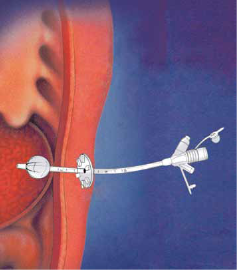
Position of a balloon gastrostomy within the stomach
No treatment or procedure is risk free, but gastrostomy insertion is considered to be generally very safe.
The main potential complications following gastrostomy are:
Infection: This can occur after the insertion of the feeding tube. It usually occurs around the wound site. To reduce this risk, you will be given antibiotics before the procedure.
Bleeding: A small amount of bleeding can occur from the wound, and this is to be expected. However, sometimes the bleeding can be more noticeable. This will usually stop on its own accord. Your INR (blood clotting) will be checked before the procedure, and if there are any concerns regarding this, then the procedure will be postponed until they are at an acceptable level. If you take Warfarin, you will be asked to stop this before the procedure, and this will be explained to you.
Perforation: Perforation of the bowel is a potential risk due to the nature of the procedure, but it rarely occurs. It may not always be obvious at the time of the procedure but presents afterwards as abdominal pain or bloating. This will be discussed in greater detail with you before the procedure as part of the consent process.
Risks of Sedation: Sedation can affect your breathing; therefore, your breathing will be monitored throughout the procedure. If you have a chest infection at the time of the procedure the doctor may advise that it be postponed until you have recovered from this.
Mortality: As with any surgical procedure, there is a very small chance that you will not survive. Because of this, we make sure that you are as fit as possible before you undergo the procedure, and that we choose a technique which is safest for you.
Failure: Occasionally it is not possible to place the feeding tube. This can be for several reasons; there is a section of bowel lying over the top of the stomach which makes access more difficult, previous abdominal or gastric surgery can alter the anatomy making placement unsafe, or your stomach may be elevated under the chest and therefore not possible to access. If this is the case, alternative methods will be discussed with you.
What to expect after the procedure?
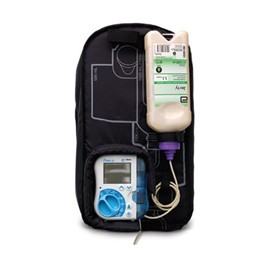
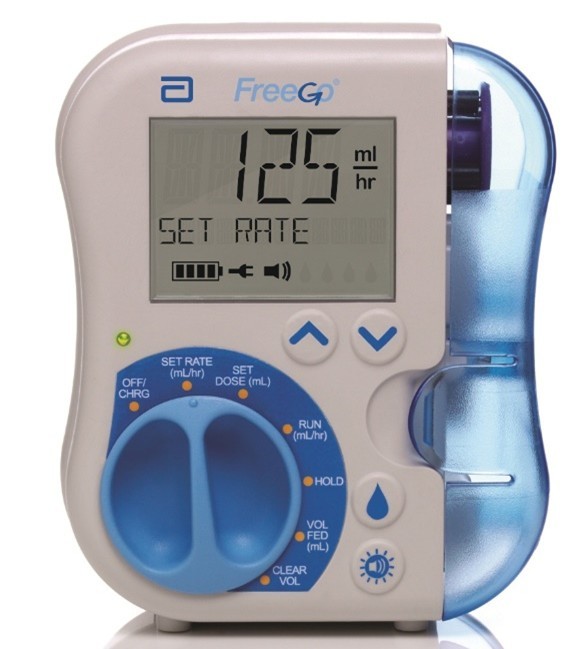
The dietitian at your hospital will talk with you about the most suitable way of administering your feed and fluids through your gastrostomy tube. You and/ or your carers will also be receiving training on how to care for the tube and administer your feed and medication.
There are several different ways in which this can be done. If you have received feeding through a tube in your nose before, the feed and pump will be the same - though the regimen may differ to allow you more freedom from the pump. The options will be discussed with you.
Once home, you will have support from the home enteral feeding dietitians in the community and Nutricia Homeward nurse team, and you will be given all this information before you go home. These are support services only and they will not be able to attend daily to set up or administer feed and medication. If it is felt that you are unable to manage this independently, it may be necessary to refer you to social services for assistance in supporting this at home.
Any Questions?
The team/staff involved in your care have written this information booklet to make your admission and care as smooth as possible. However, it does not cover every aspect of your care, and the staff will be happy to answer any questions or points of concern.
PINNT is a charity providing support for patients receiving enteral nutrition support.
Their website is www.pinnt.co.uk
Contact Information
|
DIETITIANS: For any questions regarding your feeding regime, including tolerance, timings or potential side effects, the Dietitians may be contacted during office hours 8.30am to 4.00pm, Monday – Friday. Who to contact will depend on the area you live in. The contact details of the dietitian best able to assist you in your area will also be clearly indicated on your feeding regime. Community Dietitians: Berkshire: TEL: 01753 636724 Community Dietitians Buckinghamshire: TEL: 01494 734825 Surrey Heath/ North-East Hants & Farnham area: TEL: 0300 613 4053 |
|
HOSPITAL NUTRITION NURSES: For tube related issues, the Hospital Nutrition Nurses may be contacted during office hours 8.30am to 4.00pm, Monday – Friday. If feeding tube was placed at Frimley Park Hospital: Nutrition Nurses at Frimley Park Hospital: TEL: 0300 613 9087 If feeding tube was placed at Wexham Park Hospital: Nutrition Nurses at Wexham Park Hospital: Krishna Patel 07775008920, Cristina Andrei - 07393265825 |
|
NUTRICIA HOMEWARD: Tube and tube site related issues: Nutricia Company Nurse (Surrey area): TEL: 0345 2501 087 Nutricia Company Nurse (Wexham area): TEL: 03456051744 The Nutricia Homeward Nurses may be contacted during office hours Monday – Thursday 9am-5pm and Fridays 9am-4pm. Delivery/ Stock related issues: Nutricia Homeward: TEL: 0800 093 3672 |
|
NUTRICIA OUT OF HOURS ADVICE LINE: Outside office hours, contact the Nutricia out-of-hours advice line, who will put you in touch with the on-call nurse who may be able to advise you over the telephone. TEL: 0800 093 3671 |
Contact us
If you have any queries relating to this information, please contact the Dietetics service.
About this information
Service:
Dietetics
Reference:
DT/044
Approval date:
1 April 2026
Review date:
1 April 2029
Click ‘show accessibility tools’ at the bottom of the page

Then click ‘select language’

Alternative formats
You can use the accessibility toolbar at the bottom of your screen to:
-
Change the text size
-
Adjust the font
-
Modify the colour contrast
-
Use the translate function
If you would like this information in another format, such as Braille, audio, or easy read, please speak to a member of staff.
You can also print as well as download as PDF using the “Print this page” button at the end of the page.
Staff will print a copy for you on request
Important note
This page provides general information only. It is developed by clinical staff and is reviewed regularly every 3 years for accuracy. For personal advice about your health, or if you have any concerns, please speak to your doctor.