

Advice after your nerve block for surgery
On this page…
What is a breast implant?
A breast implant is a prosthesis used to alter the size and shape of the breast. The two primary breast implants include
- Silicone implants have a silicone shell filled with viscous silicone gel
- Expander balloon implant.
What is an Expander implant?
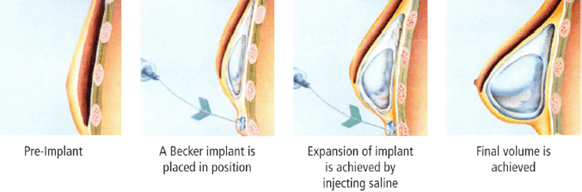
Typically, an inflatable balloon implant with a port placed under the skin. The port is used to inflate the balloon to give the breast volume.
Saline over weeks or months to stretch the skin and underlying tissue. Once the skin has stretched it can be replaced with a permanent silicone implant or left in place as it is.
Who is suitable to have this type of operation and are there any other options?
As with any operation there may be alternatives available.
Your consultant will advise you as to whether this is an appropriate option for you.
What will the operation involve?
The surgeon will measure your breasts.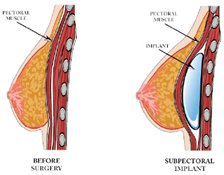
The site will be marked where the incisions that are to be made during the operation.
The implant lies under your chest muscle as shown in the figure below.
The operation normally takes a couple of hours
Are there any risks?
As with any operation, there are some risks these may include the following:
- Infection wound breakdown
- Asymmetry (unequal breast size, normally slight)
- Abnormal scar tissue may be found around the implant. This can squeeze the implant and cause a firm; painful swelling called a capsular contracture. You may need another operation to treat this.
- Implants can sometimes cause ripples and creases on the breast, especially if your skin is thin because of having radiotherapy.
- Implant exposure
- Your breast skin and nipple may feel less sensitive than normal
- The breast can droop with time (known as ptosis)
What is ALCL?
This is an extremely rare blood cancer that was found with textured breast implants – 1 in 30,000. The symptoms are swelling or pain around the breast a few years after the surgery.
Where will my scars be?
The scar will be in the inframammary fold under the breast
These cuts may be in the crease under the or around your nipples.
Scars are permanent, they will fade with time.
Will I be able to feed breast with breast implants?
You may still be able to breast feed with implants. However, if you plan to do so
It is important that you discuss this at consultation before the procedure.
What happens when I decide to have the operation?
You will have a pre assessment before your surgery
Please bring all your current medication with you to your appointment and any other relevant information that we need to know.
The clinic is nurse-led.
The consultant and anesthetist will see you on the day of the operation.
You should stop smoking at least 6 weeks before the operation.
How long will I be in hospital?
You will be in hospital for one or two nights.
What happens when I return to the ward?
Once you return to the ward the nurses will monitor your vitals
They will also make sure you are comfortable and kept well hydrated.
The nurse will check that your dressings are clean and dry.
You may have a suction drain on each breast to collect any excess fluid and blood
These will be removed before discharge.
Will I have any pain after the operation?
You may experience some discomfort
You will give you painkillers
Please note this may vary from one person to another depending upon the individual’s pain threshold.
When can I start eating and drinking?
You can eat and drink as soon as you are fully awake and safe to do so
How do I care for my wound?
The nurse will remove all your dressings according to the doctor’s instructions and measure.
You will be given an appointment to attend the clinic.
The nurse will then advise you when to shower and how often the dressings need to be changed.
You will be advised when and what type of bra to wear
Stitches are normally dissolvable
However, if you do have any that need to be removed these will be removed in 2 weeks
What can I do after the operation?
You will be limited as to what you can do for a few days after the operation.
You should avoid lifting, carrying heavy objects, vacuuming and any other strenuous activities for 7-14 days
The consultant will see you in clinic about 4-6 weeks after the date of your operation.
When will I be able to drive?
We advise you not to drive for two weeks after the operation.
You should be able to perform an emergency stop without experiencing any discomfort. Please check with your insurance company regarding your cover post-surgery.
Wearing a seat belt can be uncomfortable immediately after the operation.
When can I return to work?
This all depends on what type of work you do.
We normally say 1-2 weeks recovery period.
However, this does not apply to all, so please bear in mind that everyone is different and some patients may take longer to heal than others.
The Trust will give you a sick note for the duration of your stay. If you feel you need longer, please consult your GP (General Practitioner).
Can I have a mammogram after having breast implants?
Breast implants can interfere with mammography.
If you are going for breast screening you should inform the radiographer that you have breast implants.
If you need further advice, please contact your breast care nurse.
Where can I seek help or advice?
You can contact Kamal Paul on 0300 615 3031 at Wexham Park Hospital. Alternatively, you can ring the Dressing Clinic on 0300 615 3031 Monday - Friday
If you are unable to come to the hospital, contact your GP or the NHS 111 service.
You can also email and send us photos to fhft.
Contact us
If you have any queries relating to this information, please contact the Plastic surgery service.
About this information
Service:
Plastic surgery
Reference:
T/019
Approval date:
23 April 2026
Review date:
1 April 2029
Click ‘show accessibility tools’ at the bottom of the page

Then click ‘select language’

Alternative formats
You can use the accessibility toolbar at the bottom of your screen to:
-
Change the text size
-
Adjust the font
-
Modify the colour contrast
-
Use the translate function
If you would like this information in another format, such as Braille, audio, or easy read, please speak to a member of staff.
You can also print as well as download as PDF using the “Print this page” button at the end of the page.
Staff will print a copy for you on request
Important note
This page provides general information only. It is developed by clinical staff and is reviewed regularly every 3 years for accuracy. For personal advice about your health, or if you have any concerns, please speak to your doctor.