

Advice after your nerve block for surgery
On this page…
This page is designed for people living with chronic obstructive pulmonary disease (COPD), their family and carers.
It is designed to support you in managing your symptoms, to help you feel better and take control.
When you have a long-term condition, you might sometimes feel you don’t have control over your health, your life and what happens to you.
Self-managing your condition, with support from others, gives you control. It is helpful to know all about your condition, your symptoms and medications and how to cope with flare ups.
What is an exacerbation?
An exacerbation or ‘flare up’ of your COPD is a worsening of your symptoms from normal day to day variations.
A flare up might be triggered by an infection or virus or there may be no apparent reason. Most people can be treated at home if they have a flare up but you may need to go to hospital, depending on how severe your symptoms are.
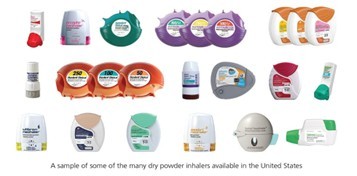
It is very important that you never run out of any of your medications.
Recognising an exacerbation
Here are some of the symptoms you might experience when suffering with an exacerbation or flare up:
- Increased shortness of breath
- Worsening cough
- Increased sputum
- Changes in colour of sputum
- Increased tiredness
- Developing a temperature or fever
- Developing a cold or viral infection
- Decrease in your usual activity
- Unable to complete usual day to day activities due to breathlessness
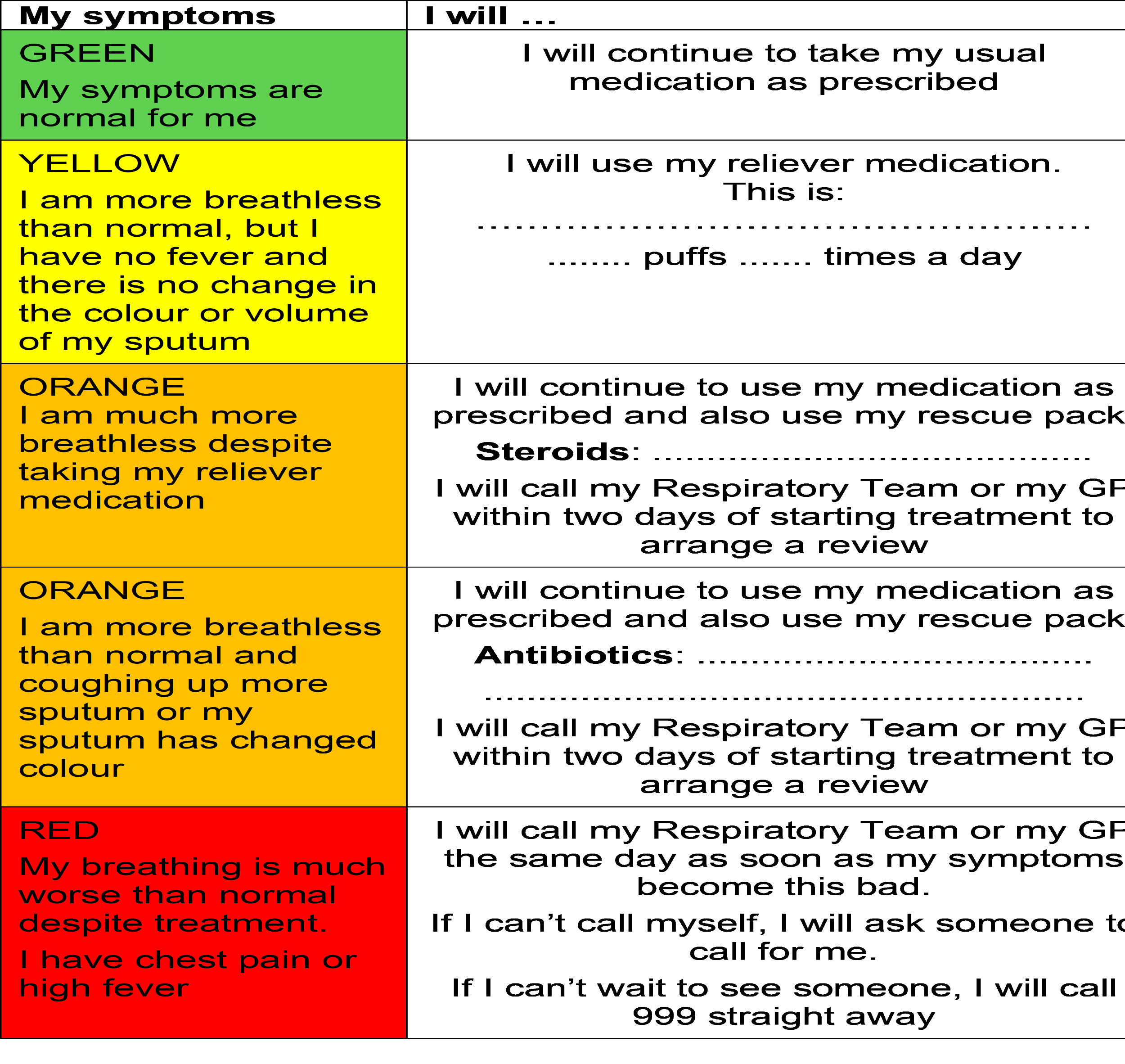
Below you’ll see a guide on what to do if you experience any of the above symptoms. If you are not sure on whether to start any treatment, you can call your Respiratory Team or your GP for advice.
If you do start any of your rescue medications, try to get them replaced as soon as possible after a review with your Health Care Practitioner.
Be careful what you breathe
- Stop smoking and avoid smoky places (Smokefree National Helpline 0300 123 1044)
- Try to avoid places with lots of exhaust fumes
- Avoid dust – use a damp cloth to do dusting and open windows, if possible, when any hoovering is being done
- Open windows if using any strong-smelling cleaners and avoid plug in or spray air fresheners or cleaning products
- Wear a mask if you are going to do something that creates a lot of dust, e.g., cleaning out pets’ cages
- Try to avoid people with coughs and colds
Exercising to stay healthy
Pulmonary rehabilitation is a 6 week course which involves both an exercise program and an educational aspect.
We understand it can be scary to think about exercising when you are breathless, particularly if you have not exercised for a while. On a pulmonary rehabilitation course, you can choose which exercises you do, how many and can rest whenever you need. There is no pressure.
The exercises can be modified depending on your ability. You will be encouraged to exercise to a point where you become controllably breathless and shown ways to manage this and any feelings of anxiety.
Keeping fit and healthy
The advice below is designed to help you stay well and minimise the chances of having a flare up.
- Make exercise a regular activity – try to take a walk outside every day if possible
- Have a flu vaccine every year; you should also have a pneumonia vaccine, which is a once only jab
- Eat well and drink plenty of fluids
- Speak to your GP if you are losing weight unintentionally
- Attend for your regular health review at your GP surgery
Changes in the weather
When it is hot
• use fans
• drink plenty of fluids
• stay inside during the hottest times of the day
• and avoid areas with lots of dust/fumes.
On cold days
• avoid going outside when it is misty or damp
• when you do go outside, keep warm by using coats, hats, gloves and scarves
• use a non-fluffy/hairy scarf across your nose and mouth to help warm the air you breathe
• keep the house at a consistent temperature throughout.
Contact us
If you have any queries relating to this information, please contact the Respiratory medicine service.
About this information
Service:
Respiratory medicine
Reference:
W/032
Approval date:
27 June 2026
Review date:
1 June 2029
Click ‘show accessibility tools’ at the bottom of the page

Then click ‘select language’

Alternative formats
You can use the accessibility toolbar at the bottom of your screen to:
-
Change the text size
-
Adjust the font
-
Modify the colour contrast
-
Use the translate function
If you would like this information in another format, such as Braille, audio, or easy read, please speak to a member of staff.
You can also print as well as download as PDF using the “Print this page” button at the end of the page.
Staff will print a copy for you on request
Important note
This page provides general information only. It is developed by clinical staff and is reviewed regularly every 3 years for accuracy. For personal advice about your health, or if you have any concerns, please speak to your doctor.