

Advice after your nerve block for surgery
On this page…
Subacromial shoulder pain is the most common type of shoulder pain. It is also known as rotator cuff tendinopathy or shoulder impingement. It is caused by chronic inflammation in the region of the rotator cuff. It is very common, but usually responds to exercise.
What are the symptoms?
Sub acromial shoulder pain is often felt around the shoulder and upper arm, it may also be felt towards the neck and shoulder blade. It can feel worse when the arm is raised to shoulder height or above or reaching behind your back. Simple activities, such as reaching for items on shelves, driving or getting dressed may be painful. Sleep can also be affected, and it is often difficult to lie on that side.
Pain may come on gradually over time or can occur suddenly particularly if the shoulder has been used for an activity that is much more demanding than it used to doing each day.
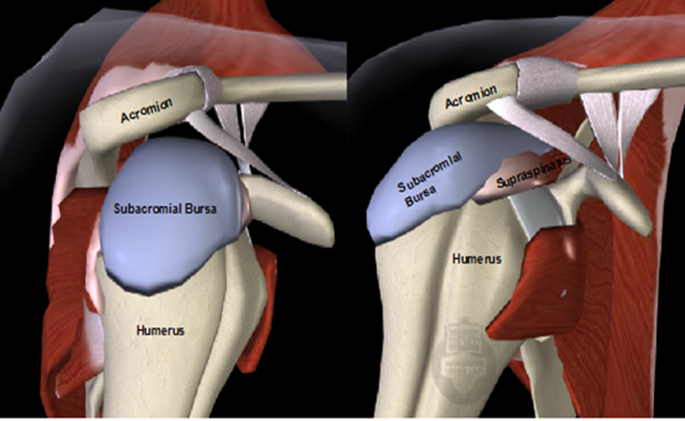
Figure 1: Graphic of right shoulder from front and side, note the blue area is the sub acromial bursa which is normal a cushion between the rotator cuff tendons and the roof of the shoulder.
Who gets sub-acromial pain and what causes it?
Sub-acromial Shoulder pain is very common. Most patients are between 40 and 65yrs old and it is slightly more common in women. It can develop due to age related changes, repetitive strain, increase in load that you are not used to, injury or sometimes it can occur for no apparent reason. Other general health factors can influence your shoulders tendon health such as smoking, obesity, high fat diet, high cholesterol levels, low vitamin d levels and diabetes.
As we get older, our muscles tend to get a little weaker and it is common also to develop small bony spurs that can promote rubbing in the shoulder. Tendon degeneration and bone spurs and sometimes damage to the tendons can cause inflammation in the subacromial bursa which patients then feel as pain.
Conservative Management
Physiotherapy
For many people, poor posture and altered movement patterns aggravate bursitis and tendon related pain in the shoulder. There is good evidence that physiotherapy focussing on optimising posture, movement and strength in the shoulder will improve many patients’ symptoms and allow them to avoid surgery. You will probably be asked to do Physiotherapy as a first line treatment either by your GP, or by the Upper limb team at the hospital.
It is important to understand it can take at least 6 weeks of strengthening and postural work before you notice improvements in your pain and function. It is therefore important that you follow the physiotherapists advice and exercise programme to achieve the best outcome.
Try to incorporate the exercises into your daily routine. If initially the exercises are causing some discomfort, complete them on alternate days. Significant gains can be made in strength if do the exercises about 4-5 times a week.
Steroid Injection (Cortisone)
You may have been recommended or have had a steroid injection. The risks of injection are extremely low, and most patients enjoy significant pain relief, it can also be used to provide an excellent window of opportunity to strengthen the rotator cuff and scapula muscles with the physiotherapist which will help to manage your problem.
Sources of further information
Subacromial Shoulder Pain – British Elbow & Shoulder Society (bess.ac.uk)
Useful contact numbers
Booking centre (appointments) 0300 614 7919 option 1
Physiotherapy Department 0300 6140540
Contact us
If you have any queries relating to this information, please contact the Orthopaedics service.
About this information
Service:
Orthopaedics
Reference:
N/071
Approval date:
13 May 2025
Review date:
13 May 2027
Click ‘show accessibility tools’ at the bottom of the page

Then click ‘select language’

Alternative formats
You can use the accessibility toolbar at the bottom of your screen to:
-
Change the text size
-
Adjust the font
-
Modify the colour contrast
-
Use the translate function
If you would like this information in another format, such as Braille, audio, or easy read, please speak to a member of staff.
You can also print as well as download as PDF using the “Print this page” button at the end of the page.
Staff will print a copy for you on request
Important note
This page provides general information only. It is developed by clinical staff and is reviewed regularly every 3 years for accuracy. For personal advice about your health, or if you have any concerns, please speak to your doctor.