

Advice after your nerve block for surgery
On this page…
You and K-wire removal
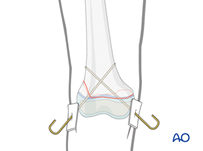
When you broke your limb, it needed to be fixed by inserting thin wires to hold the fracture. ‘K’ (Kirschner) wires were used to keep the position of the fracture after the bones have been realigned. The fracture may need to be held by one or more wires. The k-wire will be left sticking out through the surface of the skin so that it can easily be removed without, in most cases, the need for another operation. K-wires are usually removed after 3-6 weeks, and this will take place in the Plaster Room.
When you come to the Fracture Clinic
It is obviously going to be an anxious time for you, the fear of the unknown. Sometimes it’s helpful to take a dose of paracetamol or similar pain relief (following dosage instructions on the packet) before you attend your appointment. The procedure itself is usually relatively painless.
When you arrive and have checked in with reception, you will be sent to the Plaster Room for your cast to be removed. Sometimes you will be sent for a X-ray after the cast has been removed, but not always. A doctor will come and see you once the cast is off.
How are the K-wires removed?
Once the cast is off the doctor will check the state of the wires. They will spray the area with a solution of chlorhexidine which is a skin disinfectant. The wires will then be removed using wire remover pliers.
The removal process is very quick. A pad of sterile swabs will be placed over the area where the wires have been removed from, and gentle pressure will be applied. Bleeding is very common from the small holes left after wire removal. This bleeding will stop quite soon. A small dressing will be applied once the bleeding has stopped. It should be left in place for 48 hours to allow the small holes to close over.
Do not get the area wet during that time. Once the holes have closed, you can then wash the area but do not soak it for a few more days. Sometimes you will be put back into a cast for another week or two, or you may need a splint. Your doctor will discuss this with you once you’ve been examined.
What if the wire cannot be removed?
In a small number of cases, the k-wire may have moved inwards and this may prevent easy removal. Some children also become very scared and may not co-operate making removal of the wire in the Plaster Room difficult. The doctor will talk through options with you. In some cases, especially with young children, you may be required to be booked in as a day case, to have the wires removed under a short general anaesthetic.
Aftercare
Once the K-wire has been removed and no further cast or splint has been applied, you will be allowed to start moving your limb. It will feel very weak at first. Encourage gentle movement so that it will regain its normal strength.
The doctor will advise you on when you will be able to return to normal activities.
After 48hrs, remove the dressing covering the wire sites. Check that the area is healthy. If there is any redness, discharge, increased pain, heat or you are feeling unwell, you should consult your GP. Infection is rare but can happen.
Contact details
The contact number for the Plaster Room at Frimley Park is: 0300 6134339
Opening hours: Monday – Friday, 9am – 5pm
The contact number for the Plaster Room at Wexham Park is: 0300 6154058
Opening hours: Monday, Tuesday, Thursday, Friday, 9am – 5pm
Wednesday 9am – 1pm (closed in the afternoon)
Contact us
If you have any queries relating to this information, please contact the Plaster room service.
About this information
Service:
Plaster room
Reference:
N/044
Approval date:
1 November 2025
Review date:
1 November 2028
Click ‘show accessibility tools’ at the bottom of the page

Then click ‘select language’

Alternative formats
You can use the accessibility toolbar at the bottom of your screen to:
-
Change the text size
-
Adjust the font
-
Modify the colour contrast
-
Use the translate function
If you would like this information in another format, such as Braille, audio, or easy read, please speak to a member of staff.
You can also print as well as download as PDF using the “Print this page” button at the end of the page.
Staff will print a copy for you on request
Important note
This page provides general information only. It is developed by clinical staff and is reviewed regularly every 3 years for accuracy. For personal advice about your health, or if you have any concerns, please speak to your doctor.