

Advice after your nerve block for surgery
On this page…
Introduction
You have been referred to the Faster to Diagnosis Service by your GP. The reason for the referral may be because your GP has concerns that your symptoms suggest cancer. However, there are many benign (non-cancerous) conditions that could cause the symptoms that you are experiencing. The majority of patients we investigate will not have colorectal cancer.
What is digital rectoscopy
Digital rectoscopy (LumenEye) is a test which allows a short telescopic tube to be inserted into the anus (bottom) which can look at the lining of the rectum (end of the bowel). This is to see if there is an abnormality which could be causing rectal bleeding.
Preparation for the clinic
You can eat and drink as normal prior to your appointment, and we recommend that you take your regular medications as prescribed.
In order to get a clear view of your rectum, you will be asked to use two glycerin suppositories, which will help to clear out your lower bowel.
How to administer suppository
• Apply gentle pressure to insert the suppository completely into the rectum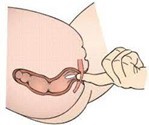
• Hold buttocks together for a few seconds
• Remain lying down for about 15 minutes to avoid having the suppository come out
Suppositories can be purchased from your local pharmacy or supermarket.
Please follow the directions on the box for further questions.
If you are not able to purchase these, you can contact the Navigator team on 0300 615 1274 or 0300 613 6520 for further advice.
It is advised that you use the suppositories 1 to 2 hours before your appointment.
What to expect in the clinic
During your appointment, the nurse will discuss your referral with you, and complete a full assessment.
You will then have a rectal examination, for which you will be asked to remove your clothing from the waist down. You will have the privacy of your clinic room to do this.
Then the nurse will:
- Ask you to lie down on your left side, with your knees lifted up towards your chest. This is the easiest way to examine your rectum.
- They will put on gloves and look at the outside of your bottom for any problems first.
- They will use lubricating gel on 1 finger and gently insert it into the bottom. This is usually very quick and you should not feel any pain.
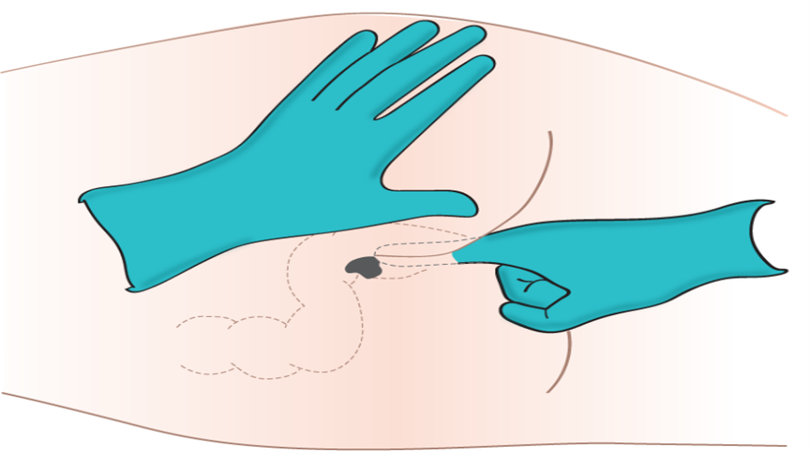
Following the examination of the rectum, the nurse will then introduce the digital rectoscope. This will allow better views of the rectum and to see if there is anything causing the rectal bleeding.
During this test, you may need to have a small amount of air blown gently into your rectum, this may cause:
- mild abdominal discomfort
- the feeling of needing to pass wind
- the urge to open your bowels
This is normal, and the team will help you to feel as relaxed as possible.
During the exam, digital photographs may be taken. These photographs will then be uploaded to your electronic patient record.
How long does digital rectoscopy take
The examination usually takes between 5 to 10 minutes, but we suggest you allow up to 60 minutes for your appointment.
When will I get the results
Following the examination, the nurse will explain any findings to you. If the examination is normal and you have no further symptoms to investigate you will be discharged back to your GP. However, if you require any further investigations these will be arranged for you.
When can normal activity be resumed
Normal activity can resume after the test and clinic appointment.
Benefits and risks
The benefits of the investigation include the potential to diagnose and treat some conditions on the day of your clinic appointment.
The risks include inadequate bowel preparation, discomfort during the procedure, missed pathology and and a very small risk of perforation which is a rare complication (less than 1 in 100,000).
Abnormalities of the rectum
Rectal Prolapse: This is where part of your rectum can protrude through your anus. This can usually be gently pushed back into place. However, you may need further assessment, so an appointment might be made for you to see a colorectal consultant.
Anal fissure: This is a small tear in the anus that can cause bleeding and pain when opening your bowels. It is important to keep your bowels as soft and regular as possible. This can be done with dietary modifications and/or laxatives. Paracetamol may help. Medication may be advised or prescribed in some circumstances, and if this is the case, the nurse will discuss this with you.
Haemorrhoids (piles): These are lumps inside and around your anus. Symptoms can include bright red bleeding after opening bowels, itching around the anus, the feeling of needing to have your bowels open after going to the toilet already, mucus in your underwear, and/or pain around the anus. If you are found to have haemorrhoids the nurse will discuss treatment options with you.
Polyps in the rectum: Polyps are small overgrowths of cells which develop in the lining of the bowel. Many polyps are benign and stay that way; however, some polyps have the potential to develop into colorectal cancer. If polyps are identified, these will not be removed and you will be referred for a colonoscopy.
Inflammation of the rectum: If inflammation is identified, you will be referred for a colonoscopy so you can have biopsies to rule out inflammatory bowel disease.
Rectal Cancer: This is very unlikely, but a potential finding. If the nurse suspects this, you will be referred for further tests, which could include a colonoscopy, CT scan, and MRI scan.
Anal cancer: This is very unlikely but a potential finding. If the nurse suspects this, you may be referred for further examination under general anaesthesia and for an MRI scan.
Contact details
Wexham Park & Heatherwood Hospitals:
0300 615 1274
fhft.fdscnsteam@
Frimley Park Hospital:
0300 613 6520
fhft.colorectalcnsfph@
Contact us
If you have any queries relating to this information, please contact the Endoscopy service.
About this information
Service:
Endoscopy
Reference:
H/089
Approval date:
10 January 2025
Review date:
10 January 2028
Click ‘show accessibility tools’ at the bottom of the page

Then click ‘select language’

Alternative formats
You can use the accessibility toolbar at the bottom of your screen to:
-
Change the text size
-
Adjust the font
-
Modify the colour contrast
-
Use the translate function
If you would like this information in another format, such as Braille, audio, or easy read, please speak to a member of staff.
You can also print as well as download as PDF using the “Print this page” button at the end of the page.
Staff will print a copy for you on request
Important note
This page provides general information only. It is developed by clinical staff and is reviewed regularly every 3 years for accuracy. For personal advice about your health, or if you have any concerns, please speak to your doctor.