

Advice after your nerve block for surgery
On this page…
The Impact of A Health Condition
There are lots of different types of long-term health conditions that children and young people
can be diagnosed with. These include:
- Diabetes
- Cystic Fibrosis
- Respiratory Conditions, like asthma
- Epilepsy
- Allergies
- Genetic conditions
- And many more!
We hope that this resource pack gives you some ideas about acknowledging the impact it has
had, thinking about how you want your life to be, how you might manage your condition and
what to do if you are struggling.
When you are living with a health condition, it is inevitable that you may experience good and
bad times with many ups and downs along the way, like you are living on a rollercoaster. We
know that there may be times that it feels easier, and times it feels overwhelming.
Noticing there are ups and downs it the first step. It’s a normal part of us adjusting to the health
condition and learning to live alongside it. How you feel about it will change over time, and
that’s ok!
It can be useful to think back to when you first learned about your health condition. How did you feel about it then? Has anything changed about how you view it now? What do you think led to that change?
Adjusting to a Health Condition
Throughout your journey with your health condition there might be lots of different emotions
and thoughts that you notice.
| Pre-diagnosis |
|
| Diagnosis |
|
| Making sense of it |
|
| Coping with treatment |
|
| Living life alongside it |
|
Over time, we start to feel ok riding the rollercoaster. We start to accept there will be ups and downs.
Adjusting to a health condition takes skills, including:
- Resilience, which is our ability to adapt to, and recover from, stress
- Coping, which is about how we manage our thoughts, emotions, body reactions and behaviours response to stressful situations
When people are first aware of their health condition, it can feel like it completely takes over their life. There is a lot to learn and to think about!
Over time, how we feel about our health condition can change. The health condition itself can
feel smaller and like it takes up less of our time. And we start to grow our life around it.
The goal of adjustment is to feel like your health condition is just a part of you, rather than it defining you. Adjustment is when you live your life alongside your condition, without it always feeling like it takes over. We give it the attention it needs but still focus on the things that are
important to us.
Consider where you are in your adjustment to your health condition now. Does it feel like a small part of you? Or does it feel like it takes over at times? It’s normal for it to grow and then become smaller again, particularly if we are stressed or have a lot of other things going on in our lives.
Resilience: Healthy Bodies Help With Healthy Minds.
Diet
When we think about developing resilience to the stress of managing a health condition, it is important to start with the basics. Focusing on eating a healthy, balanced diet, doing some exercise and getting enough sleep is the foundation to us becoming resilient.
What we eat:
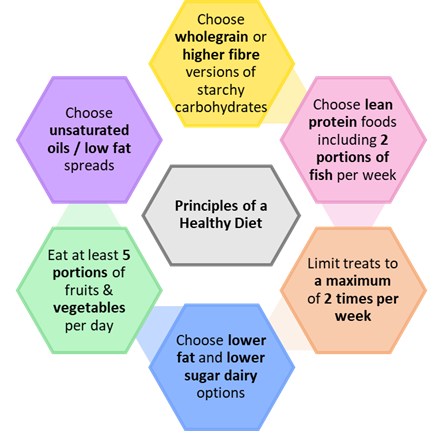
It’s important to eat the right foods in the correct amounts for a well-balanced, healthy diet. These
principles will help both your physical and mental health:
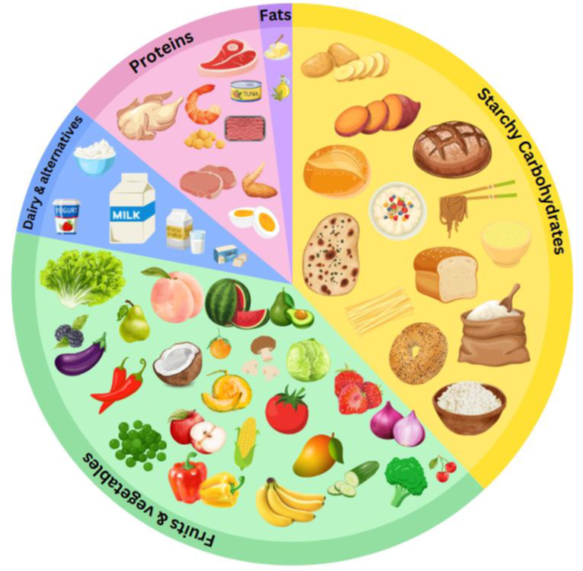
The Eatwell Guide shows you the 5 food groups that we eat.
If you eat a variety of foods from across the guide, you will have a well-balanced diet. Foods outside of the plate (chocolate, biscuits, cake, crisps, ice cream etc) are not essential to health and should only be eaten in small amounts as treats.
Energy
Think about what physical activities you do. Some health conditions restrict what movement our bodies can do and need to be managed differently during exercise. But we know that being active is associated with better mental health and it is worth trying to find some activities you can do that you enjoy.
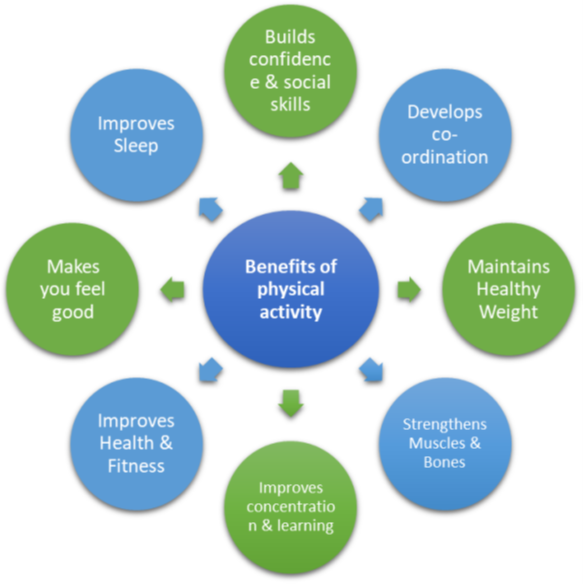
There are lots of benefits of being physically active, where your condition allows it.
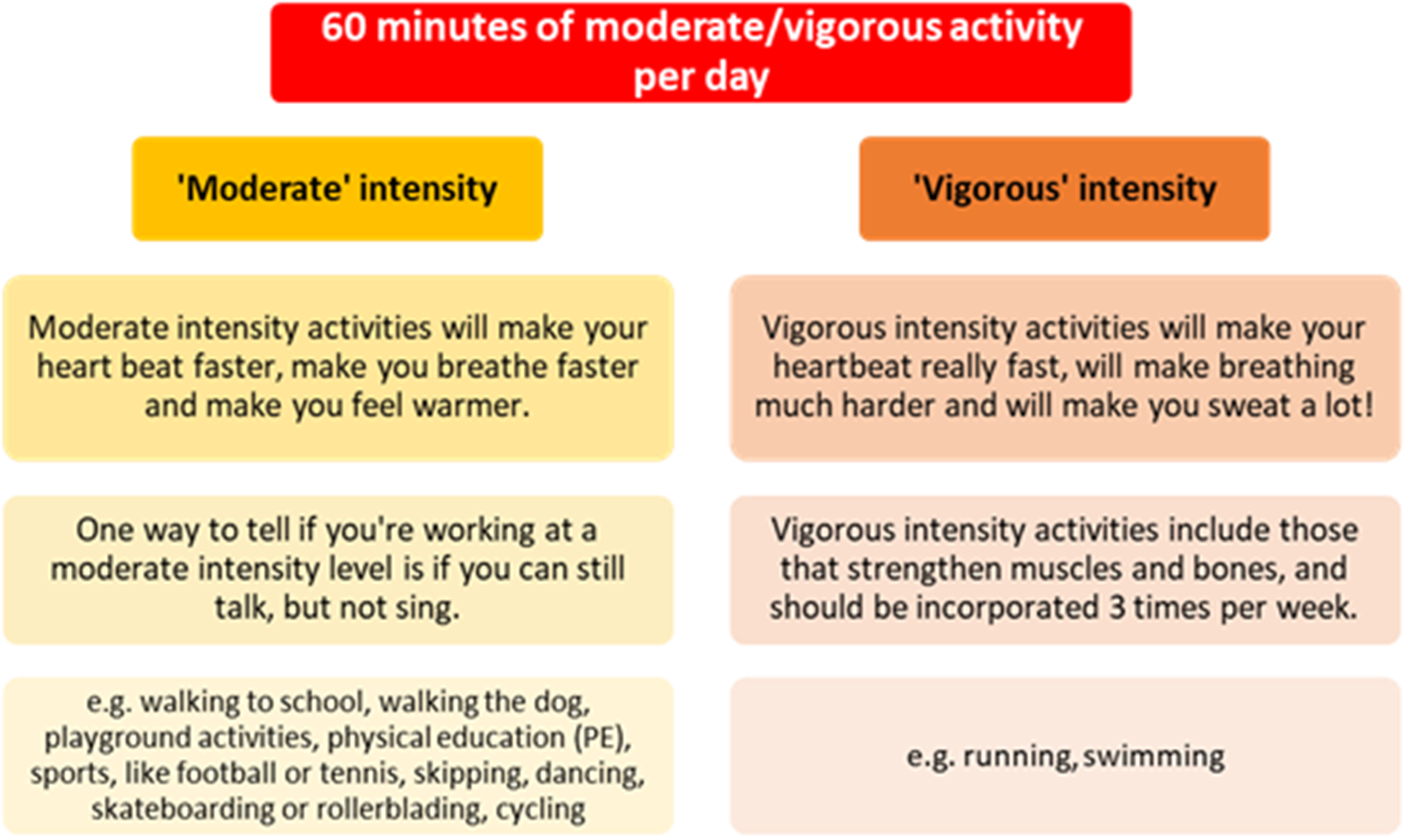
The physical activity levels recommended for 5–18-year-olds
Sleep
Let’s focus now on sleep. Children and young people often need a lot of sleep, but they can also
have erratic sleeping and waking times. When you have a health condition, these times can
become even more erratic! The goal is to get enough sleep to wake up feeling refreshed.
Top Tips for better sleep!
- Have some quiet time before bedtime e.g., read a book
- Go to bed at the same time every night
- Only use your bed and bedroom for sleeping (i.e., don’t play or work in there)
- Don’t have a TV, laptop or phone in your bedroom
- Turn your clock around so you can’t see the time
- Have a warm bath before bed
- Don’t have the heating on too high, you sleep better when a little cooler
- If your mind is buzzing, write down your thoughts and ideas so you’re more likely to stop thinking about them.
- Don’t drink caffeine, especially after 3pm
- Once you’re awake, get up straight away
- Open the curtains when you wake up
- Get up the same time each day
- When you’ve got up, get dressed
Children need different amounts of sleep depending on their age:
- 0-1 year olds = 14-15 hours
- 1-3 year olds = 12-14 hours
- 3-6 year olds = 10-12 hours
- 7-12 year olds = 10-11 hours
- 12-18 year olds = 8-9 hours
It is important to remember that a child with a health condition may need more than this!
When you have a health condition it is particularly important to make sure you are getting good quality sleep. Some advantages of good quality sleep are:
- You’re awake in the day so you can see family, friends and go to school more.
- You’re awake for meal times – you will have even less energy if you don’t eat well.
- You will be less tired – you will be happier, be able to do more exercise, concentrate for longer, be more creative, and lots more!
Think of 3 ways good quality sleep could benefit you:
Chat with your parent/carer to agree 3 goals to focus on to help you sleep better (for example, “I will leave my phone downstairs”)
Difficult Emotions
At times, we can all experience difficult emotions. Many young people, with or without a health
condition, experience feelings of low mood and anxiety. Low mood can be temporary, and pass
within a couple of days or weeks, or it can last longer. It is sometimes referred to as depression,
especially if it lasts longer than two weeks and starts to affect all areas of life.
What does low mood or depression feel like?
Depression can affect people very differently.
Here is how some people feel:
- Depressed (low) mood most of the day almost every day
- Reduced interest or pleasure in activities some of the time
- Significant weight loss or gain, or decrease/increase in appetite
- A slowing down of thought and being less physically active (observable by others)
- Fatigue or loss of energy most days
- Feelings of worthlessness
- Thoughts of/actually self-harming
- Feeling that you don’t want to be here anymore
What does anxiety feel like?
Anxiety can affect people very differently. Here is how some people feel:
- Stop enjoying normal life
- Constantly worrying
- Obsessively researching your health condition and complications
- Avoiding any reminders of your health
- Fatigue or loss of energy
- Difficulty sleeping
- Inability to relax
- Unable to concentrate
- Feeling constant ‘butterflies’ or a ‘lump’ in your throat
- Heart beat racing
- Often causes tummy ache/headaches
Managing any Unhelpful Thoughts
Noticing any Unhelpful Thoughts:
When we are facing a stressful situation, it’s common for us to experience negative thoughts.
When you are living with a health condition you may have thoughts like:
"My life is too hard."
"I can’t cope with all of the things I have to do."
"None of my friends can ever understand what I’m going through."
"People will judge me because I look different to them."
"I’ll never be able to live the life I want to."
Sometimes we need to allow ourselves permission to have these thoughts, and just notice they are there.
But we know that if our thoughts are negative a lot of the time, this may begin to impact how we are feeling, our bodily sensations and our behaviour and can make coping with our condition tricky.
It’s important to remember, Thoughts are not Facts!
Thought Checker:
- Am I thinking it’s going to be worse than it might actually be?
- Am I trying to predict the future when I can’t really know for sure what will happen?
- Am I forgetting to think of the positives in this situation?
- Am I thinking in black-and-white terms, that things will either be good or bad with no in-between?
- Am I thinking that just because I had one bad experience, it will definitely happen again?
Motivation to Make a Change
Think of something you would like to change or are trying to change at the moment, about your
relationship with your health condition. For example, it might be to eat a healthier meal in the
evening, give your medication more consistently, or to increase the amount of exercise you do.
Then look at the Stage of Change below: which stage are you in?
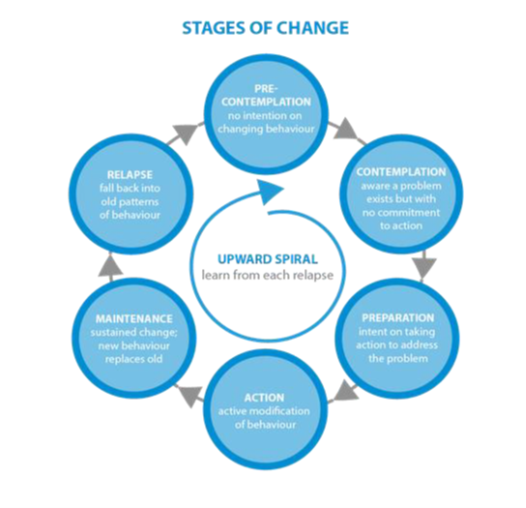
To help you move through this cycle of change:
- If you’re in the pre-contemplation stage now, maybe try to set aside some time to think about the pros and cons of making the change.
- If you’re contemplating change, think about what the first step would be in taking action.
- If you’re in the preparation stage now, commit to the time you will start to make the change.
- If you’re in the action stage, well done! You’ve already started making positive changes. Now try to think of how you can maintain this in the longer-term; what needs to be in place to support you?
- If you’re in the maintenance stage, well done! You have made a change and maintained it over time. If you stay here long enough, you will have achieved your goal and your new behaviour will become automatic for you. Try to think about anything that could tempt you to give up or lose motivation, and put a plan in place to prevent that.
- If you’re in the relapse stage, well done for giving it a go. The key is to learn from this attempt at change and work out why it didn’t work out this time. Then set a new goal to work towards.
Burnout
If you have been living with your health condition for some time, you may at times feel fed-up
with all the tasks you have to do to manage it. This feeling is often referred to as ‘burnout’. One
sign of burnout is noticing a change in how you manage your condition; some common examples are below:
- I notice I am missing appointments or worried about going to the hospital
- On one hand I want to and on the other hand I don’t want to manage my condition
- I am finding I am avoiding some parts of my treatment, more often
- I am exhausted with managing it all the time
- I feel like my condition is controlling me at the moment and not the other way around!
- I am feeling alone with my health care at the moment. I am arguing more about it with my family.
- I am feeling sad or worried about my health at the moment.
To Manage Burnout:
- Notice the signs when burnout is bothering you: Everyone can experience burnout differently: what are your early warning signs?
- Be kind to yourself: No one can be perfect all the time so if you have a day when you don’t hit your treatment goals, remind yourself that you can start again tomorrow. Remember it is normal to have good and bad days.
- Book in something to look forward to: prioritise doing the activities that you enjoy
- Celebrate your Sparkling Moments: No matter how small they are. Write down what has gone well, even if it is nothing to do with your health condition or only lasted for a couple of minutes.
- Focus on solutions not problems: To get back on track with your treatment, set small goals and take one step at a time. What made this one small positive step possible?
- Share the Load: Can a family member help you “take a break” from the constant need to pay attention to your health and take a few hours off? Are there tasks they could do for you, for now?
- Ask for Help: Burnout loves making people feel like they are isolated - so don’t let it win! Find someone you trust to talk about how you are feeling. Family and friends can provide an ear to vent how you are feeling or to help champion your goals. Tell the medical team too; they might have practical ideas about how to ease the burden for you by reviewing your management plan.
How can I Improve my Wellbeing?
The good news is a lot of the ideas you’ve likely already discussed in clinic to help you manage your health condition will also help you to feel better about yourself. For example, eating healthily, exercising and ensuring you get enough rest/sleep, will all help you to feel better emotionally as well as physically.
When difficult emotions stop us from doing things that we used to enjoy, this can make us feel even worse in the long-term. Take a moment to think about the things you have stopped doing or are doing less, because of your feelings around your health condition. Try making a note below of things you are avoiding:
|
Things at home
|
Things at school
|
Hobbies
|
Social activities
|
The next step is to plan how easy it would be to start doing some of these activities again. Create a ladder (hierarchy) of tasks with the most difficult at the top and easiest at the bottom. Then you can start by trying to complete the easiest task. Before you complete each task, write down what you think will happen, then once you’ve completed the task write down what actually happened. Hopefully you will start to see that it is mostly not as bad as you think it is going to be. If a task feels too difficult try to break it down into smaller, more manageable, tasks. Approach this step by step, don’t try to complete all tasks at once.
| Situation | Difficulty (0-10) |
| Example: Giving an injection at a friends house | 10 (Most difficult) |
| Example: Texting a friend | 1 (Least difficult) |
We might need different strategies to manage our emotions at different times.
Here are some things to try
Let It Out Physically
|
Work out how you’re feeling
|
Creativity as a way of expression
|
Comforting yourself
|
Getting out and about
|
Distract yourself
|
Being Productive
|
MindfulnessMindfulness is about paying attention on purpose, and simply noticing what is happening right now. Mindfulness is taking notice of how your body feels, what you see, smell and taste. You can practice mindfulness anywhere you feel comfortable. There are many benefits to becoming more ‘mindful’ and accepting of your thoughts and feelings. For more information on mindfulness, have a look |
Coping with my Health Condition
There are three main ways of coping. Do you recognise yourself in these examples?
Avoidant coping is when you try to ignore or escape from challenges, you try to pretend that they aren’t happening.
Primary coping is when you tackle the source of your challenges to change your stress, through problem-solving.
Secondary coping is when you adapt to the stressor and change the way you respond to its challenges
The Problem with Avoidant Coping
If something feels difficult, sometimes we try to avoid thinking about it. But then we never fully
understand the problem enough to be able to solve it, and the difficult feeling remains. If we avoid
our difficulties then when we come to relax at night, our brains suddenly want to remind us of all
the things we need to worry about and it can be difficult to get to sleep.
On the other hand, sometimes when things feel difficult, we can overthink things and it can spiral to the point where we feel worse. This applies to everyone, however when you have a health condition there are additional things to think about, therefore we can easily end up in a spiral of overthinking.
Instead, it can be helpful to get a good balance between avoiding and overthinking, by setting a
designated ‘worry time’ during the day. To set this up:
- Create a set worry time (should be no longer than 10-15 minutes).
- What time works best? When you’re home from school? Ideally not just before bed.
- Postpone overthinking/worries
- When a worrying or stressful thought appears during the day remind yourself ‘I don’t need to worry about this now, I can worry about it later’
- Make a brief note of thoughts if you’re worried you’ll forget, then do something to distract yourself
- Complete worry time at agreed time, for up to 15 minutes
- Maybe write down your worries? Or talk to a parent or friend? Or draw how you’ve been feeling?
- You might want to spend the time exploring your feelings, or problem-solving some solutions
It is important that we allow ourselves to explore feelings but not think about them all day.
Progressive Muscle Relaxation
| 1 | Get comfortable in a distraction free environment. You can either lay down or sit upright in a chair. Closing your eyes will help you focus on the different muscle groups, but you do not have to if you don’t want to! For all steps, hold the tense position for a couple of deep breaths, or however long is comfortable for you, then relax. Repeat each step three times. |
| 2 | Draw a deep breath in through your nose and feel your abdomen rise as you fill your body with air. Then slowly exhale from your mouth, pulling your belly-button towards your spine. |
| 3 | Start with your feet. Clench your toes with your heel pressing towards the ground. Squeeze tightly for a couple of breaths and then release. It may help to say ‘relax’ whilst you release the tension. Next, flex your feet with your toes pointing towards your head. |
| 4 | Next move to your legs. Stretch your leg out, with your toes pointing towards the sky, feel the back of your leg tightening. Hold this for a couple of deep breaths and then release. Then, point your toes down into the ground with your leg straight for a couple of deep breaths. |
| 5 | Now move onto your glutes. Squeeze your buttocks muscles for a couple of deep breaths. Remember, you should only feel tension and not pain. |
| 6 | To tense your stomach and chest, pull your belly button in towards your naval as tight as you can. Breath in deeply, filling up your chest and lungs with air. |
| 7 | Next, tense your shoulder blades and back. Push your shoulder blades backwards, as if you are trying to get them to touch. This will push your chest forwards. |
| 8 | Now tense the muscles in your shoulders as you bring your shoulders up towards your ears. |
| 9 | Be careful when tensing your neck muscles! Face forward, and SLOWLY pull your head back to look up at the ceiling. |
| 10 | Squeeze your teeth together to tense your jaw. Open your mouth as wide as you can, as if you are yawning, to relax your mouth and jaw. |
| 11 | To tense your eyes and cheeks, squeeze your eyes tight shut. |
| 12 | Raise your eyebrows as high as they will go, as if you were surprised, to tense your forehead. |
| 13 | To tense your upper arms, bring your forearms up to your shoulder to ‘make a muscle’. |
| 14 | Finally, to tense your hand and forearm, make fists with both of your hands. |
Practice means progress. Only through practice can you become more aware of how your muscles respond to tensions and relaxation. Training your body to respond differently to stress is like any training – practice is the key!
Calming The Body: Deep Breathing
During periods of anxiety, the body triggers the Fight or Flight Response. Breathing is shallow,
uncontrolled, and muscles become tense. Deep breathing triggers the Relaxation Response, whereby breathing becomes deeper, controlled, slower, and the symptoms of anxiety reduce.
| Sit or lie down comfortably. Close your eyes if it makes you feel more comfortable. Place your hand on your stomach, if you breath deeply enough, you should notice your hand rising and falling with each inhalation and exhalation. Imagine a balloon blowing up in your stomach as you breath in, and deflating as you breath out. |
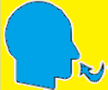 |
Inhale. Breath in slowly through your nose for 4-8 seconds. |
 |
Pause. Hold the air in your lungs for 4-8 seconds (however long is most comfortable for you). |
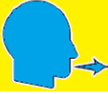 |
Exhale. Breath out slowly through your mouth for 4-8 seconds. |
| Repeat. Practice for at least 2 minutes. As your technique improves, practice for 5-10 minutes. |
Tips
- Slow down. The most common mistake is breathing too quickly. Count each step slowly as you do so.
- Counting your breaths takes your mind off of the source of anxiety. Counting acts as a distraction, whenever you catch your mind wandering, return to counting.
Worry Tree
|
What is making you worry? |
| Can I do anything about this issue? |
| NO: | YES: |
| Try to distract myself to ease my worry. | Make a mind-map or list to show what things I can do to stop or improve my worry. |
| Can I do anything about my worry right now? | |
|
NO – I can’t do anything about it at the moment.
|
YES - I can:
|
| Make a mind-map or action plan of what I can do in the future to help ease my worry. | Do this now! |
| Do my best to stop worrying by distracting myself until I can action my plan. | Stop worrying and distract myself. |
Tip: make your mind-maps and lists colourful, you will be more likely to remember what you have written, and engage with the material more!
Guided Visual Imagery Relaxation: The Beach
Lay down, or sit comfortably in a quiet room. Use the deep breathing techniques you learnt earlier in this pack, close your eyes and listen to somebody read you the following script. You can also read this script to yourself. You may find it more relaxing to play an audio track of crashing waves on the beach; this can be sourced on YouTube, Spotify, and most other online music platforms.
You’re walking down a long wooden stairway to a big, beautiful beach. It is very quiet and stretches off into the distance as far as you can see. As you look down you notice that the sunlight is reflecting off of the golden sand. You step into the sand, it feels warm so you wriggle your toes. You notice the warmth from the sand between your toes and around your feet. You notice the sounds of the waves crashing and chasing you up the shore, the water sparkles like a diamond as it retreats back. The roaring sound of the waves is so soothing that you can just let go of any worries.
The ocean is a beautiful light blue, with patches of darker sapphire in the deep. As you look at these deep blue areas you notice a small sailboat on the horizon. All of these sights help you to let go of any worries and relax even more.
As you continue walking along the beach, you become aware of the fresh salty sea air. You look up take a slow deep breath in, and breath out. This breath makes you feel refreshed and relaxed. As you look up you notice two seagulls, the wind gusts and they appear to dance in graceful circles above you. It makes you wonder how it would feel if you could fly under the warm sun.
You find yourself settling into a deep state of relaxation as you walk further down the beach. You feel the sun wrap its warm arms around you, the warmth relaxes all of your muscles. You notice a beach chair as you walk down the beach, once you reach it you take a seat. Laying back in this comfortable chair makes you reflect on everything you have felt, seen and thought at this beach. You drift into a deeper state of relaxation.
Now, feeling relaxed and at peace, you slowly rise from the beach chair and step into the warm sand to walk home. As you walk, you remember how relaxing this beach has been, and you know that you can come back to this place anytime you like. You start to climb the wooden stairs and gradually bring yourself back into the room. When you are ready, you can open your eyes.
Relaxing Safe Place Imagery
All visualisations can be strengthened by engaging all of your senses in creating your ‘Safe Place’. If you any negative thoughts enter your positive imagery, discard that image and create another one.
Get comfortable in a quiet place where you won’t be disturbed. Sit, or lie, comfortably. Take a few minutes to practice some deep breathing, become aware of any tension in your body, and release it with each breath.
Imagine a place where you can feel safe and relaxed. Your safe place can be somewhere you have been on holiday, somewhere you have seen a picture of, or a completely new place you create. Avoid using your home as your safe place.
Look around your safe place, pay attention all the colours and shapes around you. Describe what you see aloud.
Now focus on what you can hear. Listen to the sounds far away from you, and those close to you. Perhaps you hear is silence. You may hear the sound of running water, or the crunch of leaves under your feet.
Now focus on any skin sensations. Notice the feel of the ground beneath your feet, or whatever is supporting you in this place. Pay attention to the temperature and direction of the wind, and anything else you can feel.
Take a deep breath in. Place your hand on your stomach, and imagine a balloon inflating in your stomach. Can you notice any smells there? Maybe you can taste the salty sea air as you inhale?
Pay attention to all of these sensations whilst you spend time relaxing in your safe place.
Whilst you’re in your safe place, give it a name that you can use to bring that image back at any time.
You can choose to stay for a while, enjoying the calmness and tranquillity. You can leave when you are ready by slowly opening your eyes and bringing yourself back to alertness in the present.
Self-Soothing
5, 4, 3, 2, 1 Grounding Technique
This approach explores your five senses to help keep you grounded in the present. This is a calming technique that can help you get through periods of anxiety, or headaches. It can be done independently, making it useful for when you are alone.
Take a deep belly breath to begin. Imagine a balloon in your stomach filling up with air as you breath in.
LOOK: Look around for 5 things that you can see, and say them out loud. For example, you could say, I see the TV, I see the pencil case, I see a vase of flowers.
FEEL: Pay attention to your body and think of 4 things that you can feel, and say them out loud. For example, you could say, I feel my feet warm in my slippers, I feel the grass beneath my feet, or I feel the beanbag I am sitting on.
LISTEN: Listen for 3 sounds. It could be the sound of traffic outside, the sound of typing or the sound of your tummy rumbling. Say the three things out loud.
SMELL: Say 2 things you can smell. If you’re allowed to, it’s okay to move to another spot and sniff something. If you can’t smell anything at the moment or you can’t move, then name your 2 favourite smells. You may say, I can smell dinner cooking, or I can smell perfume.
TASTE: Say 1 thing you can taste. It may be the toothpaste from brushing your teeth, or sweetness from fruit. If you can’t taste anything, then say your favourite thing to taste.
Take another deep belly breath to end.
Develop Coping Thoughts/Positive Self-Talk
Positive statement encourage us and help us cope in distressing times. We can act as our own coach by saying encouraging things to ourselves, especially when our symptoms are worse (e.g. pain). Creating a sentence that you can say to yourself when you are feeling low or struggling to cope with your health condition can be very useful. Some children keep a copy of these in their pencil case or wallet so that they are always available.
Some examples include:
“I can do this.”
“I can cope.”
“Keep calm and carry on.”
“Thoughts are just thoughts – they are not necessarily fact.”
“It is okay to feel this way, it is a normal reaction.”
“This is difficult and painful, but it is only temporary.”
“This won’t last forever.”
Activity:
| Situation | Coping Thought/Positive Statement |
| Example: I have got really bad stomach pain, I am supposed to have a test at school today. | ‘The pain will pass, like it has done before. I can still go and do my best, and talk to a teacher to tell them about how I am feeling’. |
| I was supposed to go out with my friends today, I’m too tired today. | |
| I keep missing out on taking part in sports. |
For Parents: Supporting Young Children and Teenagers Living With a Long-Term Health Condition
It can be difficult to see a child/teenager struggling. However, as an adult there are ways in which you can help improve their ability to manage their condition.
- Set Routine and Record – It is important that the young person establishes a routine to ensure they get enough sleep, but also so they can live a balanced life where their energy is dedicated to family time and hobbies, as well as schoolwork. Keeping a diary can really help with this as it allows you and your child to ensure they have periods of rest, away from thinking about their health condition. You can find an activity, rest and sleep diary using this link - https://www.ruh.nhs.uk/patients/
- Distract and reduce focus on physical symptoms - It can be difficult to know how to respond to a child/ young adult who is experiencing symptoms such as pain, tiredness or lacking motivation to look after their health. Often, the natural urge is to pay attention to signs that the young person may be struggling. It is important to avoid making the child/ young person worry or become anxious, as they may focus on their symptoms more. Although it is challenging as a parent, it is important to minimise attention on the symptoms, for example, by not constantly asking how tired they are.
- Encourage normal activities – It is important that the young person continues to participate in activities they enjoy, rather than dedicating all their energy to schoolwork. These activities may need to be adapted or managed differently with their health condition, and the temptation is to avoid them because it becomes too much effort. But it’s important to feel part of a social group and do things they enjoy, with peers. It will get easier to manage with practice!
- Provide encouragement – Children and young people will feel more confident in their ability to cope with their health condition with your support and confidence. Your role is to provide positive encouragement that they can cope with and manage it.
- Support and communicate – Health conditions may affect your child/teenager’s ability to attend school, complete homework, coursework and revision. Offering support with studies may relieve some of the stress and give them more space to prioritise their health. You may like to provide this information booklet to their school/college so they can provide extra support where necessary.
- Access you own support if you need it – coping can be difficult for the whole family, not just the person with the health condition. You can talk to your GP about services that might be able to support you if you are finding it difficult to manage.
Accessing further Support
For Managing Diabetes
Digibete 19-25’s page – https://
Diabetes UK Podcast - https:/
Diabetes and your emotions - https://
Diabetes UK Youth programme - https://
JDRF diabetes and emotional wellbeing - https://jdrf.org.uk/information-support/living-with-type-
1-diabetes/health-and-wellness/emotional-wellbeing/
Various diabetes and emotions guides - https://
10 tips for coping with diabetes distress - https://www.cdc.gov/diabetes/managing/diabetesdistress/
ten-tips-coping-diabetes-distress.html
Managing diabetes-related stress video - https://
Your feelings about diabetes technology - https://www.diabetes.org.uk/guide-to-diabetes/diabetes-technology/diabetes-technologyemotionsetesUK
Your feelings about food and diabetes - https://www.diabetes.org.uk/guide-todiabetes/
emotions/your-feelings-about-food-and-diabetes
What is diabetes burnout? - https://
Dealing with diabetes burnout - https://www.cdc.gov/diabetes/library/spotlights/diabetesburnout.
html
For Managing Epilepsy:
Online support for young people with Epilepsy: https://
Child-friendly resources on Epilepsy: https://www.epilepsy.org.uk/living/parents-andchildren/
just-for-kids
For parents: supporting your child with Epilepsy: https://
For Managing Asthma
Resources for children and young people with Asthma: https://
Advise on managing asthma when studying, during puberty and when leaving home:
https://
Help for young people on living independently with asthma: https:/
For Managing Allergies
Online courses, meet ups and information on managing allergies: https://
Youth Engagement Project: https://
Information for parents on managing residential trips, sports, etc:
https://
For Managing Cystic Fibrosis
Accessing yoga classes and funds to support activities: https:/
Youth programme, online events, resources and information for young people:
https://
Generic Useful Websites
Mental health resources for Teachers, Parents, Carers & Children: http:/
Stress and Anxiety: https://www.moodcafe.co.uk/for-children-and-young-people/feeling-worried,-
frightened,-stressed-or-anxious.aspx
Anxiety and Depression: https://
Mindful Breathing and Activities: www.
Relaxation Techniques: www.
Thought Distancing: www.
Supporting Sleep: www.
Helplines
If you are having suicidal thoughts call 116 123 (open 24 Hrs) or text SHOUT to 85258
Cystic Fibrosis Trust Helpline: 0300 373 1000
Allergy UK Helpline: 01322 619 898
Asthma & Lung UK Helpline: 0300 222 5800
Epilepsy Society Helpline: 01494 601 400
Epilepsy Action Helpline: 0808 800 5050
Diabetes UK Helpline: 0345 123 2399
Contact us
If you have any queries relating to this information, please contact the Paediatrics service.
About this information
Service:
Paediatrics
Reference:
P/110
Approval date:
1 July 2025
Review date:
1 July 2028
Click ‘show accessibility tools’ at the bottom of the page

Then click ‘select language’

Alternative formats
You can use the accessibility toolbar at the bottom of your screen to:
-
Change the text size
-
Adjust the font
-
Modify the colour contrast
-
Use the translate function
If you would like this information in another format, such as Braille, audio, or easy read, please speak to a member of staff.
You can also print as well as download as PDF using the “Print this page” button at the end of the page.
Staff will print a copy for you on request
Important note
This page provides general information only. It is developed by clinical staff and is reviewed regularly every 3 years for accuracy. For personal advice about your health, or if you have any concerns, please speak to your doctor.