

Advice after your nerve block for surgery
On this page…
You have been referred for a BRAVO capsule extended pH study because of your recent stomach problems.
This test is usually recommended for people experiencing heartburn or acid reflux.
This procedure is contraindicated for patients with Nickel allergy
What is a BRAVO capsule pH study?
The BRAVO capsule test is a non-invasive examination used to assess and measure the amount of acid passing from the stomach into the gullet (acid reflux).
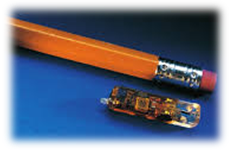
The BRAVO capsule is a small pill that adheres to the lining of the gullet, above the valve of the stomach. The capsule sends wireless signals to a receiver, recording the acid levels in the gullet over an extended period.
What do I need to do before the test?
You should receive a letter from the Endoscopy Unit, with clear instructions on how to properly prepare for a Gastroscopy procedure. When having a Bravo procedure you will need to have sedation as part of the gastroscopy, this is to make sure you are comfortable and the Bravo device attaches correctly. Because you will need sedation you will need someone to accompany you for the 24hrs following your procedure and you will not be able to drive yourself.
For the BRAVO study, you need to temporarily stop taking certain medications prior to the test. Please see the lists below.
STOP 7 DAYS BEFORE TEST
• Lansoprazole (Zoton)
• Omeprazole (Losec)
• Pantoprazole (Protium)
• Rabeprazole (Pariet)
• Esomeprazole (Nexium)
STOP 2 DAYS BEFORE TEST
• Ranitidine (Zantac)
• Cimetidine (Tagamet)
• Dyspamet Famotidine (Pepcid)
• Axid (Nizatidine)
• Metoclopramide
• Domperidone
• Gaviscon
• Pyrogastrone
• Maxalon
• Maalox
• Rennies
• Settlers
• Bisodol
• Magnesium Trisilocade
• Gastrocote
What does the test involve?
You must go to the Endoscopy Unit, where the team will help you prepare for the Gastroscopy procedure (see Gastroscopy leaflet). During the gastroscopy, the endoscopist will assess the lining of your gullet by inserting a camera through your mouth, down the gullet and into your stomach. They will also measure where to place the BRAVO capsule. You will be given sedation to make sure you are comfortable and the device attaches correctly.
The camera will then be removed, and the BRAVO capsule will be inserted via the mouth, down the throat to the required position. The capsule is pinned to the lining of the gullet where it will transmit signals to a receiver. The receiver is about the size of a mobile phone and can either be carried in an over shoulder pouch or clipped onto your belt.
The capsule will send signals to the receiver for up to 96 hours, then the receiver will stop recording automatically. The capsule will remain attached to the lining of the gullet for about 5–12 days, after which it will drop off and pass out naturally through your digestive system.
Will it be painful?
No, it should not be painful. The procedure could be uncomfortable, and you may feel a strange sensation between your ribs where the capsule is attached. Some patients have reported a bit of discomfort when swallowing. If you do experience this, chewing carefully and drinking liquids may help minimize this sensation.
You might also experience some mild chest pain. Taking pain relief medication such as paracetamol and ibuprofen could help ease this. However, if the pain becomes severe, please contact the Endoscopy department (between 8.00 am – 6.00 pm) or go to your nearest A&E department.
What should I do during the test?
Over the test period, you will be asked to complete a diary, documenting your activities and any symptoms you experience. A Clinical Physiologist will provide you with further instructions before you leave the Endoscopy Unit.
You can drink and eat as normal and can go about with your usual activities. You can shower/bathe during the test, but DO NOT take the receiver in with you as it is not waterproof. The receiver can pick up signals from the capsule up to 3ft/ 1m (roughly an arm’s-length) away, so you can leave it in a safe, dry place nearby while you bathe, then put it back on once you are dry.
How do I care for the receiver?
During the study period, you need to make sure that the receiver is always with you. Please keep it safe and dry. The receiver may beep during the procedure and show a flashing ‘C1’ on the top screen.
This can be due to:
- The receiver being out of range from the capsule.
- External interference – Wireless broadband, Wi-Fi, Bluetooth devices and mobile phones may use the same frequency as the capsule.
If this happens:
- Bring the receiver close to your chest bone and keep it there until the flashing C1 message disappears. Then keep the receiver within 3 feet distance of your chest.
- Stop using your Wi-Fi/wireless broadband and move away from any potential source of interference.
- If these actions do not work, please ring the Endoscopy Unit, Heatherwood Hospital on 0300 614 4020.
DO NOT take any indigestion medication as they will mask or reduce the acid levels in your stomach and will therefore give an inaccurate result. You will be able to resume taking indigestion medications after the study.
Is the test suitable for everyone?
This test is NOT suitable for everyone.
If you have bleeding disorders, strictures, severe oesophagitis, varices, obstructions, nickel allergy, pacemaker, or implantable cardiac defibrillator, you should NOT undergo a BRAVO procedure.
Additionally, because the capsule contains a magnet, you should NOT have an MRI study within 30 days of undergoing a BRAVO pH study.
What are the risks and benefits?
The BRAVO study is a good alternative to measure acid reflux in patients who cannot tolerate having a tube down the nose for 24 hours.
Complications are very rare, and those associated with gastroscopy are documented in the leaflet sent with your appointment letter. Potential complications with the BRAVO pH capsule include:
• Tears in the oesophageal lining, causing bleeding and possibly requiring medical attention
• Perforation of the oesophagus
• Premature detachment of the capsule/ incomplete study
What happens next?
Once the study has been completed, you will be asked to return the receiver along with your diary to the GI Physiology Unit (Heatherwood hospital). It is imperative that you return the receiver on the agreed-upon day with the Clinical Physiologist, as other patients might also need it and to avoid delay in your study being analysed. The recording will be uploaded, analysed and the results will be sent to your consultant. The consultant should write to you to arrange an out-patient appointment where they will explain the results to you and discuss further treatment.
Contact us
If you have any queries relating to this information, please contact the Endoscopy service.
About this information
Service:
Endoscopy
Reference:
H/075
Approval date:
17 January 2025
Review date:
1 January 2027
Click ‘show accessibility tools’ at the bottom of the page

Then click ‘select language’

Alternative formats
You can use the accessibility toolbar at the bottom of your screen to:
-
Change the text size
-
Adjust the font
-
Modify the colour contrast
-
Use the translate function
If you would like this information in another format, such as Braille, audio, or easy read, please speak to a member of staff.
You can also print as well as download as PDF using the “Print this page” button at the end of the page.
Staff will print a copy for you on request
Important note
This page provides general information only. It is developed by clinical staff and is reviewed regularly every 3 years for accuracy. For personal advice about your health, or if you have any concerns, please speak to your doctor.