

Advice after your nerve block for surgery
On this page…
Introduction
Constipation means opening bowels less than 3 times a week, or having hard, dry poo (stools) which may be large or come out as tiny pellets. It may be that you often need to strain to pass stool.
What causes constipation?
Constipation in adults has many possible causes. Sometimes there’s no obvious reason.
The most common causes include:
- Not eating enough fibre, which is found in fruits, vegetables and cereals
- Not drinking enough fluid
- Not moving enough and spending long periods sitting or lying down
- Being less active and not exercising
- Often ignoring the urge to go to the toilet
- Changing your diet or daily routine
- Stress, anxiety or depression
- During pregnancy and 6 weeks after giving birth
- Some medicines, including certain painkillers, antidepressants, medicines for indigestion called antacids, and iron tablets.
As well as causing a change in your bowel habits it may also cause the following symptoms:
- Stomach aches and pain
- Feeling bloated
- Feeling nauseous
- Loss of appetite
Treatment and prevention
Making changes to your diet and lifestyle can help to make your stool softer and easier to
pass. Try to:
- eat regular meals
- make sure that your diet is healthy and balanced, with whole grains, vegetables, and fruits or fruit juice such as apples, apricots, grapes, raisins, peaches, pears, plums, prunes, raspberries, or strawberries
- gradually increase your fibre intake by eating more bread made with wholemeal (wholewheat or wholegrain) flour, wholegrain breakfast cereals, brown rice, wholemeal pasta, and fruit and vegetables
- eat at least 5 different types of fruit and vegetables each day
- drink at least 2 litres of fluid each day (about 8 to 10 cups)
- go for a daily walk or run - this can help you pass stool regularly
- avoid alcohol because it dehydrates you, even though it is a fluid
- find a place and a time of day when you can spend time on the toilet
- respond to your body - when you feel the urge to go to the toilet, do not delay
- rest your feet on a low stool while you are using the toilet if it is comfortable - having your knees above the level of your hips can make it easier to pass stool
Medicines that can help
- Ispaghula husk, macrogol and lactulose work by softening your stool to make it easier to pass. If you do not pass normal stool within 3 days, go back to the pharmacy for further advice.
- Senna and docusate are stimulant laxatives that work by stimulating your gut muscles to help move stool along your bowel. Docusate also softens stool.
Most laxatives can cause side effects such as bloating, flatulence (farting or wind), feeling sick, and some tummy pain, but these are usually mild and get better over time. Keep drinking plenty of water while you’re taking the laxative. Stop taking the laxative when your stool becomes easier to pass again.
If you do not pass normal stool within 3 days contact your GP or NHS 111
Always read the patient information leaflet that comes with your medicine. If you are concerned about any side effects from a treatment, report it to a doctor, nurse or pharmacist.
Faecal impaction including laxative sachet disimpaction plan
You may have been advised that you have Faecal Impaction. This is very bad constipation where stool can build up in the abdomen and become immobile in the intestines. You may pass very small stools every few days or have very infrequent bowel movements. You may have ‘leaks’ of stools causing soiling, where soft stool has bypassed other hard stool, out of your control (overflow).
Disimpaction is the treatment to give relief from Faecal Impaction. This involves giving gradually increasing doses until the stool in the intestines has become liquid and comes out as diarrhoea and then switching to a maintenance dose.
Day 1 Take 4 sachets (spread through the day).
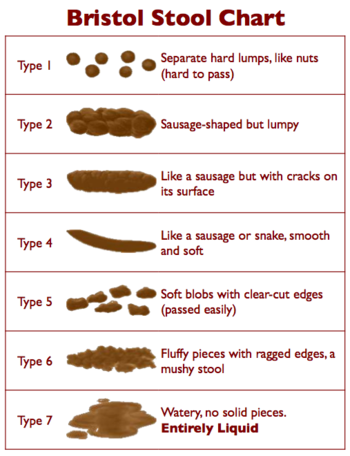
If you then pass Type 7 stool and it stays Type 7 for 24 hours: → switch to 1–2 sachets daily for 2 weeks.
Day 2 Only do this if Day 1 didn’t work (no bowel motion OR stool not Type 7):
Take 6 sachets that day.
If Type 7 stool for 24 hours: → switch to 1–2 sachets daily for 2 weeks.
Days 3–7 Only do this if Day 2 didn’t work (no bowel motion OR stool not Type 7):
Take 8 sachets daily.
If Type 7 stool for 24 hours (at any point): → switch to 1–2 sachets daily for 2 weeks.
Day 7: If you have still had no bowel motion, see your GP urgently (ASAP).
Day 10: If your stool is still not Type 7, contact your GP.
If you’re not at Type 7, continue 8 sachets daily until you get Type 7 (unless a clinician tells you otherwise).
- Dissolve each sachet in 125ml (one quarter of a pint) of water. Total dose must be drunk within a 6-hour period.
- If you have a heart condition do not take more than 2 sachets in any one-hour period.
An additional 1 litre of fluid should be drunk daily whilst taking Movicol or Laxido.
Return to Emergency department if:
• Stomach pains worsen
• You stop passing stool
• You start vomiting
• The stool has changed colour to dark red/black
• Passing blood from your back passage
• You are concerned
Contact us
If you have any queries relating to this information, please contact the Emergency department (ED) service.
About this information
Service:
Emergency department (ED)
Reference:
A/009
Approval date:
1 November 2024
Review date:
1 November 2027
Click ‘show accessibility tools’ at the bottom of the page

Then click ‘select language’

Alternative formats
You can use the accessibility toolbar at the bottom of your screen to:
-
Change the text size
-
Adjust the font
-
Modify the colour contrast
-
Use the translate function
If you would like this information in another format, such as Braille, audio, or easy read, please speak to a member of staff.
You can also print as well as download as PDF using the “Print this page” button at the end of the page.
Staff will print a copy for you on request
Important note
This page provides general information only. It is developed by clinical staff and is reviewed regularly every 3 years for accuracy. For personal advice about your health, or if you have any concerns, please speak to your doctor.