

Advice after your nerve block for surgery
On this page…
What is an allergic reaction?
An allergic reaction occurs when the body’s immune system reacts to a normally harmless
substance, an ‘allergen’. This can cause a wide range of symptoms from a simple rash to problems with blood pressure or breathing.
Anaphylaxis or anaphylactic shock is the most severe type of allergic reaction. The body over-reacts to the allergen and a severe allergic reaction occurs needing immediate medical attention to avoid potentially fatal results.
Most reactions occur quickly after ingestion or contact with the allergen. Rarely, they occur after a few hours. Symptoms can recur usually within six hours of the first reaction in some patients particularly if they have needed adrenaline.
Signs and Symptoms
Mild/moderate reactions
These are very common, and symptoms may include:
- Itching skin
- Rash
- Tickly throat
- Swelling (e.g., face or lips)
Treatment plan:
Antihistamine e.g., cetirizine. Take 1-2 tablets immediately. Take one further tablet if no improvement.
If reaction does not improve or gets worse seek medical attention.
Severe allergic reactions
These are rare and symptoms may include:
- Wheeze, persistent cough, difficulty breathing or a choking feeling.
- Swelling of tongue or throat that is restricting swallowing and/or breathing.
- Dizziness, collapse or deteriorating consciousness.
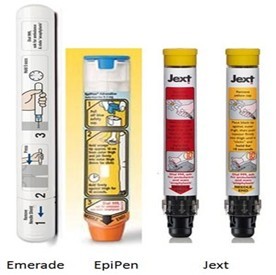
Treat early, if in doubt use the adrenaline autoinjector
Treatment plan:

Immediately call an ambulance (dial 999) Tell the operator this is an emergency case of anaphylaxis (anna-fill-axis).
If wheezy and you have a blue salbutamol inhaler, give 10 puffs via a spacer. Take 1 antihistamine tablet e.g., cetirizine immediately.
A second adrenaline autoinjector may be given after 10 minutes if symptoms return or are no better.
Points to remember
- Make sure both your adrenaline autoinjectors and antihistamines are in date.
- Make sure you know how to use your adrenaline autoinjectors see ‘Further information’ for trainer pens and online videos).
- Always carry your adrenaline autoinjectors and antihistamines with you.
- Consider carrying a medical ID alert with information about your risk of anaphylaxis.
- If you have asthma, make sure it is well controlled.
When discharged from the Emergency Department a referral to immunology services
for allergy testing will be sent.
Further information
Using the following link: www.
The Anaphylaxis Campaign www.
AllergyUK www.
The MedicAlert Foundation www.
Email: info@medicalert.org.uk
Contact us
If you have any queries relating to this information, please contact the Emergency department (ED) service.
About this information
Service:
Emergency department (ED)
Reference:
A/012
Approval date:
1 November 2024
Review date:
1 November 2027
Click ‘show accessibility tools’ at the bottom of the page

Then click ‘select language’

Alternative formats
You can use the accessibility toolbar at the bottom of your screen to:
-
Change the text size
-
Adjust the font
-
Modify the colour contrast
-
Use the translate function
If you would like this information in another format, such as Braille, audio, or easy read, please speak to a member of staff.
You can also print as well as download as PDF using the “Print this page” button at the end of the page.
Staff will print a copy for you on request
Important note
This page provides general information only. It is developed by clinical staff and is reviewed regularly every 3 years for accuracy. For personal advice about your health, or if you have any concerns, please speak to your doctor.