

Advice after your nerve block for surgery
On this page…
About your fracture
Your clavicle, or collarbone, is a long bone that makes up part of the shoulder complex.
Most clavicle fractures occur following a fall or a direct blow to the clavicle. Fractures usually occur in the middle of the bone, although they can occur anywhere along the length of the bone.
Non-surgical management
Most clavicle fractures are treated conservatively in a sling for between 4-6 weeks. As long as you do not lift your arm above shoulder height or put weight through your arm, the bone will heal itself during this time.
Surgical management
Some clavicle fractures may need surgical management. This may be due to the location of the fracture, if there are multiple fractures or fracture fragments or if there is overlapping of the fracture ends. The standard method of fixation of this fracture is with a plate and screws.
The operation is done by “open surgery” under general anaesthetic; an incision around 5cm long is made (dependent on the length of the plate). The bone fragments are realigned into their normal position and held in place with a plate and screws. The wound is then closed with dissolvable stitches. As the wound heals there will be a visible scar over the incision site.
It is important to note that it can take up to 12 weeks for full range of movement and strength to be obtained
Do I need to wear a sling?
If you are being managed non-surgically then you are likely to need a sling for up to 6 weeks. If you have surgery then a sling should be worn for between 2 - 6 weeks, as directed by your consultant. The sling should be worn at all times but can be removed to complete your exercises.
Will it be painful?
It is normal to feel pain after a fracture or operation. You will be given pain relief medication to help reduce this discomfort while you are in hospital and a prescription will be given to you for your discharge home.
Ice
Ice can be applied to the area to reduce the swelling and help control the pain. If you have a surgical wound that is not healed then a plastic bag can be applied over the wound to stop it getting wet. DO NOT apply ice directly to the skin.
1. Make an ice pack using crushed ice in a plastic bag or a pack of frozen peas.
2. Wrap the pack in a damp tea towel.
3. Place on affected area for 10-15 mins.
Apply 3-4 times a day and continue if the shoulder remains swollen.
NB: Remove the ice pack immediately if a burning feeling arises.
When can I drive?
For your safety and for others you will be unable to drive until your arm is out of a sling and you are able to move your arm sufficiently (usually between 6-8 weeks following your fracture/operation). Check you can manage the controls and can drive short distances with a passenger in the car for added safety.
It is advisable to check with your insurance company when you are covered to return to driving.
When can I return to work?
This will depend on your occupation. If you are in a sedentary job you may return as soon as you feel able, usually after one week. However, if your job involves heavy lifting or prolonged use of your arm above shoulder height you may require a longer period of absence. This should be discussed with your consultant.
Are there things I should avoid doing?
You should avoid lifting your arm above shoulder height or putting any weight through it.
Do I need to see a physiotherapist?
If required, you will be referred to outpatient physiotherapy to gain further advice and progress your exercises.
Leisure activities
Activities that require a high level of shoulder movement and muscle power should be avoided for 12 weeks+, ie. swimming, golf, tennis, squash, badminton etc unless advised by your physiotherapist.
Immediate Exercises
Each exercise to be done 3 times a day:
|
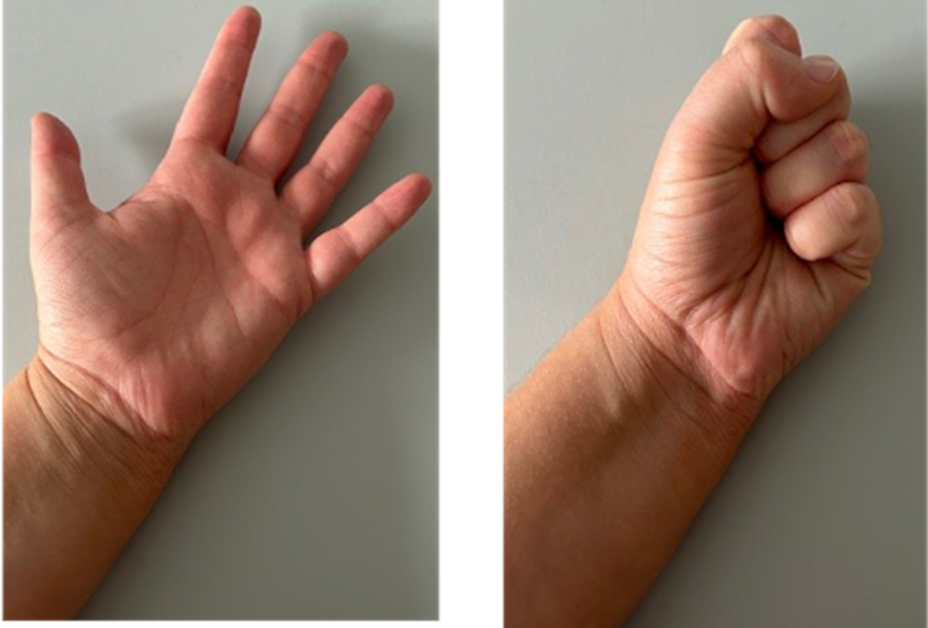
Full Fist Start with the fingers straight, bend the fingers to make a full fist. Repeat 10 times |
 |
|
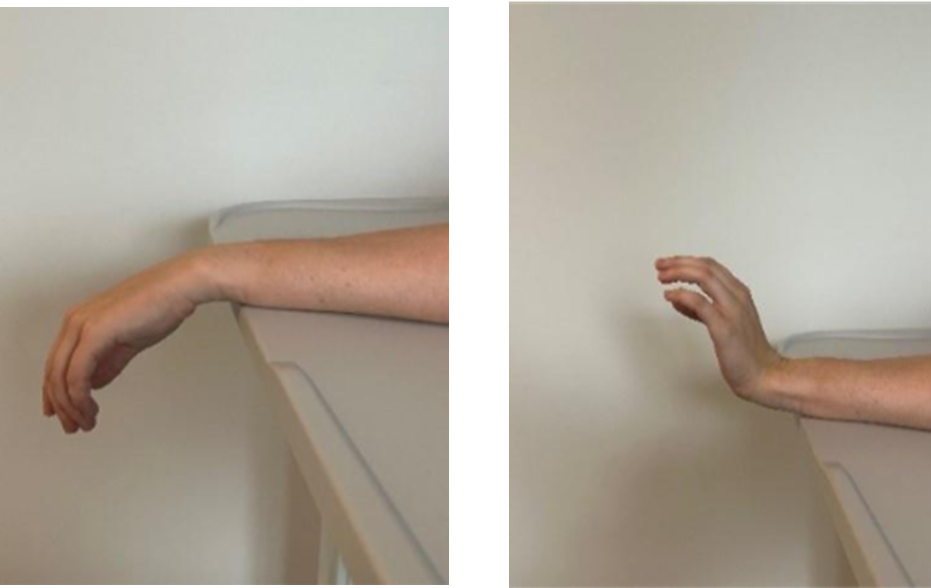
Wrist flexion and extension Elbow supported on table Repeat 10 times |
 |
|
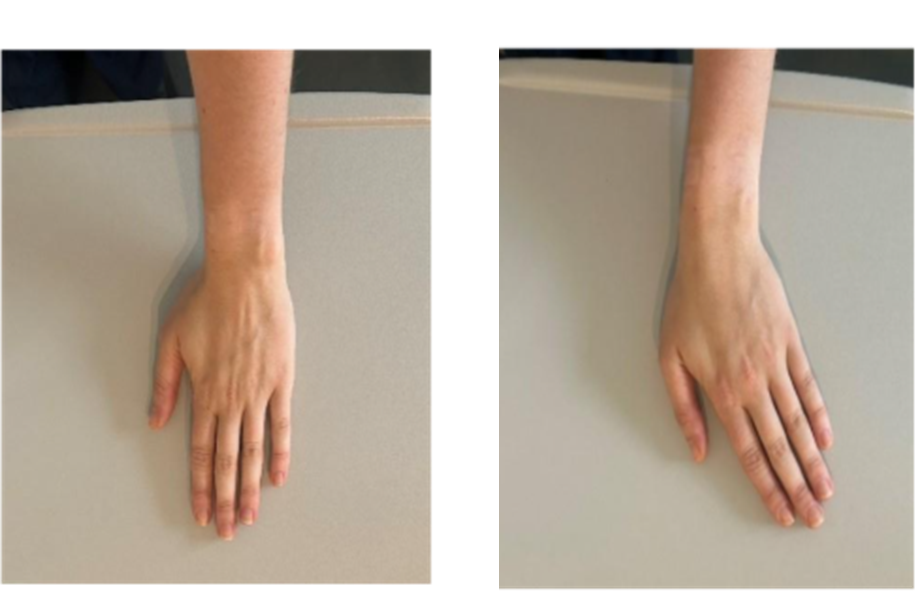
Elbow supported on the table Hold fingers and wrist straight. Repeat 10 times |
 |
|
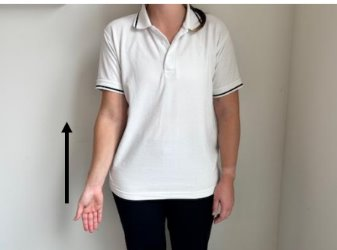
Elbow Straightening Exercises: Make sure that the weight of the shoulder is always supported under the elbow. |
 |
|
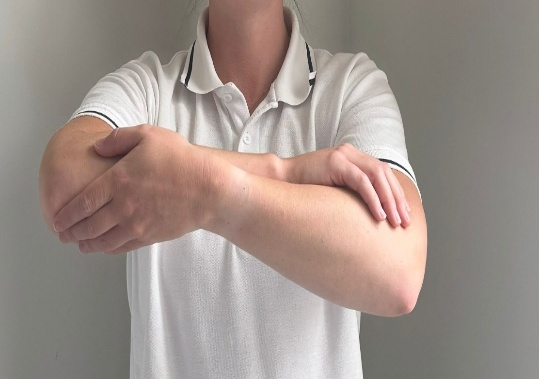
Short Lever Pendular - Flexion Repeat 10 times |
 |
|
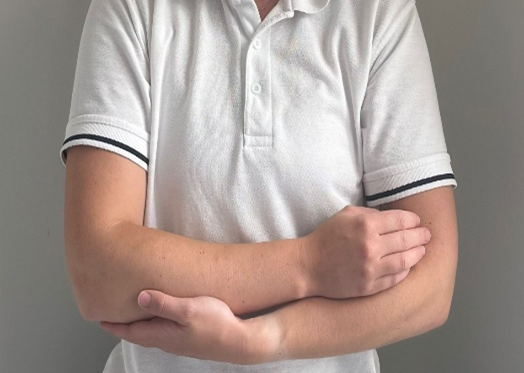
Short lever Pendular - Abduction Start with the injured/operated arm cradled by the good arm, holding under the elbow. |
 |
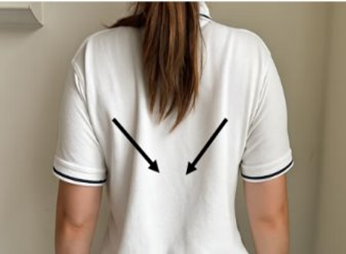
| Scapular Setting Start with your shoulder relaxed and arm down by your side. Bring the shoulder up towards your ear and take the shoulder slightly back so that your shoulder blade sits in a good position. This is a very gentle exercise, and movements should only be very small. Hold for 5 seconds and relax. Repeat 10 times |
 |
Contact us
If you have any queries relating to this information, please contact the Orthopaedics service.
About this information
Service:
Orthopaedics
Reference:
BB/113
Approval date:
1 December 2025
Review date:
1 December 2028
Click ‘show accessibility tools’ at the bottom of the page

Then click ‘select language’

Alternative formats
You can use the accessibility toolbar at the bottom of your screen to:
-
Change the text size
-
Adjust the font
-
Modify the colour contrast
-
Use the translate function
If you would like this information in another format, such as Braille, audio, or easy read, please speak to a member of staff.
You can also print as well as download as PDF using the “Print this page” button at the end of the page.
Staff will print a copy for you on request
Important note
This page provides general information only. It is developed by clinical staff and is reviewed regularly every 3 years for accuracy. For personal advice about your health, or if you have any concerns, please speak to your doctor.