

Advice after your nerve block for surgery
On this page…
The scaphoid is one of the small bones located in your wrist (carpal bones), which is located near your thumb. A scaphoid fracture happens when this bone breaks and it’s usually caused by falling on your outstretched hand. Scaphoid fracture is the most common carpal bone which breaks or injures. (Please see image below to see where your scaphoid is located)
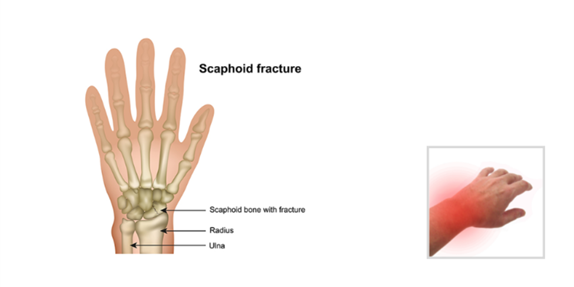
Anatomy of Scaphoid fracture. This file is taken from wikimedia commons and is licensed under the Creative Commons Attribution-Share Alike 3.0 Unported license.
Signs and Symptoms
- Pain in your wrist or thumb, especially when you move it.
- Swelling around the thumb side of your wrist.
- Difficulty gripping or pinching things.
- Tenderness when you touch the area below your thumb.
The scaphoid bone has a limited blood supply, which can make healing slow. If untreated, the bone may not heal properly, leading to long-term pain or stiffness.
How is it treated?
Immobilization: Usually, patients are put in a cast for 5-6 weeks or splint to keep your wrist still and allow the bone to heal. Patients will have a follow up appointment to check if your scaphoid is healed. If doctors are concerned with healing, they might re-cast patient or send patient to hand therapy for a splint for up to 8 weeks depending on recovery.
Surgery: In some cases, screws or pins are used to fix the bone.
Therapy: For splinting or mobilization once your bone starts to heal, therapy will help restore strength and movement.
Advice for scaphoid injuries
No heavy lifting, contact sports or weight bearing of hand and wrist for a minimum of 8 weeks.
Some patients may be referred whilst the cast is still in situ, in this instance please ensure you keep fingers and unaffected joints moving within the cast to avoid stiffness.
Therapy Post Scaphoid Fracture
Rest
It is important to rest to allow time for the symptoms to settle and to start the healing process. Try to be aware of which movements and activities cause your pain, so you know what to avoid. If they cannot be avoided completely, try to change how you do tasks and give yourself regular breaks to allow your wrist and thumb to rest.
Splint
There are different types of splints that may help this is usually provided after being in a cast for 5weeks. Your therapist may provide you with one of these types of splints, depending on your needs.
1. Soft splints can help to remind you to rest, support your wrist and thumb during activities and provide support to rest after tasks.
2. Hard plastic splints stop all the movements that would normally make your symptoms worse and can help in cases with a lot of swelling and pain.
There are types of tape that can also help to rest the thumb and allow you to use the hand while giving it rest. These include: Kinesio tape, mechanical tape and coban tape. Your therapist will give you an additional information sheet and teach you how to use the tape and tell you where to purchase it if required.
Management of Swelling
It is important to get the swelling down; your therapist will give you more information about which may help most in your case:
- Elevation
- Heat/warm water
- Contrast bathing
- Gentle soft tissue massage over the swollen and painful area
- Anti-inflammatory gels/topical gels over the swollen and painful area
Exercises
In the beginning you should keep your fingers moving by doing the following exercises. This will be guided by your hand therapist.
Repeat all your exercises 4 x per day, doing each exercise 10 x.
Wrist flexion and wrist extension
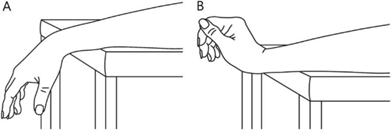
Try to bend your knuckles as you lift your wrist and relax your fingers straight as you bend your wrist.
Thumb opposition
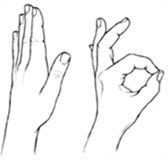
Touch your thumb to each finger in turn, and then the base of the little finger.
If your hand aches for more than 30 minutes after your exercises you should try to do less next time.
Further options for management of scaphoid fractures
If the above management is not successful, your therapist may refer you back to your doctor for further investigations or treatment.
You may be referred to an Orthopaedic surgeon if your symptoms do not improve to discuss further options.
Contact Details
If you have any concerns, or need to change your Hand Therapy appointment, please contact the Therapy Department on:
Frimley Park Hospital: 0300 613 3396
Heatherwood Hospital: 0300 614 0540 Option 3
Wexham Park Hospital: 0300 614 0540 Option 2
Contact us
If you have any queries relating to this information, please contact the Hand therapy service.
About this information
Service:
Hand therapy
Reference:
UU/096
Approval date:
23 February 2026
Review date:
1 February 2029
Click ‘show accessibility tools’ at the bottom of the page

Then click ‘select language’

Alternative formats
You can use the accessibility toolbar at the bottom of your screen to:
-
Change the text size
-
Adjust the font
-
Modify the colour contrast
-
Use the translate function
If you would like this information in another format, such as Braille, audio, or easy read, please speak to a member of staff.
You can also print as well as download as PDF using the “Print this page” button at the end of the page.
Staff will print a copy for you on request
Important note
This page provides general information only. It is developed by clinical staff and is reviewed regularly every 3 years for accuracy. For personal advice about your health, or if you have any concerns, please speak to your doctor.