

Advice after your nerve block for surgery
On this page…
Back pain is common in teenagers and can be caused by rapid growth, prolonged poor posture, reduced activity levels, or carrying heavy school bags.
The most common symptoms are:
- Pain in your upper or lower back
- Reduced back range of movement
- Reduced muscle strength and muscle flexibility
- Altered posture
Posture Advice
Make sure you do not stay in one position for too long as this can make your back pain worse. Take regular movement breaks if sitting on a computer or another electronic device– move around every 20 minutes
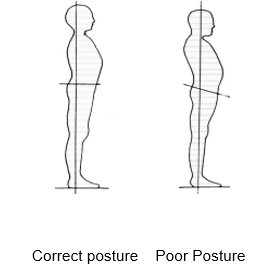
Standing Posture
- Stand tall at all times and avoid slouching.
- Think tall.
- Pull in your stomach muscles.
- Tuck in your bottom.
- Maintain the curve in your lower back
Sitting Posture
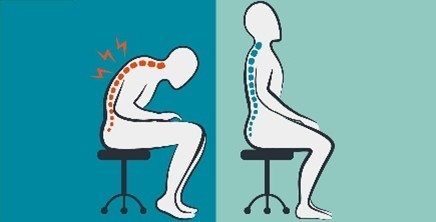
- Try and maintain the curve in your lower back.
- Try and sit close to your desk at school / home.
- Avoid slouching over your work.
- Keep your back straight.
Carrying School Bags
- Try to carry your school bag equally on both shoulders, or put the strap across your body.
- Rucksacks worn correctly are very good as the weight is kept close to your back.
- If you can, try to leave your books in a locker and only carry those you need.
General Activity Levels
- It is important that you keep moving.
- In most cases movement and activity will not damage your back.
- Try reducing high impact activities or positions that make your pain worse until it settles
- Once your back pain is reducing and the flexibility of your back is improving try to start gradually building up your activity levels to what you would normally do.
- Try starting with lower impact activities (such as swimming or cycling) then gradually return to your usual activities ensuring you warm up and cool down properly.
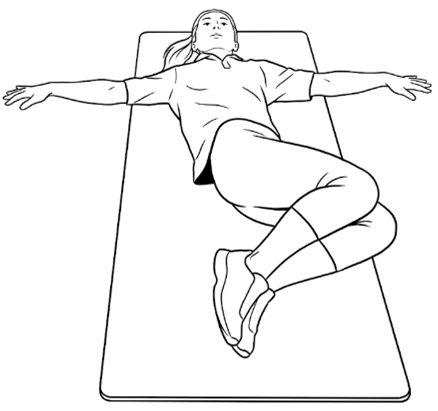
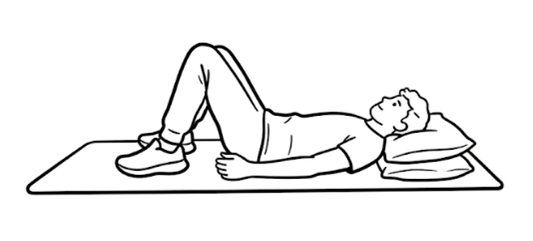
Knee Rolls
|
Lying on your back with knees together and bent. Slowly roll your knees to one side. Hold for 10-15 seconds. Return to a neutral position. Repeat 5 times each way. |
|
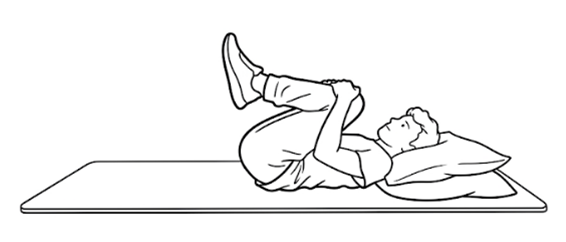
Knee Hugs
|
Lying on your back with knees together and bent. Hug your knees towards your chest. Hold for 10-15 seconds. Return to a neutral position. Repeat 5 times. |
 |
 |
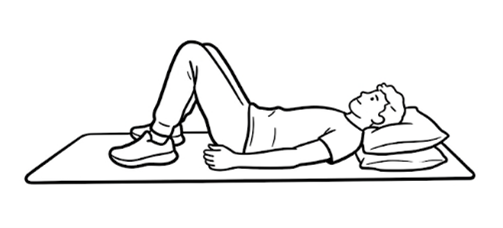
Pelvic Tilts
|
Lying on your back with knees together and bent. Flatten your back into the bed / floor Hold for 5 seconds. Return to a neutral position. Repeat 10 times. |
 |
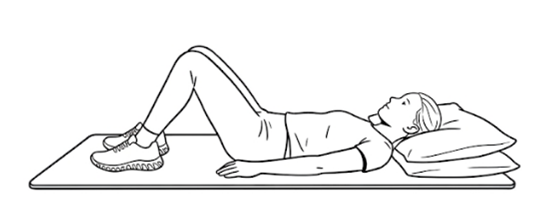
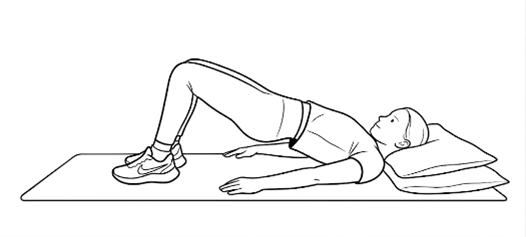
Bridging
|
Lying on your back with knees together and bent. Lift your bottom slowly off the bed / floor. Hold for 5 seconds. Return to a neutral position. Repeat 10 times. |
 |
 |
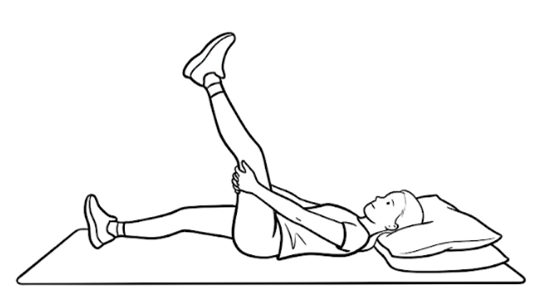
Hamstring Stretch
|
Lying on your back, Hug one of your knees towards your chest. Straighten your leg until you feel a stretch in the back of your leg. Hold for 30 seconds. Repeat 3 times each leg. |
 |
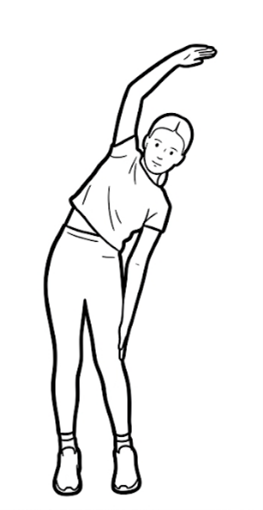
Spinal Side Stretch
|
Standing straight with your back against a wall. Raise one arm above your head and stretch to the side. Hold for 10 seconds. Repeat 10 times each way. |
 |
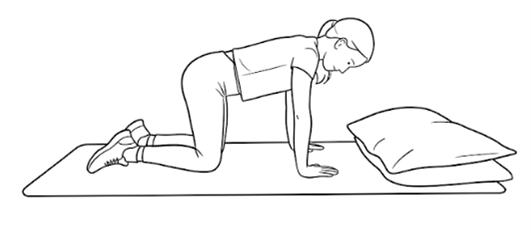
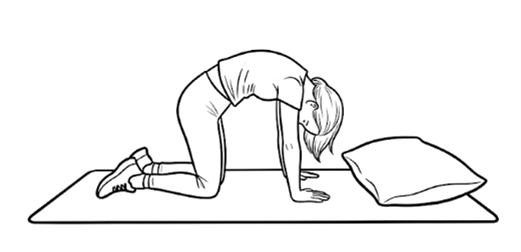
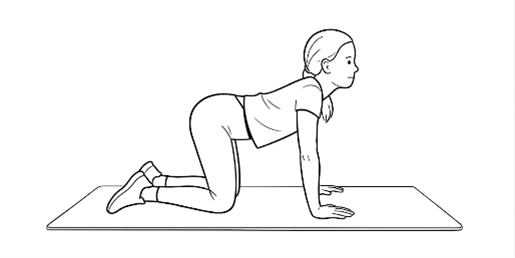
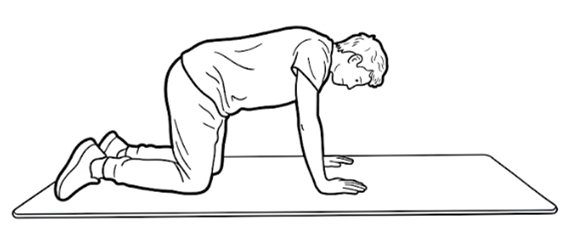
Cat / Cow Stretch
|
Get onto your hands and knees Arch your back upwards. Hold for 10-15 seconds. Return to a flat back. Hollow your back and lift your chest. Hold for 10-15 seconds. Return to a flat back. Repeat 10 times. |
|
|
|
|
|
|
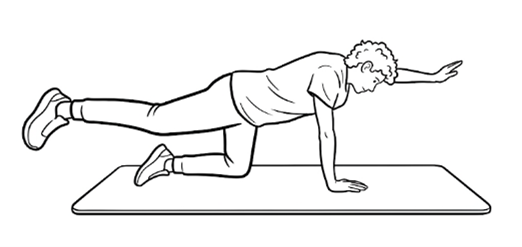
Superman
|
Kneel on your hands and knees with your back straight. Raise one arm forward in line with your ear. Straighten the opposite leg behind you. Keep your hips still Hold for 5 seconds. Repeat 10 times each way. |
|
|
|
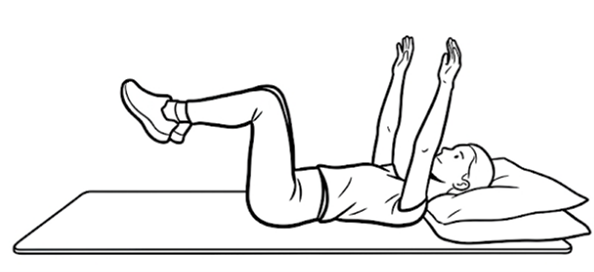
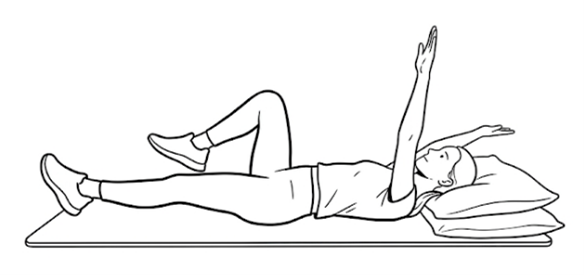
Dead Bugs
|
Lie on your back with your arms in the air and legs lifted. Lower one arm backwards in line with your ear. Straighten the opposite leg in front you, keep your back flat on the bed Hold for 5 seconds. Repeat 10 times each way. |
|
|
|
Further Information
Safety Netting
Please see your GP if you have any of the following:
- Pain that wakes you up at night.
- Numbness or "pins and needles" in your legs.
- Pain that started after a big fall or injury.
Contact us
If you have any queries relating to this information, please contact the Physiotherapy service.
About this information
Service:
Physiotherapy
Reference:
PT/001
Approval date:
1 April 2026
Review date:
1 April 2029
Click ‘show accessibility tools’ at the bottom of the page

Then click ‘select language’

Alternative formats
You can use the accessibility toolbar at the bottom of your screen to:
-
Change the text size
-
Adjust the font
-
Modify the colour contrast
-
Use the translate function
If you would like this information in another format, such as Braille, audio, or easy read, please speak to a member of staff.
You can also print as well as download as PDF using the “Print this page” button at the end of the page.
Staff will print a copy for you on request
Important note
This page provides general information only. It is developed by clinical staff and is reviewed regularly every 3 years for accuracy. For personal advice about your health, or if you have any concerns, please speak to your doctor.