

Advice after your nerve block for surgery
On this page…
Introduction
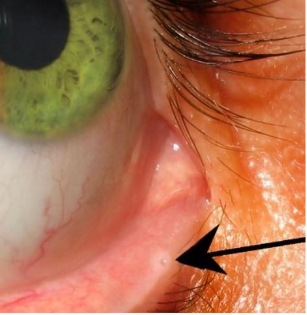
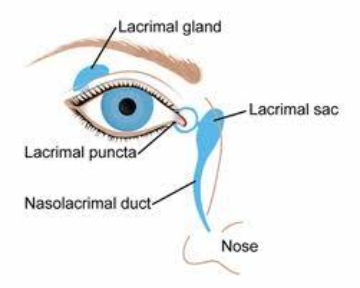
The punctum is the tiny entrance to the tear ducts which sits near the inner corner of the eye. There is normally one punctum present on each upper and lower eyelid. The tear ducts are responsible for draining away your tears.
Treatment and operation
- Punctal stenosis refers to narrowing of the punctum. This prevents normal drainage into the tear ducts and can lead to watery eyes. Dilatation with a fine instrument stretches open the punctum. This may produce an improvement of the watering this of the eyes, but any beneficial effect is usually temporary, as the punctal stenosis tends to recur after stretching alone. It may be useful to perform this in the clinic, along with a procedure to flush salt water through your tear ducts to rule out a blockage elsewhere.
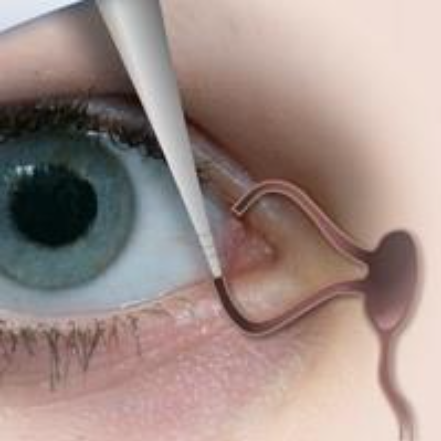
- A small operation, known as a puncto-canaliculoplasty to open up the punctum can be performed, which should help the tears to drain into the tear ducts more easily. This involves making some small cuts to the punctum to keep it open and has a more lasting effect than dilatation alone.
On the day of your operation
- You cannot drive on the day of your operation.
- The procedure is usually undertaken under local anaesthetic. Anaesthetic drops will be used to numb the surface of the eye. The area is cleaned and then a local anaesthetic is injected into the skin around the punctum.
- Antibiotic ointment is applied to the eye at the end of the procedure.
After the surgery
- It is best not to drive for a few days after surgery as your vision is likely to be blurred. Your eyes may be watery and you may experience a foreign body sensation in the corner of the eye. If there is any pain, you may take paracetamol.
- Your eyelids will be slightly bruised and swollen for about a week. Eye drops are prescribed for 4 weeks after the procedure which will help to settle things down without too much inflammation and to prevent infection.
- You will have a follow-up appointment approximately 12 weeks later. This is to allow time for the operation to settle and for you to monitor the response to the operation.
- A small proportion of patients develop more inflammation during the healing period which can cause the punctum to re-stenose in which case a further modified procedure may be recommended.
If you have any concerns after your operation, please contact the staff in the eye treatment centre on the following numbers
|
From 9am to 5pm Monday to Friday: |
0300 373 5884 |
| From 5pm to 9am and at weekends: | 0300 614 5000 and ask for the eye doctor on call |
Contact us
If you have any queries relating to this information, please contact the Ophthalmology service.
About this information
Service:
Ophthalmology
Reference:
QQ/043
Approval date:
5 August 2024
Review date:
1 July 2027
Click ‘show accessibility tools’ at the bottom of the page

Then click ‘select language’

Alternative formats
You can use the accessibility toolbar at the bottom of your screen to:
-
Change the text size
-
Adjust the font
-
Modify the colour contrast
-
Use the translate function
If you would like this information in another format, such as Braille, audio, or easy read, please speak to a member of staff.
You can also print as well as download as PDF using the “Print this page” button at the end of the page.
Staff will print a copy for you on request
Important note
This page provides general information only. It is developed by clinical staff and is reviewed regularly every 3 years for accuracy. For personal advice about your health, or if you have any concerns, please speak to your doctor.