

Advice after your nerve block for surgery
On this page…
Introduction
Living with a lung disease, like any long-term condition, can be stressful. Stress is very common, with an estimated one in four people consulting their doctor with stress related problems at some stage in their life. These problems can include fatigue, pain, and digestive problems as well as emotional and psychological difficulties.
Research has shown that 30-50% of people with a long-term lung disease experience anxiety, so it’s important to recognise the impact of anxiety as it can affect both physical and mental health. If we don’t address the impact of anxiety, it can make managing our lung condition more difficult.
The impact of long-term stress may lead us to avoid situations and thus reducing our activity levels which, in turn affects our quality of life, general health and wellbeing. Fortunately, we know that reducing anxiety improves people’s health in general as well as their respiratory conditions.
What is Stress and Anxiety?
Anxiety is a normal response to situations we feel are threatening, and can affect anyone at any point in their lives.
Stress can affect the way we feel, the way we think, the way we behave and the way our bodies work. Stress can be helpful, enabling us to cope with demanding situations, such as sitting an exam, it can also provide us with motivation to grow and develop.
However, stress becomes a problem when a person feels they cannot cope with their current demands and pressures. Stress can come both from inside ourselves (e.g., wanting to succeed) and from external events (e.g., work pressures, financial problems). Sometimes it can be a relatively insignificant event that leads to an outburst of stress or anxiety, because on top of the other stresses it can all get too much. This situation can lead to physical symptoms, but often leads to emotional responses and behaviours such as becoming tearful, irritable, or wanting to be alone.
Symptoms of Stress and Anxiety
Physical Symptoms - The Fight or Flight Response
Physical symptoms are what we feel physically, due to physiological changes in our body as a response to stress or anxiety – these may include feeling dizzy, nausea, heart pounding, sweaty, poor sleep, more breathless or restlessness. When stress builds up it can lead to feelings of anxiety, and sometimes panic attacks.
At these times we experience the same physical response as if we were in a life-threatening situation and we release a hormone called adrenaline, which prepares our body to fight or flight. If we do not ‘fight’ or ‘flight’ we can be left with adrenaline circulating around the body and feel physical discomfort. The physical sensations we experience are not harmful, but they can be unpleasant and frightening, particularly if we don’t know what’s causing them.
Adrenaline
Adrenaline prepares the body to fight or flight; the heart pumps faster so that it can quickly get blood to the muscles, but the blood needs to be oxygenated, so the lungs also begin to work faster – breathing becomes faster and shallower. Other physical symptoms which may be triggered are listed below. You may experience any one or more of these symptoms whilst anxious.
- Palpitations
- Muscle Tension
- Sharpened or blurred vision
- Pins & needles
- Chest pain
- Blushing
- Diarrhoea/Constipation
- Increased sweating
- Nausea
- Headaches
- Dizziness
- Frequent urination
- Dry mouth
Behavioural Symptoms
Behavioural symptoms are what we do or don’t do because of the stress or anxiety we feel – these might include changes in eating and sleeping habits (more or less), use of alcohol, cigarettes/ vapes or recreational drugs to cope. Typically, the main behavioural symptom is avoidance of situations that seems to trigger anxiety. In the short term this seems to help but, long term, it can fuel our fears and exacerbate the problem. The more we avoid, the stronger our belief about a situation being dangerous becomes, making it harder to face the next time. It is important to gradually face up to the fear and give yourself the chance to learn that the situation is not dangerous.
Thinking and Feeling Patterns:
Thinking patterns i.e. what we think in relation to stress, are often distracted so don’t pay attention to what is being said, we may feel muddled or experience racing thoughts. Thoughts such as “I can’t cope…”, “I need to get away….” “I’m not going to be able to breathe”, “I’m going to have a heart attack”, “Something terrible is going to happen to me…” are common.
Emotional Symptoms and feeling patterns - i.e., what we feel in relation to stress - typically include feeling anxious or nervous, worried, scared, fearful, lonely, agitated and having lower self-esteem than usual. The impact of stress affects the way we think and how we feel. Thoughts can get out of proportion and negative thinking can begin to make us feel low and depressed. It is often negative and worrying thoughts that trigger anxiety and the fight/flight response.
Remember that patterns of negative thinking become a habit, which takes time to change. It is possible to gradually work on controlling this problem so that you begin to break the unhelpful thinking habits.
Vicious Cycles
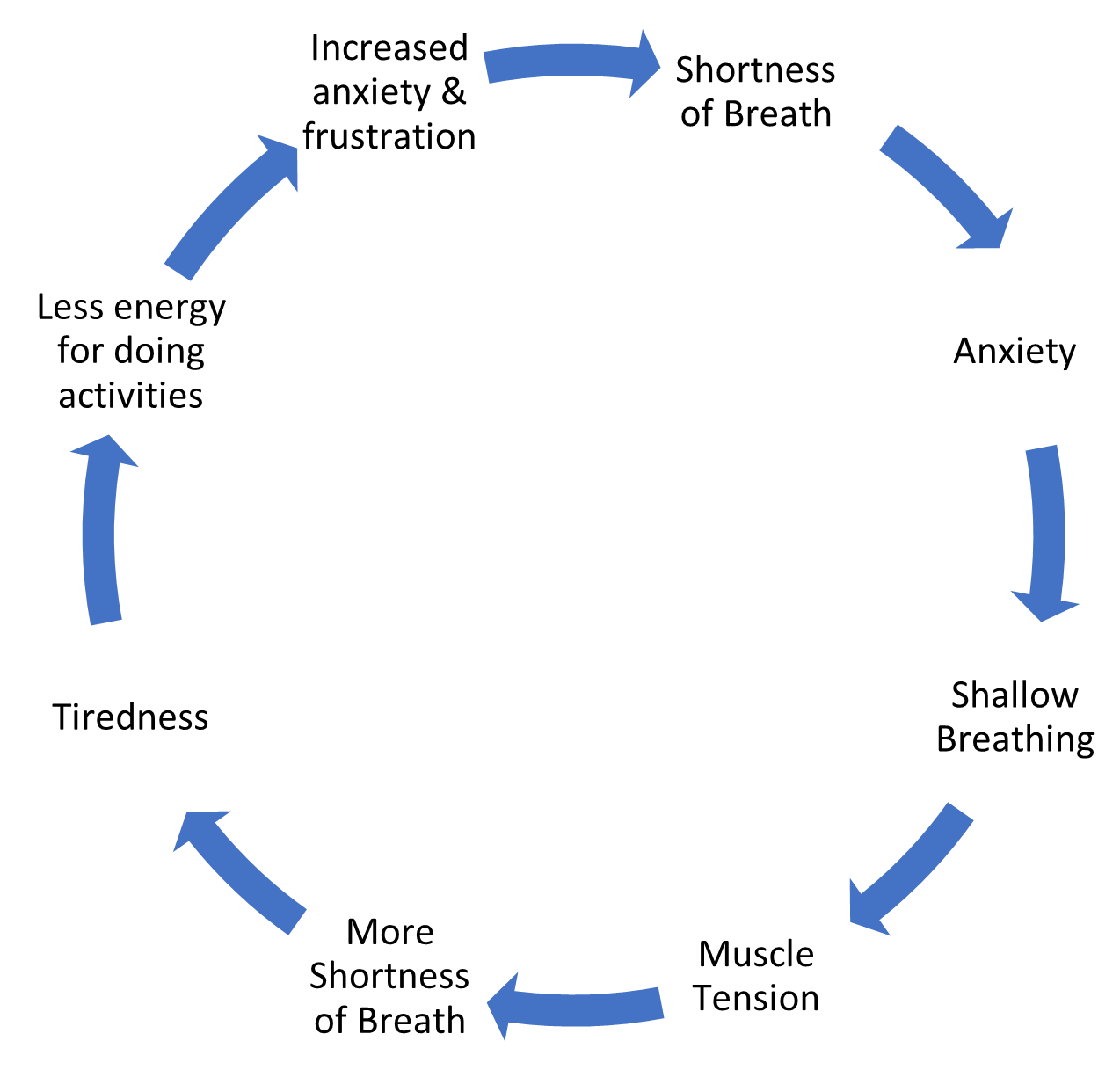
People with breathing problems often find themselves caught in a negative “vicious cycle”. This can often be set off by symptoms such as breathlessness. When we feel breathless, it is common to feel worried or anxious. A natural reaction is not to do anything that makes us breathless.
Example trigger: Going to the shops in the rain
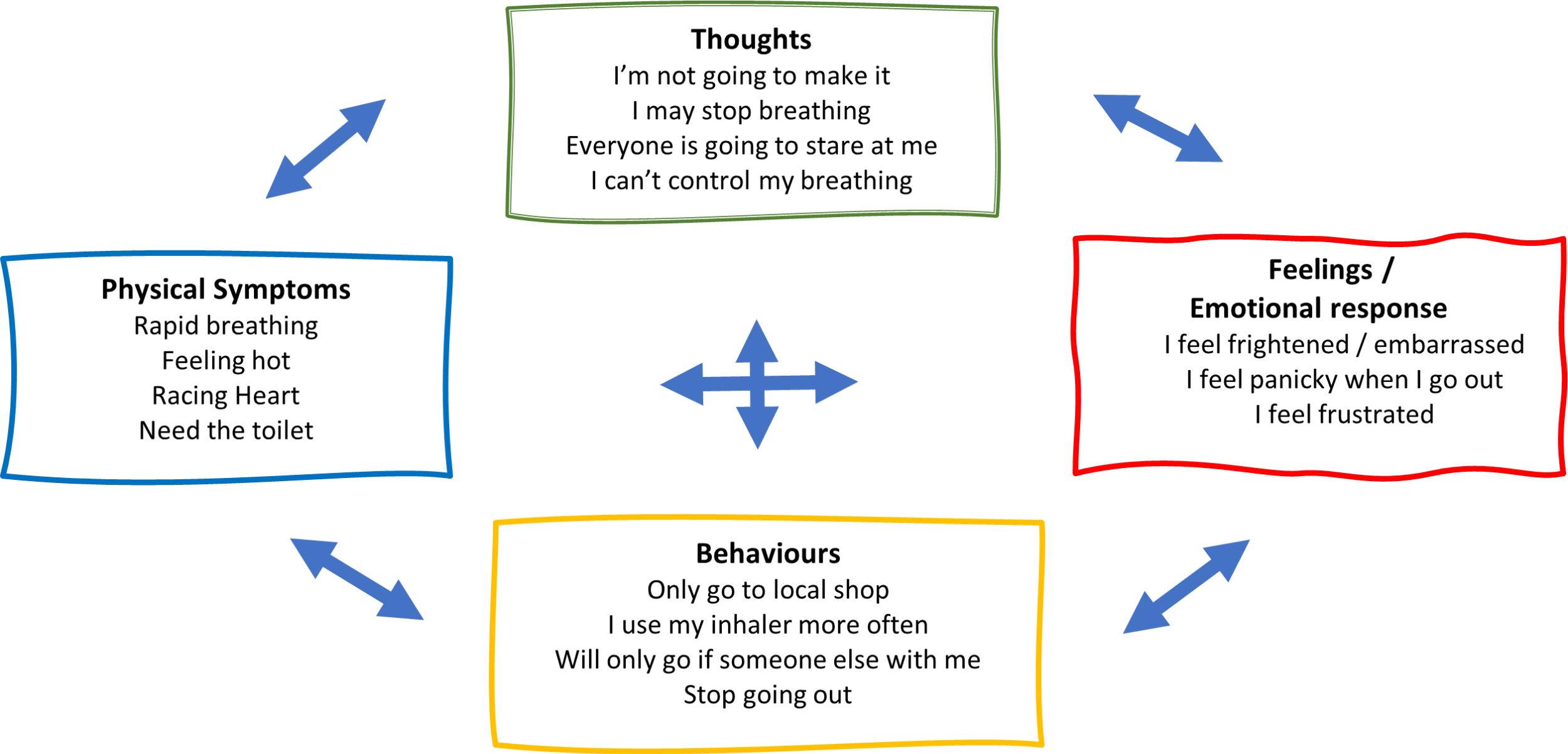
Breathlessness, fatigue and anxiety
People who have breathing problems often find themselves in this negative cycle:
This demonstrates that the symptoms of lung disease and the symptoms of anxiety can be similar, and often interact with one another. Breathlessness can increase your anxiety and anxiety can increase your breathlessness. This cycle leads to inactivity and thereby to poorer health.
Recognising where you fit in with the cycle is the first step………
Managing Anxiety
Everyone deals with stress differently and sometimes we have more capacity to manage stress than others. The amount of stress we feel is often due to the importance we place on the event or situation, our beliefs about ourselves and our thoughts about the situation. Although we often cannot control stressful events, we can learn strategies to help control our reactions to it.
As humans, we only have a certain capacity for managing stress and being aware of how “full” we are at any one time can be helpful.
Coping Strategies
Coping strategies work to reduce the general worry/stress or can be used in a crisis (e.g., panic attack) situation. Some coping strategies are positive, like going for a walk or reading; and some are negative, like smoking or drinking alcohol to excess.
The Stress Jug
Imagine that all your stress was in a jug. The fuller your jug is, the greater the symptoms of your stress will be. Once the jug is full, your ability to manage any situation that arises is greatly compromised, resulting in feeling unable to manage something that would not normally affect you.
Some of your jug is already filled with the anxieties of life that we cannot avoid (money, illness or family problems). If you partially empty your jug on a daily basis, you can avoid it over-flowing, which will help you reduce your symptoms and to feel more in control. It can be helpful to identify stressors we are living with and consider how full our stress jug is.
Anxiety can be managed by:
• Understanding what anxiety is and its causes
• Reducing physical symptoms and maintaining a healthy lifestyle
• Use short term strategies to help “in the moment”
• Use long term strategies to keep overall stress levels down and improve wellbeing.
Short Term Strategies
Distraction techniques can be used in situations when you feel particularly panicked; these work by encouraging the brain to move focus away from uncomfortable feelings.
The effectiveness of distraction tasks varies depending on the level of our anxiety and we can use different types of distraction tasks at different levels. If we feel mildly anxious then reading a book, playing cards, watching TV or having a chat with friend may be enough.
With increased anxiety, it is necessary to use distraction tasks requiring more mental effort to keep the brain focused on the task, such as word and number games – e.g., counting down from 300 in 3’s or 7’s, times tables. The Calming Hand is another useful strategy.
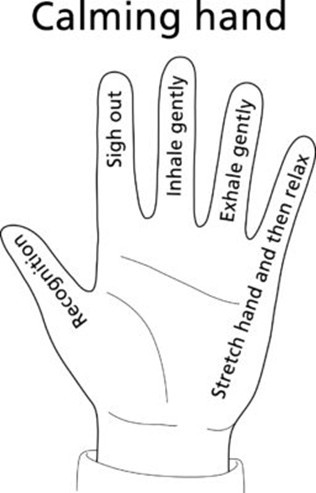 |
The Calming Hand helps us to learn to manage panic attacks and episodes of breathlessness. The key points are: Step 1: Thumb - Acceptance: Recognise the signs of panic EARLY and that they are not sinister. – this helps to regain control. Hold your thumb firmly whilst reminding yourself what to do next. This helps to calm your breathing. Step 2: Index Finger - Sigh Out: This enables you to relax your shoulders & upper chest. If possible, try to breathe out for longer than you breathe in. Step 3: Middle Finger – Inhale gently: take a slow & gentle relaxed in-breath, followed by Step 4: 4th Finger – Exhale slowly: A gentle breath out; relaxed breathing helps to relieve the sensation of breathlessness Step 5: Little Finger - Stretch and relax your hands and stop; Hand stretching is helpful when having and acute episode of panic, it also less obvious when in public. Sometimes hand stretching is enough to help when you are starting to panic. You may need to repeat a few times for the feelings to subside |
Distraction suggestions include:
• Recalling happy memories or imagining yourself in a peaceful, beautiful place.
• Alphabet games – recalling football teams, capital cities, girls/boys names, etc
• Language/Memory - reciting poems or nursery rhymes, family birthdays
• Focussing - on an object, its shape, size, texture, and colour
• Reading
• Listening to the radio or music
• Exercising – this uses up excess adrenaline that can cause some of the physical symptoms
• Getting out of the house
• Talking to a friend or family member
Any of these techniques can be used to reduce the initial acute anxiety which can create the physical symptoms. Think about what techniques you might use for different situations.
Long Term Strategies
Long term strategies involve aiming for a balanced lifestyle. An important skill is time management (see pacing/energy conservation information), especially being able to build in ‘me’ time, time to relax and time to be able to do activities that you enjoy. It is helpful to be aware of diet, exercise, and sleep, as components of life that can significantly affect one’s ability to cope.
- Hobbies or Interests: Doing anything you enjoy, that you find absorbing
- Journaling / Writing a Diary: Diaries are useful to help you reflect on how your anxiety levels have changed and promote further positive feedback. Diaries can also be used to express emotions, increase self-awareness (note down triggers of increased stress or panic attacks and coping strategies that have worked) and tackle negative thinking
Challenging and changing our thoughts can be difficult but it really important for those managing lung conditions; if we think “I can‘t cope with getting breathless”, we might not do any activity which makes us short of breath. This would leave us less fit and less confident. It is more helpful to think “It’s not nice to be breathless but, if I keep active, I will get more confident I can manage the breathlessness. I’ll also get fitter, so I don’t get breathless so easily”. If you can successfully challenge worrying or upsetting thoughts, then the anxiety response begins to slow down.
Recognising and tackling anxious behaviours
We use safety behaviours in an attempt to prevent fears from coming true and to make ourselves feel safe when we are in an anxiety provoking situation. It’s not so much WHAT we do, but WHY we do it. When we feel anxious it is natural to want to remove ourselves from the situation, as this reduces our feeling of threat or worry, and makes us feel less anxious.
However, if we never learn to cope with these situations, we become more anxious and less able to manage situations. Examples of safety behaviours include avoiding certain places, always sitting in a seat near a door for a quick getaway, never going out unaccompanied in case something terrible happens. Safety behaviours may seem helpful because they reduce anxiety in the short term, but in the long term they make matters worse as we never learn to cope with the anxiety and lead “a smaller life”.
Changing your outlook – positive thinking
If you tend to see the negative in situations then you can train yourself to seek out the positive by using a diary – for example, set yourself the task of picking out two positive aspects of each day – however small they are.
Reassuring Self-Talk
Saying reassuring and comforting statements to yourself. Our anxious thoughts can become very intense and we may have feelings that something awful is going to happen (“I will collapse”). Although very frightening and at the time feels very real, it is important to recognize that anxiety itself is not dangerous and these are just thoughts. For example, it may help to say something to yourself like “it’s okay, I’ve been through this before, I can do it again, I can cope with this”
Calming Words
Try saying specific words to yourself, out loud, or silently; words such as “calm”, “peace”, “relax”. Some people find it helpful to say these words in time with their breathing.
Yoga, pilates, tai chi
Look for classes in the local area, online or at the local leisure centre may be able to help.
Emotional Support
Talking to friends or family can help reduce the emotional burden. There is professional help available if you feel that would be easier.
Relaxation Exercises
When we are stressed the muscles in our body tense up – this can lead to physical symptoms such as headaches, backache, tight chest. These aches and pains, and the tension itself, cause the brain to pick up that our bodies are stressed, which in turn exacerbates the worrying or stressful thinking and emotions.
Relaxation slows down the systems in the body that speed up when we get anxious or stressed and, if we can learn to turn on the bodily symptoms of relaxation, then we can turn off the symptoms of tension.
Relaxation is a skill that can be learnt – it is a matter of practising and finding the techniques that work for you. Try listening to music or following a guided meditation on the internet.
Relaxation can make you more aware of when you are tense or relaxed, reduce heart rate and blood pressure, slow the rate of respiration, reduce the amount of sweat produced, reduce muscle tension, help you to feel more in control, aid natural sleep, help you cope in stressful situations or at stressful times in your life.
For people with lung disease the most important benefit of relaxation is that oxygen consumption, and consequently the rate at which your body uses up energy, is dramatically reduced. This means you will aid your breathing and have more energy to do the activities that you want to do.
You could try visiting the Asthma and Lung UK Website to find out more about relaxation and mindfulness techniques: www.
Contact us
If you have any queries relating to this information, please contact the Respiratory medicine service.
About this information
Service:
Respiratory medicine
Reference:
W/042
Approval date:
30 September 2026
Review date:
1 September 2029
Click ‘show accessibility tools’ at the bottom of the page

Then click ‘select language’

Alternative formats
You can use the accessibility toolbar at the bottom of your screen to:
-
Change the text size
-
Adjust the font
-
Modify the colour contrast
-
Use the translate function
If you would like this information in another format, such as Braille, audio, or easy read, please speak to a member of staff.
You can also print as well as download as PDF using the “Print this page” button at the end of the page.
Staff will print a copy for you on request
Important note
This page provides general information only. It is developed by clinical staff and is reviewed regularly every 3 years for accuracy. For personal advice about your health, or if you have any concerns, please speak to your doctor.