

Advice after your nerve block for surgery
On this page…
This page aims to explain the procedure you will have whilst in hospital, it serves as a guide. If any questions arise from reading this information, please speak to one of the Kidney Cancer Nurse Specialists.
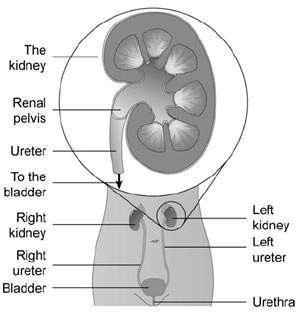
The kidneys are a pair of organs located at the back of the abdomen which filter blood to remove waste products producing urine. The urine is carried from each kidney to the bladder via a tube called the ureter. When the bladder is full the urine passes out of the body through a tube called the urethra. The urethra opens immediately in front of the vagina in women and at the tip of the penis in men.
If you are diagnosed with a kidney lump (or tumour) the following information is important to know:
• Localisation of the tumour
• The estimated size
• Your age and co-morbidities
• Your current medications
• Your current kidney function
• Previous surgery on your abdomen / kidneys
• Involvement of renal vein, adrenal gland
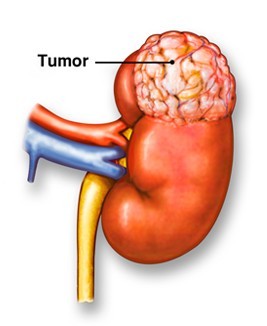
The procedure is called an Open Radical Nephrectomy.
Radical nephrectomy is a surgical treatment option for localised kidney cancer. The aim is to remove the whole kidney and the surrounding fatty tissue. This surgery is performed when it is not possible to remove the tumour and leave part of the kidney intact. It is generally recommended for large kidney tumours or tumours extending to surrounding organs.
Most people can live with only one functioning kidney without major complications.
The operation
For this operation you will receive a general anaesthetic and will be positioned on your side or on your back depending on the location and the size of the tumour. For an open radical nephrectomy the surgeon cuts into the abdominal wall to access the kidney directly. The traditional way of operating on a kidney involves a 20-30cm cut below the ribcage on the side. Depending on the tumour size, location and /renal vein involvement a midline or a transverse incision of the abdomen is needed.
To prevent tumour spillage the surgeon keeps your kidney covered with a protective layer of fatty tissue. He then separates the renal artery, renal vein and ureter from the kidney. Finally the kidney is removed
How long will the operation take?
The operation takes between 120-180 minutes to perform, plus another hour or so for the anaesthetic and waking up after the procedure.
What are the risks of the Open Nephrectomy?
Any operation and anaesthetic carries risks, these are however generally small. Risks of the anaesthetic can be discussed with the anaesthetist who will be looking after you during the procedure and will visit you before the operation.
Possible problems with the procedure can include:
- Infection
- Pain
- Bleeding. In some cases (less than 5%) heavy bleeding may require a blood transfusion
- Injury to bowels / liver / spleen / blood vessels
- Mild to moderate kidney function impairment
- Adrenal gland removal
- Risks associated with anaesthetics such as DVT / PE chest infection, heart attack or death
What happens before the operation?
You will be asked to attend a pre-assessment clinic before your operation in the pre-operative department (POD). The purpose of this appointment is to organise any tests that may be needed and ensure you are fit for surgery.
It would be useful if you could bring in a list of any medications that you normally take at home and let us know of any drug allergies you may have.
IT IS IMPORTANT TO LET THE HOSPITAL KNOW IF YOU ARE ON ANY DRUGS THAT THIN THE BLOOD, e.g. Aspirin, Warfarin, Clopidogrel, Dipyridamole, Edoxaban, Apixaban etc
Day of your admission to hospital
- You may eat and drink up to 6 hours before your operation.
- You will be admitted to a ward on the day of your operation. You will go to theatre from here and then return to your allocated ward.
- It would be helpful if you could bring a supply of your usual medications to take whilst in hospital.
- Any tests not carried out before admission will be performed before your operation.
- Depending on what medication you take you may be asked to have your normal medications, or some may be withheld and given to you after the operation.
- You will be asked to bathe before the operation at home, to put on a theatre gown and to wear some special stockings during and after the operation. These stockings aim to reduce the risk of developing blood clots (DVT) in your lower legs.
- A surgeon and a Kidney Cancer Nurse Specialist will come and see you on the day of your procedure and go through the consent form with you.
- The anaesthetist will come and see you and discuss your medical history. They will discuss the anaesthetic, any monitoring lines that may need to be inserted and your post operative pain relief.
After your operation
After your operation, you will normally wake up in the recovery department, where you will stay until you are fully awake, comfortable, and ready to be transferred to the ward. You will have a ‘drip’ to keep you hydrated and can be used to give you medications. You will also have your blood pressure, pulse, oxygen levels and temperature checked regularly.
Once you are back on the ward, we will get you sitting up and out in the chair as soon as possible. The nurses will offer you water to drink, progressing to tea and coffee and a light diet when you are ready. You will have a catheter draining urine from your bladder. You may also have a drain from the operation site to stop any excess fluid collecting, although this is rare.
You should expect some discomfort, but this should be controlled using the painkillers you will be prescribed. If you still have pain, it is important you let the ward staff know as soon as possible so additional pain relief can be given.
The renal cancer team will review you, discuss your operation, your recovery plan and the follow up plan. You will be encouraged to start moving about as much as possible, walking around the ward, eating and drinking normally. Your catheter and surgical drain will be removed within 48 – 72 hours. You will be encouraged to do some exercises, including regular leg movements and deep breathing exercises. The average length of stay is around 5 days.
The tumour will be sent off to be looked at using a microscope, the results (histology) will confirm the type of tumour and the follow up arrangement that will be necessary.
Going Home
Most patients leave between 4 – 7 days after the operation. A small number of patients might need to stay for an extra night. On discharge you will be comfortable and will be given painkillers and laxatives to take home with you.
Please make arrangements for someone to collect you, as you will not be fit to drive home following a major surgical procedure.
Be sensible when you get home – you have had major surgery so you should not undertake strenuous physical exercise, even if you feel able, for approximately 4-6 weeks.
Before driving, you need to be confident that you can perform an emergency stop and therefore we advise you wait 4 weeks before attempting to drive.
If you develop any of the following:
• Smelly cloudy urine
• Blood in the urine
• Fever
• Pain
• Shivering
• Frequency of passing urine
• Burning sensation when passing urine
• Feeling unwell
• Red, inflamed, or oozing wound
Please seek advice from the Kidney Cancer Nurse Specialist in normal office hours.
If out of hours / weekends, please call the Surgical Assessment Unit (SAU) helpline on 07990 528061.
In an emergency dial 111 or attend your local A&E department.
Follow-up
When you leave hospital, you should be aware of when you are coming back for results or further tests.
If you do not hear from us, please get in touch so we can ensure appointments have been made for you.
After surgery you will receive a telephone appointment with one of the Kidney Cancer Nurse Specialists, Sister Jo Oakley or Sister Kate Brown. During this call the results of the surgery will be discussed with you and if follow-up is recommended you will be informed.
Useful Telephone Numbers/contacts
Sister Jo Oakley Kidney Cancer CNS 0300 613 2426
Sister Kate Brown Kidney Cancer CNS 0300 613 5804
FRCC Senior Clinical Admin Officer 0300 613 4450
Appointments 0300 613 4201
Radiology Department 0300 613 4140
Pre-Operative Department 0300 613 2157
Contact us
If you have any queries relating to this information, please contact the Urology service.
About this information
Service:
Urology
Reference:
Z/046
Approval date:
1 February 2025
Review date:
1 February 2028
Click ‘show accessibility tools’ at the bottom of the page

Then click ‘select language’

Alternative formats
You can use the accessibility toolbar at the bottom of your screen to:
-
Change the text size
-
Adjust the font
-
Modify the colour contrast
-
Use the translate function
If you would like this information in another format, such as Braille, audio, or easy read, please speak to a member of staff.
You can also print as well as download as PDF using the “Print this page” button at the end of the page.
Staff will print a copy for you on request
Important note
This page provides general information only. It is developed by clinical staff and is reviewed regularly every 3 years for accuracy. For personal advice about your health, or if you have any concerns, please speak to your doctor.