

Advice after your nerve block for surgery
On this page…
This information will help you understand how you can avoid pressure damage (also known as bed sores or pressure ulcers) while you are unwell, both in hospital and at home.
What is a Pressure Injury?
A pressure injury is a wound that can develop within a few hours. Common causes are
- inactivity or lack of movement
- sitting badly in your chair
- dragging the skin up/down a bed or chair surface
- resting the weight of your legs on the back of your heels
The skin becomes pinched between the bony areas of the body and the surfaces on which you are resting or leaning. This causes the tissues under the skin to deteriorate and die because of the lack of blood flowing into the area.
ANYONE can develop a pressure injury. The signs are:
- Redness
- Pain
- Blistering
- Or a dark patch of skin.
The most common places are shown here:
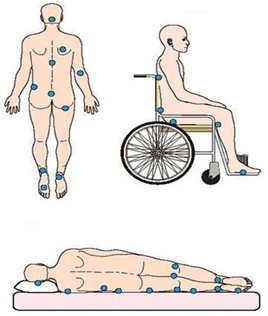
You are at risk if you
- find it difficult to move yourself without help.
- are not eating or drinking fluids properly.
- have had pressure injuries before.
- cannot feel part of your body (numbness) for some reason.
- have diabetes.
- are very young or old.
- have poor circulation, heart or breathing problems or if you smoke.
- are unable to control your bowel or bladder.
- have damage to your spine.
- need to use medical equipment (i.e., catheter, sling, oxygen mask).
How can you help to prevent these injuries from developing?
As soon as you start to feel any pain or soreness on your heels or bottom, ask a nurse to check for early signs of pressure damage.
Please try to help yourself by changing your own position as often as possible: aim to move every half hour.
Do not rest or sit on an area that is already feeling sore or where you have had an injury before.
You may be provided with some special boots to help avoid pressure on your heels in bed.
The staff will ask you to change your position every 2 to 4 hours, even if you have been provided with a pressure relieving mattress or a chair cushion.
We will arrange for a pressure relieving mattress and chair cushion if required; but you still need to keep changing your position!
The mattress helps but does not do it all!
When sitting in a chair, make sure your heels are not taking the full weight of your legs, let the heels hang over the edge of any stool surface.
About this information
Reference:
DD/009
Approval date:
29 May 2025
Review date:
1 May 2028
Click ‘show accessibility tools’ at the bottom of the page

Then click ‘select language’

Alternative formats
You can use the accessibility toolbar at the bottom of your screen to:
-
Change the text size
-
Adjust the font
-
Modify the colour contrast
-
Use the translate function
If you would like this information in another format, such as Braille, audio, or easy read, please speak to a member of staff.
You can also print as well as download as PDF using the “Print this page” button at the end of the page.
Staff will print a copy for you on request
Important note
This page provides general information only. It is developed by clinical staff and is reviewed regularly every 3 years for accuracy. For personal advice about your health, or if you have any concerns, please speak to your doctor.