

Advice after your nerve block for surgery
On this page…
Introduction
Your liver produces bile that helps you digest and absorb fat and fat-soluble vitamins. The gallbladder stores this bile and releases it into your intestine when you eat. Particles in the bile, usually cholesterol, sometimes stick together and form hard stones called gallstones. Most of the time, gallstones do not cause symptoms. However, if they do, the gallbladder is usually removed; this is called a cholecystectomy.
How Should I Change My Diet?
Your doctor may have advised you to follow a low-fat diet because you have gallstones. Gallstones can cause pain, however, there is no evidence that reducing the fat in your diet will necessarily reduce the pain; it might be helpful to have smaller, frequent meals.
Some people find that very specific foods trigger pain, this can be very individual, and you may wish to avoid these foods for a trial period to see if the pain reduces.
Keeping a food and symptom diary can help to identify possible trigger foods.
It is important to reintroduce foods if you do not think they are causing you problems.
A low-fat diet may be beneficial if you suffer with steatorrhea (fatty stools) – these may be pale, floating, bulky and foul smelling. If this is the case, see the low fat idea suggestions included in this leaflet.
Your diet should not be “fat free”, as a small amount of fat is needed by the body as a source of essential fatty acids and fat-soluble vitamins
If you find your symptoms are worsened by fatty meals, the suggestions in this leaflet will help you to choose low fat foods, but still eat a varied and healthy diet.
After You Have Surgery
Unless your doctor tells you otherwise, go back to your normal diet as soon as possible, you do not need your gallbladder for normal digestion of food. Your liver still makes bile so you can digest fat.
Some people experience diarrhoea after cholecystectomy. This usually stops soon after surgery. If you have ongoing diarrhoea, speak with your doctor
Guide for Healthy Eating
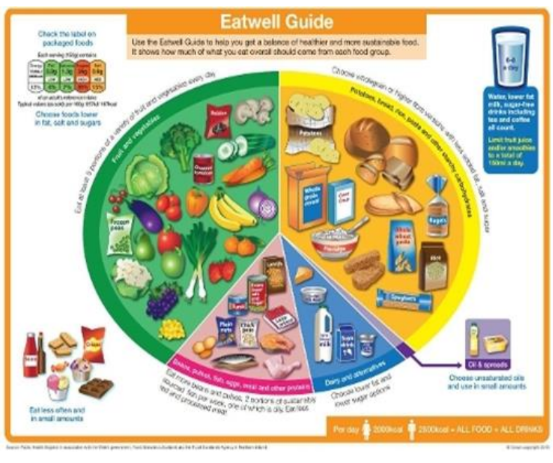
Use the ‘Eatwell Guide’ (pictured overleaf) to help to ensure you have a healthy diet, this includes:
- Five portions of fruit and vegetables each day - remember, fresh, frozen, dried and canned all count towards your total 5-a-day. Do not forget to include the vegetables you add to cooked dishes e.g. onions in a stew or casserole, tomatoes in a pasta sauce or vegetable soup are included.
- Potatoes, bread, rice, pasta and other starchy carbohydrates -aim to include one food from this group at each mealtime and eat regularly. Try and opt for wholegrains where possible.
- Variety - choose a variety of different types and colours of fruit and vegetables. As well as providing vitamins, minerals and fibre, the natural colours and flavours of plants add powerful anti-oxidants to our diet.
- Beans, pulses, fish, eggs, meat and other proteins - choose lean meat or remove excess fat and avoid frying where possible. Try to include two portions of fish each week, one of which should be an oily fish (darker skinned), for example mackerel, trout, sardines.
- Dairy and alternatives - with dairy foods providing the richest and best absorbed source of dietary calcium, try for three portions a day to meet most calcium needs.
- Fluid - Aim to have at least 6 - 8 glasses daily. All fluids count, although avoid too many drinks with caffeine and choose no added sugar drinks
Protein Rich Foods
Protein foods are important in helping to maintain muscle mass and build strength.
Milk and Yoghurt
- Use milk instead of water in drinks such as coffee, hot chocolate, malted drinks or cup-a-soups
- Aim for at least one pint of milk a day, including what you have on cereal and in drinks
- You can add more calories and protein to your milk by adding four tablespoons of dried milk powder to one pint of full fat milk and use in hot drinks, on breakfast cereals, in porridge and in savoury sauces
- Have a milk-based dessert, such as milky puddings, custard, milk jelly, thick and creamy yoghurt, mousses. Use evaporated milk as toppings for fruit or cereal
- Try sipping nourishing drinks between meals, these give fluid but also valuable nutrients. Try milkshakes, smoothies, lassi, pure fruit juice, milky coffee, hot chocolate, soup or malted milk drinks
Meat and Fish
- Include meat, chicken or fish in cooked meals
- Use convenience meals as a standby in fridge or freezer e.g. fish in sauce, shepherd’s pie, lasagne, beef, chicken or sausage casseroles, macaroni cheese, roast dinner
- For snack meals try smaller portions of meat or fish in a sandwich or on toast e.g. ham sandwich, sardines or pilchards on toast
Beans and Lentils
- Try lentil/bean soups or add tinned (ready to eat) beans such as butter beans, baked beans or kidney beans to soups or casseroles
| Food | Foods allowed | Foods high in fat |
| Fats | Low fat spreads e.g. Gold, Flora Lite, fry light spray |
Butter, margarine, lard, dripping, suet, vegetable oils |
| Meat and meat products | Average helpings of lean beef, poultry (without skin), pork, gammon, ham, lean bacon and offal |
Streaky bacon, pork bell, corned beef, tongue, pate, luncheon meat, beefburgers, sausages, sausage rolls, pies, pasties, lasagne, salami, meat paste |
| Fish | All varieties of white fish and shellfish |
Oily varieties of fish, mackerel, sardines. Scampi, taramasalata Fish roe |
| Vegetarian | All varieties of beans, tofu, Quorn, lentils, soya and soya products |
Refried beans |
| Eggs | 2 whole eggs per week, egg whites | Quiche, scotch egg, fried egg |
| Milk and milk products |
No more than ½ pint semi-skimmed milk per day. Skimmed milk - unlimited Cottage cheese, low fat soft Low fat yoghurts, low fat fromage frais |
Full cream milk, evaporated and Full fat cheese, cheese spread, full fat yoghurts and fromage frais Coconut milk |
| Bread, Cereals and Potatoes |
Bread, pasta, rice, breakfast Boiled potatoes or jacket |
Breakfast cereal containing nuts Naan bread Pizzas Chips, roast potatoes Fried rice |
| Fruit and vegetables |
All fresh and frozen fruit, tinned fruit, dried fruit All fresh, frozen and tinned vegetables |
Avocado, olives, coconut |
| Soups and sauces | Fat free salad dressing, Tomato based sauces, vegetable soups, sweet and sour sauce, soy sauce, gravy made with stock cubes and cornflour (no meat juices) |
Salad cream, Gravy (made with fat or meat juices) Creamy/cheese sauces/soups |
| Cakes and biscuits | Plain biscuits e.g. Rich Tea, Garibaldi, ginger nuts |
Cream biscuits, chocolate coated biscuits, fancy cakes, pastries |
| Confectionary | Plain popcorn Twiglets |
All varieties of nuts Crisps Butter popcorn |
| Puddings | Fruit based puddings e.g. fruit salad, baked apple, poached fruit, sorbets jelly, meringues instant desserts and milk puddings made with skimmed or semi-skimmed milk e.g. custard, Angel Delight, low fat yoghurt |
Puddings made with pastry e.g. pies, crumbles, Puddings with cream e.g. trifle, creme caramel etc, ice cream |
| Drinks | Tea, coffee, Bovril, Marmite, low fat chocolate drinks e.g. Highlights, Options, Horlicks Lite, fruit juices, squashes, carbonated drinks |
Cocoa, drinking chocolate, Ovaltine, Horlicks, cream liquors |
| Miscellaneous |
Jam, marmalade, sugar, pickles, chutneys Salt, pepper, herbs, spices, Salsa dips |
Lemon curd, chocolate spread, Ready meals - check labels Houmous Pastry foods e.g. quiche |
Hints and Tips for a Poor Appetite
If you have lost your appetite, a low-fat diet is not likely to be suitable and the following suggestions may help to optimise your nutritional intake and prevent weight loss
- Small portions are often more appealing and can be followed by a second helping
- Make eating as easy as possible. Try ready meals or convenience foods e.g. toad-in-the-hole, shepherd’s pie
- Avoid drinking at mealtimes or just before a meal, as drinks could fill you up and prevent you eating enough
- Meals and drinks should be high in calories and protein
- Try a pudding once or twice a day e.g. milky pudding, cake, trifle, high protein yoghurt
- Keep snacks handy and ready to eat
- A small glass of alcohol before a meal can help to stimulate your appetite. You may need to check this with your doctor or pharmacist before taking alcohol whilst on medication
- Get out if you can - fresh air can help stimulate your appetite
- Eating in a well-ventilated room can also help
- If your appetite is better at certain times of the day, aim to eat more at these times
Nutritional Supplements
If your appetite is very small, you can consider buying nutritional drinks such as Build Up, Meritene or Complan; these are available in milkshake and soup styles.
Mix milkshakes with full fat milk and mix the soup with water as directed.
They are available to buy from most supermarkets and pharmacies.
If you are already slim or underweight and are worried about losing weight, please ask your doctor to refer you to a Dietitian.
Contact us
If you have any queries relating to this information, please contact the Dietetics service.
About this information
Service:
Dietetics
Reference:
DT/063
Approval date:
31 August 2023
Review date:
30 August 2026
Click ‘show accessibility tools’ at the bottom of the page

Then click ‘select language’

Alternative formats
You can use the accessibility toolbar at the bottom of your screen to:
-
Change the text size
-
Adjust the font
-
Modify the colour contrast
-
Use the translate function
If you would like this information in another format, such as Braille, audio, or easy read, please speak to a member of staff.
You can also print as well as download as PDF using the “Print this page” button at the end of the page.
Staff will print a copy for you on request
Important note
This page provides general information only. It is developed by clinical staff and is reviewed regularly every 3 years for accuracy. For personal advice about your health, or if you have any concerns, please speak to your doctor.