

Advice after your nerve block for surgery
On this page…
What is Pre-diabetes?
Pre-diabetes is where blood glucose levels (glucose is a type of sugar) are above the normal range, but not high enough to give a diagnosis of diabetes. If you have pre-diabetes, your risk of developing full blown diabetes is increased.
Research suggests that having a healthy diet, reaching or maintaining a sensible weight and increasing activity can help to prevent or delay the development of diabetes.
Steps to Healthy Living with Pre-diabetes
- • Aim to reach or maintain a sensible weight. If you are overweight, weight loss of 5-10% can be beneficial e.g. if you are 95kg (15 stone), weight loss of 5-10kg (11– 22lbs) would be good to achieve
- Information on finding out if you are overweight and how to successfully lose weight is available on the NHS Choices website: https://
www. or you can discuss with your Health Care professionalnhs.uk/ better-health/ lose-weight/ - Aim to exercise for thirty minutes five times a week e.g. walking/cycling/swimming/golf/gardening. This can be spread throughout the day. Resistance (muscle strengthening) training twice a week is also recommended
- Eat regular meals, including small portions of starchy foods such as bread, potatoes, cereals, pasta or rice at each meal
- Include more ‘slow release’ carbohydrate foods, particularly those containing more fibre such as granary or stoneground bread, wholewheat pasta, basmati or brown rice and porridge
- Reduce the fat in your diet and replace saturated fats with unsaturated fats
- Reduce your intake of foods and drinks with a high sugar content
- Eat more fruit and vegetables or salad – aim for at least five portions a day
- Use less salt
- Drink alcohol in moderation only
Balancing Your Diet
Everyone needs to eat a balanced diet to keep healthy. This is especially important if you have pre-diabetes.
Starchy Foods
Starchy food is a carbohydrate, which is broken down into glucose (sugar) in the stomach. This glucose is then released into the blood stream and is used by the body as it fuel.
The recommended number of portions range from 5-14 per day. If you are trying to lose weight, aim for approximately 7-8 portions per day.
One portion of starchy foods is equivalent to:
- 3 tbsp breakfast cereal
- 1 wheat biscuit/shredded wheat
- 1 slice of bread/toast
- ½ roll/large pitta/bagel
- 1 small chapatti
- 4 crispbreads
- 1 crumpet/muffin
- 2 tbsp cooked, boiled rice
- 3 tbsp cooked pasta
- 2 egg size potatoes
- ½ packet egg noodles
Fruit and Vegetables
Aim to eat at least five portions a day from a mixture of fruit, vegetables and salad. One portion is 80g and is equivalent to:
- 1 piece of fruit such as an apple or orange
- • small fruits e.g. 2 plums, 2 satsumas
- 1 small glass of fruit juice
- 3 tablespoons of vegetables – either fresh or frozen
- A side salad
For more information on portion sizes see NHS Choices at: https://
Dairy Products
Dairy products contain calcium, which is important for bone and tooth health. Some of these products can be high in fat, so aim for low fat alternatives. Aim for 2-3 portions of dairy products per day. A portion is equivalent to:
- ½ pint (200ml) milk (semi–skimmed, skimmed, soya)
- Small pot (125g/5oz) low fat yoghurt or fromage frais
- 1½oz (40g) cheese (matchbox size)
- 8oz (200g) low fat cottage cheese
- 3oz (80g) cream cheese (light)
Diabetic Foods - Do I Need Them?
You do not need special diabetic foods; they can be high in fat and expensive. Sweeteners known as polyols, such as sorbitol or Xylitol are often used in products marketed as ‘diabetic products.’ Consuming large amounts of polyols can have a laxative effect, causing bloating, flatulence and diarrhoea.
Meat, Fish, Eggs and Pulses
Aim for 2-3 portions per day; one portion is:
- 5oz (125g) lean meat or fish (raw weight)
- 3 slices of cold meat
- 3 fish fingers
- 2 eggs
- ½ can baked beans
- 2 tbsp nuts, peanut butter, tahini, seeds
- 3-4 tbsp cooked lentils, dhal
- 4 tbsp cooked kidney beans, chickpeas, butter beans
- 4oz (100g) soya, tofu
How Can I Use Less Salt?
A high intake of salt may raise your blood pressure, so it is sensible to use less. It is important to control blood pressure when you have pre-diabetes.
Aim to have no more than 6g salt in your diet per day:
- Avoid adding salt to meals
- Use sparingly in cooking. If you steam or microwave vegetables, you will probably find that you do not need to add salt
- Use fresh or frozen vegetables rather than tinned
- Cut down on processed foods such as salty meats, crisps, salted nuts and ‘ready meals’
- Check food labels for information on salt content of the foods you buy
- Cut down salt gradually so that you can get used to the taste change. Adding herbs and spices instead can help
Suggested Meal Composition for Pre-diabetes
This plate model shows what a sensible meal should look like if you have pre-diabetes. Add extra vegetables to your meal, so that half of your plate consists of vegetables. Reduce portion sizes of meat and starchy foods. This meal will still consist of a plateful of food, but the fat and calorie content will be reduced, and it will contain lots of fibre, vitamins and minerals.
Check your plate at your next meal and see if you are having a healthy balance.
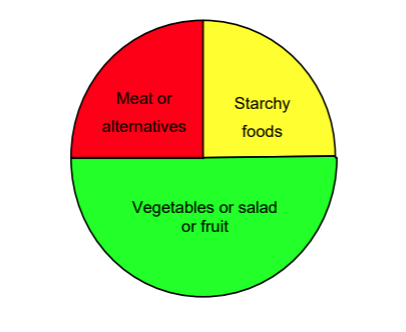
If you are underweight, there is more flexibility to increase wholegrain carbohydrates and healthy fats. Ask to be referred to a Dietitian if you require further advice.
How Can I Eat Less Fat?
It is important to cut down on the amount of fat that you eat, particularly saturated (animal) fat, as this type of fat is associated with heart disease. Replacing saturated fat with unsaturated fat has a beneficial effect on insulin sensitivity. Remember all fats are high in calories and should be restricted if you need to lose weight.
Choose monounsaturated fats e.g. olive, rapeseed oil or spreads, or polyunsaturated fats e.g. sunflower, corn or soya oil or spreads. Avoid lard, dripping, suet and margarines high in saturated fats. If you use butter, use sparingly.
Grill, bake, poach, casserole, steam or microwave food, instead of frying. If you need to use oil in cooking, measure it out with a teaspoon to use less.
Choose lean cuts of meat and trim the fat off. Remove skin from poultry. Cut down on processed meats, pâté, corned beef, beef burgers and sausages. Try using less meat in casseroles and stews by replacing some with extra vegetables and pulses.
Try semi-skimmed or skimmed milk instead of full cream milk. Use skimmed milk to make custard, sauces and instant desserts, e.g. sugar-free instant whip.
Watch out for hidden sources of fat. Pies, pastries, chips, mayonnaise, crisps and cream all add extra fat to your diet.
Choose low fat ‘diet’ yoghurts and fromage frais. Cheese contains a lot of fat so try and choose lower fat varieties, e.g. cottage cheese, edam, camembert or half fat cheddar and just use small amounts. Use as part of your meal rather than as a between meal snack.
Nuts contain unsaturated fat, which is a healthier fat. They do contain a lot of calories though, so if you need to lose weight, limit the amount that you have.
How Can I Eat Less Sugar?
Food and drinks which contain a lot of sugar will usually cause a sudden rise in blood glucose levels, particularly if taken on an empty stomach. It is best to cut down and replace them with lower sugar alternatives.
If you do have a food with a higher sugar content, have a small portion at the
end of a meal rather than in between meals; this will slow down the rate that the sugar is absorbed into your blood and ensure that your control remains good.
In the case of drinks, it is better to use ‘sugar-free’, ‘no added sugar’ or ‘diet’ squashes and fizzy drinks. Be aware that fruit juice contains sugar and should only be drunk in moderation.
Sugary foods such as cakes, biscuits and chocolate are best restricted, particularly if you are overweight, as they contain fat as well as sugar.
Low Calorie Sweeteners
If you need to sweeten your food, there are many sweeteners and alternatives to sugar available. They are available in three forms: tablet for use in drinks, liquid for use in custards and powder for use on cereals. Many are affected by heat, so add them after liquids have been boiled, e.g.
custard, or once a dish has gone cold.
Types of sweeteners:
- Artificial sweeteners e.g. aspartame, saccharin will not affect blood glucose levels
- Polyols still contain carbohydrates but have less effect on blood glucose levels than sugar
- Sweeteners from the Stevia plant - these are 200-300 times sweeter than sugar so much less is used
Excessive consumption of some sweeteners called polyols e.g. Sorbitol, may have a laxative effect
| Food containing a lot of added sugar | Low sugar/sugar-free alternatives |
| Sugar, glucose, dextrose and sucrose |
Artificial sweeteners, e.g. Stevia Hermesetas, Canderel, Sweetex, Splenda |
| Jam, marmalade, honey, lemon curd, treacle and golden syrup |
Reduced sugar jams and marmalades. |
| Sweet drinks e.g. coke, fruit squash, Lucozade, milkshakes |
Diet fizzy drinks, sugar free squash, soda or mineral water |
| Sweets, chocolate, mints, chewing gum |
Sugar free chewing gum, sugar free mints/sweets |
| Sugar or honey coated breakfast cereals e.g. coco pops, Frosties, honey nut cornflakes |
Low sugar breakfast cereals, e.g. Weetabix, shredded wheat, porridge, unsweetened muesli |
| Chocolate coated and cream filled biscuits |
Plain biscuits in moderation, e.g. rich tea, crispbreads, oatcakes |
| Yoghurts, fromage frais | Diet yoghurts and fromage frais (i.e. low fat, low sugar) e.g. Shape, Ski Light, Muller Light, Weight Watchers or natural yoghurts, some Greek yoghurts |
| Sweet puddings, crumbles, sponge puddings, trifle, cheesecake, mousse, instant and tinned puddings, fruit in syrup |
Fruit in natural juice, sugar free jelly/angel delight Home-made sugar free puddings, e.g. rice pudding, semolina, custard made with skimmed milk and sweetener |
| Cakes, pies, tarts | Low sugar baked foods (use half amount of sugar), e.g. scones, tea breads, potato scones |
| Condensed milk, drinking chocolate, malted milk drinks |
Evaporated milk, ‘lite’ varieties of milky drinks e.g. low-calorie hot chocolate |
‘Slow Release’ Carbohydrate Foods
Some carbohydrate foods cause a slower rise in blood glucose than others and reduce the peaks in blood glucose following a meal. This may have a role in helping to reduce the chance of going on to develop diabetes.
When choosing carbohydrate foods, it is better to have ‘slow release’ ones such as the following:
- Pasta/noodles
- Pulses, including baked beans, lentils and chickpeas
- Bread with ‘bits’ in e.g. multigrain, granary, stoneground
- Pumpernickel bread, wholemeal pitta bread, high fibre crispbreads
- Oats and oat-containing cereals
- Yoghurts
- Quinoa
- Some fruits e.g. apples, oranges
If you would like more information about ‘slow release’ foods, ask your dietitian.
How Can I Eat More Fibre?
Fibre from foods such as wholemeal bread and high fibre cereals help to keep your digestive system healthy, prevent constipation and help to satisfy appetite.
In addition, ‘soluble’ fibre which is found in fruit, vegetables, pulses and oats, helps to control blood glucose by slowing down the rate at which food is digested.
When you eat more fibre, you will need to drink more fluid to prevent constipation. Try to include at least eight to ten cups a day.
How Can I Eat More Wholegrains?
Wholegrain foods can have a protective effect against developing cardiovascular disease and diabetes. Look for the word ‘whole’ before the name of the cereal, for example wholewheat or whole oats.
To increase your wholegrain intake, choose foods such as granary bread, oats, rye, barley, brown rice and wholewheat pasta.
You can find more information on wholegrains from the British Dietetic Association website (http://
Alcohol
Most people who have pre-diabetes can have alcoholic drinks but check with your doctor first. If you are not overweight the recommended limit is fourteen units per week, spread over the week. It is recommended to have at least two alcohol free days per week.
1 unit = half a pint of beer or lager (standard strength)
or
1 pub measure of spirits e.g. whisky
or
1 small glass of dry sherry or wine
- Avoid ‘diabetic’ and strong beers and lagers e.g. diet pils, as they are higher in alcohol and calories
- All alcohol is high in calories, so if you are trying to lose weight, try to reduce the quantity you drink
- Sweet wines, sweet sherry and liqueurs can be drunk occasionally as part of a meal, but contain more sugary carbohydrates
- Choose low calorie, sugar free ‘mixers’ with spirits, e.g. diet coke, low calorie tonic
- Low alcohol beers and wines usually contain sugar and are best not drunk in large quantities
Breakfast Ideas
- Wholegrain cereals or porridge with skimmed/semi-skimmed milk
- Granary toast with egg
Snack Meal Ideas
- Soup e.g. lentil, split peas or vegetable with seeded or granary bread
- Baked beans on seeded or granary toast
- Small portion of wholemeal pasta and bean salad
- Jacket potato/seeded or granary sandwich or roll filled with:
- tuna and low-calorie salad cream/mayonnaise
- cottage cheese with various flavours
- wafer thin meats
- reduced fat cheese
Include some salad with sandwich or jacket potato
Main Meal Ideas
- Lean roast meats or poultry, casseroles and stews with vegetables
- Shepherd’s pie with extra vegetables
- Wholemeal pasta with tomato and vegetables
- Spaghetti Bolognese made with lots of vegetables
- Vegetable or bean curry with rice
- Fish and potato pie with vegetables
Between Meals
If you need snacks in between meals, choose fruit, diet yoghurt, plain biscuits such as rich tea or a small portion of unsalted nuts.
After reading this information you may want to think about what changes you could make that you would benefit from. Changing our behaviour can be hard. Often writing down our thoughts and developing an action plan is the best way to successfully change our behaviour.
Contact us
If you have any queries relating to this information, please contact the Dietetics service.
About this information
Service:
Dietetics
Reference:
DT/027
Approval date:
1 March 2026
Review date:
1 March 2029
Click ‘show accessibility tools’ at the bottom of the page

Then click ‘select language’

Alternative formats
You can use the accessibility toolbar at the bottom of your screen to:
-
Change the text size
-
Adjust the font
-
Modify the colour contrast
-
Use the translate function
If you would like this information in another format, such as Braille, audio, or easy read, please speak to a member of staff.
You can also print as well as download as PDF using the “Print this page” button at the end of the page.
Staff will print a copy for you on request
Important note
This page provides general information only. It is developed by clinical staff and is reviewed regularly every 3 years for accuracy. For personal advice about your health, or if you have any concerns, please speak to your doctor.