

Advice after your nerve block for surgery
On this page…
What is Anxiety?
Anxiety….
- Is a normal emotion that helps us to cope with difficult and dangerous situations.
- Is a common emotion. It is normal to sometimes feel worried, anxious, and stressed.
- Is a problem when it stops you from enjoying normal life. Anxiety is a problem when it affects school, family relationships, work, friendships, or your social life.
- Can be general, affecting many areas of life, or it may only happen in certain situations, such as being in a crowded place, or using public transport.
Generalised Anxiety Disorder (GAD)
A child or young adult with GAD has a lot of worry that appears to have no real cause. The worry may be more intense than the situation calls for. Those with GAD often worry about many things, including future events, past behaviours, social acceptance, family matters, their personal abilities, and school performance. Unlike adults with GAD, children sometimes do not realise their anxiety is more intense than the situation calls for. Children and young adults with GAD often need reassurance from the adults in their life. Symptoms vary between each child, but the
most common symptoms of GAD are:
- Refusing to go to school.
- Frequent stomach aches, headaches, or other physical complaints.
- Sleep problems.
- Muscle aches, or tension.
- Clingy behaviour with family members.
- Worry about sleeping away from home.
- Feeling a ‘lump’ in your throat.
- Fatigue.
- Lack of concentration.
- Easily startled and annoyed.
- Inability to relax.
The symptoms of GAD may seem like other health problems.
Social Anxiety
Social anxiety is a fear of social situations. It is an intense fear that does not go away by itself over time, and affects everyday activities, self-confidence, relationships, and school life.
Symptoms of social anxiety include:
- Worrying about everyday activities, such as meeting strangers, starting conversations, speaking on the phone, working, or shopping.
- Avoiding or worrying a lot about social activities, such as group conversations, eating with company, and parties.
- Always worrying about doing something embarrassing, such as blushing, or appearing incompetent.
- Finding it difficult to do things when others are watching. Some may feel like they are being judged all the time.
- Fear of criticism, avoiding eye contact, or having low self-esteem.
- Symptoms such as feeling sick, sweating, trembling, or a pounding heartbeat.
- Some experience panic attacks. Although feeling this way is common in adolescence, if this persists it may become problematic.
Health Anxiety
Health anxiety is when someone spends so much time worrying about being or getting ill, that it begins to take over their life.
Those with health anxiety can:
- Constantly worry about their health.
- Frequently check their body for visible signs of illness, such as lumps.
- Always asking others for reassurance that they are not ill
- Worry that their doctor, or medical tests, may have missed something.
- Obsessively use the internet to research health related questions.
- Avoid anything to do with serious illness, such as medical television shows.
- Act as if they were ill. For example, avoiding physical activity.
Anxiety itself can cause symptoms like headaches or an increased heartbeat, and you may mistake these signs for illness.
Panic
Panic is a form of anxiety where you may experience regular sudden attacks of fear or panic.
Panic Attacks are when the body experiences a rush of intense psychological and physical symptoms. The onset can be very quick, and for no apparent reason, making them very distressing.
Symptoms of a panic attack may include:
- Increased heart rate,
- Feeling faint,
- Nausea,
- Chest pain,
- Shortness of breath,
- Trembling and shaky limbs,
- Hot flushes or chills,
- A choking sensation,
- Dizziness,
- Numbness/pins and needles,
- Dry mouth,
- An urge to go to the toilet,
- Ringing ears,
- A feeling of dread,
- Feeling like you are going to die,
- Feeling like you are having a heart attack,
- A churning stomach,
- Feeling disconnected from your body.
Panic attacks normally last between 5-20 minutes, but can last up to an hour. The frequency of attacks depends on how severe anxiety is; some may experience them once a month, and others once a day. Although panic attacks are scary, they are not dangerous and do not cause any lasting physical harm.
Fight vs. Flight for Younger Children
Thousands of years ago, when we were cavemen, stress and anxiety were very useful emotions because they helped us take action in the face of immediate danger, keeping ourselves safe. For example:
A bear jumps out in front of you > you feel anxious > physical changes occur in your body, preparing you to either fight or run away > you fight or run away > you are now safe and your anxiety is relieved > your body returns to normal.
Anxiety is not always as helpful in today’s environment. Our body still reacts in the same way as it did thousands of years ago, however, the world today is much more complicated and many of the things that make us worry cannot be fixed immediately.
This can leave us with feelings of anxiety, which are difficult to resolve instantly. However, anxiety exists for a reason , and can be helpful in protecting us from immediate danger, both in the past and in the present.
Tip: When your child is in fight vs. flight, help them to focus on regulating their breathing. Avoid using phrases such as “calm down”. Instead, use “let's breathe” or “in through the nose, out through the mouth” or “you're okay, just breathe”.
Avoidance and Safety Behaviours
When we feel anxious, or expect to feel anxious, we can respond in one of two ways to control our anxiety. One way is to avoid situations or activities that we associate with anxiety. This could include:
- Avoiding people (e.g. medical staff or unwell friends and relatives).
- Avoiding places (e.g. hospitals, schools, or bathrooms).
- Avoiding activities (e.g. spending time with a group of people, or meeting new people). Those with health anxiety tend to worry more than usual about physical sensations in their bodies, they may also avoid activities that bring about changes in their physiological state, for example, participating in sports.
Alternatively, we engage in safety behaviours. This is when we may not outright avoid a situation or activity, but will only do so if certain precautions are in place. For example, someone who is scared of spending time with new people may go with an exit plan and have an excuse to leave at any minute. Avoiding situations, or using safety behaviours may reduce the anxiety short term, but is likely to have unhelpful long term side effects. In the long run, the worries and anxieties will continue to exist and you will not have faced your fears and seen how things really play out. Over time using avoidance/safety behaviours can deplete our sense of self-confidence. These behaviours may also prevent you from taking part in activities that you want to participate in, and can lead to a restrictive lifestyle.
| Avoidance Behaviour | Safety Behaviour |
| Avoiding anything which could remind you of panic symptoms of anxiety (e.g. caffeine and exercise). | Only going to places you know well, or places where you are familiar with the staff. |
| Avoiding places where you may have a panic attack and not be able to escape (e.g. a busy shop). | Always being aware of, or stay near to, an exit. |
| Avoiding making eye contact, and engaging in social situations. | Not looking up from the ground. Using your phone and/or headphones to avoid eye contact and conversation. |
Once you know what it is you avoid, along with the safety behaviours you use, you can begin to do
something about them!
Changing How I Cope With Anxiety: The Ladder Hierarchy
Anxiety can prevent us from doing things we like, such as going to the cinema, swimming, or spending time with friends. However, you cannot let anxiety stop you, it is important that you practice fighting against avoidance! Ultimately, you need to face your fears if you want to overcome your anxiety. It may seem overwhelming in the beginning, however, it is much easier if you break the process down into smaller steps.
Construct a ladder of places or situations that you avoid because of your anxiety. At the top of the ladder, state the situation that you are most anxious about. At the bottom of the ladder, put places or situations you avoid , but don’t bother you as much. Give each item a rating of 0-10 according to how anxiety provoking the situation is.
Overcome your anxiety by approaching these situations, starting from the bottom of the ladder. Make sure you write down what you think will happen, before approaching the task, and compare this with what actually happened.
| Situation | Anxiety (0-10) |
| Example: Having an injection | 10 |
| Example: watching somebody else have an injection | 2 |
Calming The Body
Muscle tension is commonly associated with stress and anxiety, it is the bodies natural response to potentially dangerous situations. Even when there is no danger, our bodies can still respond in the same way. You may not always realise that your muscles are tense, it may be as subtle as your jaw clenching, or as obvious as your shoulders feeling really tight and hunched.
PGR is a deep relaxation technique which is based upon the simple practice of tensing one muscle group at a time . This is followed by a relaxation phase with release of tension. This is very useful before bedtime.
Progressive Muscle Relaxation
| 1 | Get comfortable in a distraction free environment. You can either lay down or sit upright in a chair. Closing your eyes will help you focus on the different muscle groups, but you do not have to if you don’t want to! For all steps, hold the tense position for a couple of deep breaths, or however long is comfortable for you, then relax. Repeat each step three times. |
| 2 | Draw a deep breath in through your nose and feel your abdomen rise as you fill your body with air. Then slowly exhale from your mouth, pulling your belly-button towards your spine. |
| 3 | Start with your feet. Clench your toes with your heel pressing towards the ground. Squeeze tightly for a couple of breaths and then release. It may help to say ‘relax’ whilst you release the tension. Next, flex your feet with your toes pointing towards your head. |
| 4 | Next move to your legs. Stretch your leg out, with your toes pointing towards the sky, feel the back of your leg tightening. Hold this for a couple of deep breaths and then release. Then, point your toes down into the ground with your leg straight for a couple of deep breaths. |
| 5 | Now move onto your glutes. Squeeze your buttocks muscles for a couple of deep breaths. Remember, you should only feel tension and not pain. |
| 6 | To tense your stomach and chest, pull your belly button in towards your naval as tight as you can. Breath in deeply, filling up your chest and lungs with air. |
| 7 | Next, tense your shoulder blades and back. Push your shoulder blades backwards, as if you are trying to get them to touch. This will push your chest forwards. |
| 8 | Now tense the muscles in your shoulders as you bring your shoulders up towards your ears. |
| 9 | Be careful when tensing your neck muscles! Face forward, and SLOWLY pull your head back to look up at the ceiling. |
| 10 | Squeeze your teeth together to tense your jaw . Open your mouth as wide as you can, as if you are yawning, to relax your mouth and jaw. |
| 11 | To tense your eyes and cheeks, squeeze your eyes tight shut. |
| 12 | Raise your eyebrows as high as they will go, as if you were surprised, to tense your forehead. |
| 13 | To tense your upper arms, bring your forearms up to your shoulder to ‘make a muscle’. |
| 14 | Finally, to tense your hand and forearm, make fists with both of your hands. |
Calming The Body: Deep Breathing
During deep breathing your blood is oxygenated, triggering the release of endorphins, whilst also decreasing the release of stress hormones, and slowing down your heart rate.
During periods of anxiety, the body triggers the Fight or Flight Response. Breathing is shallow, uncontrolled, and muscles become tense. Deep breathing triggers the Relaxation Response, whereby breathing becomes deeper, controlled, slower, and the symptoms of anxiety reduce.
| Sit or lie down comfortably. Close your eyes if it makes you feel more comfortable. Place your hand on your stomach, if you breath deeply enough, you should notice your hand rising and falling with each inhalation and exhalation. Imagine a balloon blowing up in your stomach as you breath in, and deflating as you breath out. |
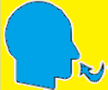 |
Inhale. Breath in slowly through your nose for 4-8 seconds. |
 |
Pause. Hold the air in your lungs for 4- 8 seconds (however long is most comfortable for you). |
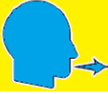 |
3. Exhale. Breath out slowly through your mouth for 4-8 seconds. |
| Repeat. Practice for at least 2 minutes. As your technique improves, practice for 5-10 minutes. |
Tips
- Slow down. The most common mistake is breathing too quickly. Count each step slowly as you do so.
- Counting your breaths takes your mind off of the source of anxiety. Counting acts as a distraction, whenever you catch your mind wandering, return to counting.
Self-Soothing
5, 4, 3, 2, 1 Grounding Technique
This approach explores your five senses to help keep you grounded in the present. This is a calming technique that can help you get through periods of anxiety. It can be done independently, making it useful for when you are alone.
Take a deep belly breath to begin. Imagine a balloon in your stomach filling up with air as you breath in.
LOOK: Look around for 5 things that you can see, and say them out loud. For example, you could say, I see the TV, I see the pencil case, I see a vase of flowers.
FEEL: Pay attention to your body and think of 4 things that you can feel, and say them out loud. For example, you could say, I feel my feet warm in my slippers, I feel the grass beneath my feet, or I feel the beanbag I am sitting on.
LISTEN: Listen for 3 sounds. It could be the sound of traffic outside, the sound of typing or the sound of your tummy rumbling. Say the three things out loud.
SMELL: Say 2 things you can smell. If you can, it’s okay to move to another spot and sniff something. If you can’t smell anything at the moment or you can’t move, then name your 2 favourite smells. You may say, I can smell dinner cooking, or I can smell perfume.
TASTE: Say 1 thing you can taste. It may be the toothpaste from brushing your teeth, or sweetness from fruit. If you can’t taste anything, then say your favourite thing to taste.
Take another deep belly breath to end.
If you cannot say things out loud, you can say it to yourself in your head.
Worry Tree
|
What is making you worry?
|
| Can I do anything about the situation? |
| NO: | YES: |
| Try to distract myself to ease the worry. | Make a mind-map or list to show what things I can do to stop or improve my worry. |
| Can I do anything about my worry now? | |
| NO -I can’t do anything about it at the moment. |
YES - I can:
|
| Make a mind-map or action plan of what I can do in the future to help ease my worry. | Do this now! |
| Do my best to stop worrying by distracting myself until I can action my plan. | Stop worrying and distract myself. |
Tip: make your mind-maps and lists colourful, you will be more likely to remember what you have written, and engage with the material more!
Guided Visual Imagery Relaxation: The Beach
Lay down, or sit comfortably in a quiet room. Use the deep breathing techniques you learnt earlier in this pack, close your eyes and listen to somebody read you the following script. You can also read this script to yourself. You may find it more relaxing to play an audio track of crashing waves on the beach; this can be sourced on YouTube, Spotify, and most other online music platforms.
You’re walking down a long wooden stairway to a big, beautiful beach. It is very quiet and stretches off into the distance as far as you can see. As you look down you notice that the sunlight is reflecting off of the golden sand. You step into the sand, it feels warm so you wriggle your toes. You notice the warmth from the sand between your toes and around your feet. You notice the sounds of the waves crashing and chasing you up the shore, the water sparkles like a diamond as it retreats back. The roaring sound of the waves is so soothing that you can just let go of any worries.
The ocean is a beautiful light blue, with patches of darker sapphire in the deep. As you look at these deep blue areas you notice a small sailboat on the horizon. All of these sights help you to let go of any worries and relax even more.
As you continue walking along the beach, you become aware of the fresh salty sea air. You look up take a slow deep breath in, and breath out. This breath makes you feel refreshed and relaxed. As you look up you notice two seagulls, the wind gusts and they appear to dance in graceful circles above you. It makes you wonder how it would feel if you could fly under the warm sun.
You find yourself settling into a deep state of relaxation as you walk further down the beach. You feel the sun wrap its warm arms around you, the warmth relaxes all of your muscles. You notice a beach chair as you walk down the beach, once you reach it you take a seat. Laying back in this comfortable chair makes you reflect on everything you have felt, seen and thought at this beach. You drift into a deeper state of relaxation.
Now, feeling relaxed and at peace, you slowly rise from the beach chair and step into the warm sand to walk home. As you walk, you remember how relaxing this beach has been, and you know that you can come back to this place anytime you like. You start to climb the wooden stairs and gradually bring yourself back into the room. When you are ready, you can open your eyes.
Relaxing Safe Place Imagery
All visualisations can be strengthened by engaging all of your senses in creating your ‘Safe Place’. If you any negative thoughts enter your positive imagery, discard that image and create another one.
Imagine a place where you can feel safe and relaxed. Your safe place can be somewhere you have been on holiday, somewhere you have seen a picture of, or a completely new place you create. Avoid using your home as your safe place, as it is too familiar. Challenge your creativity!
Look around your safe place, pay attention all the colours and shapes around you. Describe what you see aloud.
Now focus on what you can hear. Listen to the sounds far away from you, and those close to you. Perhaps you hear is silence. You may hear the sound of running water, or the crunch of leaves under your feet.
Now focus on any skin sensations. Notice the feel of the ground beneath your feet, or whatever is supporting you in this place. Pay attention to the temperature and direction of the wind, and anything else you can feel.
Take a deep breath in. Place your hand on your stomach, and imagine a balloon inflating in your stomach. Can you notice any smells there?
Pay attention to all of these sensations whilst you spend time relaxing in your safe place.
Whilst you’re in your safe place, give it a name that you can use to bring that image back at any time.
You can choose to stay for a while, enjoying the calmness and tranquillity. You can leave when you are ready by slowly opening your eyes and bringing yourself back to alertness in the present.
Challenging Your Worries
The way we think about things impacts our mood and anxiety. Many of these thoughts occur outside out control, and can be negative or unhelpful. It is important to remember that they are just thoughts, and are not necessarily based on facts. Therefore, when we are feeling stressed or anxious, thoughts should be questioned as they are often based on the wrong assumption.
Step 1: is important to be able to recognise the common unhelpful thinking patterns which occur in anxiety. Then you can challenge it.
Jumping to conclusions
Taking things personally
Mind reading
When we are feeling emotionally vulnerable, we can take things to heart and become more sensitive to what people say. We can make assumptions about why someone said something, be overly quick to draw conclusions, and think that we are the focus of what has been said.
Predicting the future
Catastrophizing
What if?
When we are worried, it is common for us to spend a lot of time ruminating. We end up thinking about the future and predicting what might go wrong. This can blow things out of proportion, and make the us expect the worst.
Black and white thinking
All or nothing
Perfectionism
‘Should’ thinking
Sometimes we only see things as black or white, with no in-between. Having this view can lead us into setting themselves impossibly high standards, being overly critical and struggling to recognise any achievement due to perfectionism.
Focusing on the negative
Ignoring the positive
Filtering
We sometimes ignore the positive aspects of a situation, and instead only focus on the negative aspects of the situation. This thinking pattern can damage self-confidence.
Over generalising
Labelling
Based on one isolated incident you might assume that other events will follow a similar pattern in the future. You might find it hard to see a negative event as a one-off. This can also mean that you label yourself, often unkindly, which can lower your mood and confidence.
Step 2: Once you have recognised an unhelpful thought, the next stage is to challenge it. You can do this by asking yourself a series of questions:
Is there any evidence that contradicts this thought?
Can you identify any of the patterns of unhelpful thinking described above?
What would you say to a friend who may have this thought in a similar situation?
What are the costs and benefits of thinking this way?
How will you feel about this in 1 month? 6 months? Will it matter?
Is there another way of looking at this situation?
|
Which of the above unhelpful thinking habits do you use?
|
Try to apply these questions to any unhelpful thoughts you notice. By asking yourself these questions you can achieve an alternative, balanced, realistic thought. This, in turn, can reduce anxiety.
Develop Coping Thoughts/Positive Self-Talk
Positive statement encourage us and help us cope through distressing times. We can act as our own coach by saying these encouraging thigs to ourselves. Some examples include:
“I can do this.”
“I can cope.”
“Keep calm and carry on.”
"Thoughts are just thoughts – they are not necessarily fact.”
“It is okay to feel this way, it is a normal reaction.”
“This is difficult and painful, but it is only temporary.”
“This wont last forever.”
Activity:
| Situation | Coping Thought/Positive Statement |
| Example: I have started in a new school. I do not know anybody here yet. I am worried about speaking to new people and making new friends. | It is okay, everybody experiences first day nerves. I will make friends soon enough! |
| I have exams in the next couple of weeks, they are really important. I am worried I will miss an exam, or do badly in them. | |
| My best friend is ill, she wants me to visit her. I have anxiety about becoming unwell. | |
| I have to talk to my whole class to present a piece of work. I can feel myself getting hot, my heart rate increasing, and my mouth getting dry. |
Worry Time for Older Children and Young Adults
Create a worry period
Choose a particular time, place, and length of time for worrying. This period should be no more than 20-30 minutes. It should be the same each day, preferably in the evening but not too close to bed time. The time should be convenient so you can regularly follow through with the task .Make this place unique and comfortable, free from distractions. It should not be somewhere you go to regularly, like your bed, rather somewhere you assign for the worry period only.
Postpone your worry
As soon as you become aware of a worry, write it in a couple of words and postpone it until your scheduled worry time. You can make a note of this in your phone, or on a piece of paper. Carrying a small notebook with you may be useful.
Remind yourself that you will have time to think about it later, there is no need to worry now. There are more pleasant things to attend to now. Turn your focus to the present moment and the activities of the day to help let go of the worry until the worry period has arrived. Decide what is the most important thing you can practically do for yourself right now. Take immediate action to do something that is either practical, positive, pleasant, active, or nurturing. You can use the ‘calming the mind’ exercises (provided in this pack) to help let go of the worry.
Come back to your worries at the designated worry period
When your worry period comes around, relax in the place you had planned and take some time to reflect on the worries you had written down from the day. Remember:
- Only worry about the things you have noted if you must.
- If some or all of the worries you wrote down are no longer bothering you or no longer seem relevant, then no further action is required.
- If you do not need to worry about some of them, spend no longer than the set amount of time specified for your worry period. It may also be helpful to write your worries down on paper.
It may be useful to ask yourself questions from page 18 to help challenge your worries.
Anxiety Coping in Younger Children
Quick Ways To Calm Down
- Imagine your favourite place (e.g. the park)
- Name animals alphabetically (ant, bear, cat, dog.)
- 5, 4, 3, 2, 1 Grounding Technique
Deep Breathing For Younger Children
- To make the exercise more fun for younger children, you can use tools such as bubbles, dandelions, and pinwheels.
- You can use language such as: ‘Breath in like you are smelling a flower, breath out like you are blowing out candles’. ‘Imagine a balloon blowing up in your stomach as you breath in, and deflating as you breath out’.
This will help the child to visualise and calm down.
Mind Jar
Some children find sensory distraction helpful in managing anxiety. You can create a mind jar using:
- A glass jar, or plastic bottle, depending on what you have available.
- Warm water
- Glitter glue, glitter paint, or glitter.
You can also add:
- Lego
- Glow in the dark paint
- Small shells/stones
- Glow in the dark stars
Fill the bottom of the container with the glitter, until the bottom is completely
covered. Add the warm water, and any other items. Put the lid on the container and shake
until the ingredients combine. Once you are happy with the look of your jar, seal the lid
shut with superglue or duct tape.
Coping Skills Toolkit
Create a toolbox filled with various objects that can be used to help in moments of anxiety. Objects include, bubbles, a stress ball, bubble wrap, cue cards.
When children feel overwhelmed it can be difficult for them to figure out what to do. Cue cards act as a visual reminder of the different techniques which can be used to calm down. Take several blank index cards and draw/write a different coping skill on each one. Hole the place cards and put them on a key ring, or tie them together with some decorated ribbon/string. You can make these cards sturdy by laminating them.
Worry Box
Sometimes worries can feel heavy to carry around, it can be helpful to put them away so children can continue with their lives.
Take a small box and decorate it together with your child. Make sure you cut a slot into the box. Think about where the box will live, such as in the wardrobe, with a trusted adult. Whenever
your child worries about something, encourage them to write it on a piece of paper and post it through the slot in the box (one worry at a time). At the end of the day or week you can open the box and talk about these worries together. If the worries are gone, tear the paper up and put it in the bin. When the worries have been put away, encourage your child to concentrate on doing nice things and thinking nice thoughts.
Worry Monster
Obtain a ‘monster’ teddy which has a mouth that can be opened and closed. Sew a zip
across the mouth so the monsters mouth can be sealed shut. Children should write down their worries, and feed it to the monster. Once the monster has ‘eaten’ the worries they are gone!
Worry Doll
Worry dolls can be useful for children who find it difficult to speak to adults about their
worries. By talking to the doll about their worries, the worries are transferred onto the doll. The doll should be taken at night by a trusted adult.
SUPPORT Your Child
Show your child/young adult how to successfully approach and cope with anxious situations. Model success.
Understand that your child has a problem. Remember that your child is not being wilfully naughty or difficult. They have a problem and need your help.
Patience. Do not expect things to change instantly, recovery is a process. Be patient and encourage the child/young adult to keep trying.
Prompt new skills. Encourage and remind the child/young adult to practice and use the new skills they have learnt from this pack.
Observe the child/young adult. Watch your child and highlight the positive or successful things they do.
Reward and praise their efforts. Remember to praise and reward the child/young adult for using their new skills and for trying to face and overcome their problems.
Talking about it. Talking with the child/young adult shows them that you care and will help them feel supported. SUPPORT the child/young adult and help them overcome their problems.
Apps:
Mindfulness and Sleep:https:/
Meditation and Sleep:https:/
Meditation: https:/
Progressive Muscle Relaxation: https:/
Mindshift - lots of strategies to manage anxiety in different situations
Websites:
Online Mental Health Guides: http:/
Free Online Counselling: https:/
Stress and Anxiety: https://www.moodcafe.co.uk/for-children-and-youngpeople/
feeling-worried,-frightened,-stressed-or-anxious.aspx
Anxiety and Depression: https://www.nhs.uk/conditions/stress-anxietydepression/
anxiety-in-children/
Mindful Breathing and Activities: www.getselfhelp.co.uk/mindfulness.htm
Online resource for Mindfulness: https://donothing.uk/
Relaxation Techniques: www.getselfhelp.co.uk/relax.htm
Relaxing Imagery: www.getselfhelp.co.uk/imagery.htm
Thought Distancing (for overthinking): www.getselfhelp.co.uk/cbtsetp6.htm
Supporting Sleep or help with Insomnia: www.getselfhelp.co.uk/sleep.htm
Books:
Overcoming Your Child’s Fears and Worries, written by Cathy Creswell and Lucy Willetts (2007)
What to Do When You Worry Too Much: A Kid’s Guide to Overcoming Anxiety, written by Dawn Huebner (2005) – recommended for younger children
The Anxiety Survival Guide for Teens by Jennifer Shannon
Parent Support:
For advice on your child’s emotional wellbeing, contact Young Minds Parent Line: 0808 802 5544; www.
Contact us
If you have any queries relating to this information, please contact the Paediatrics service.
About this information
Service:
Paediatrics
Reference:
P/104
Approval date:
1 July 2025
Review date:
1 July 2028
Click ‘show accessibility tools’ at the bottom of the page

Then click ‘select language’

Alternative formats
You can use the accessibility toolbar at the bottom of your screen to:
-
Change the text size
-
Adjust the font
-
Modify the colour contrast
-
Use the translate function
If you would like this information in another format, such as Braille, audio, or easy read, please speak to a member of staff.
You can also print as well as download as PDF using the “Print this page” button at the end of the page.
Staff will print a copy for you on request
Important note
This page provides general information only. It is developed by clinical staff and is reviewed regularly every 3 years for accuracy. For personal advice about your health, or if you have any concerns, please speak to your doctor.