

Advice after your nerve block for surgery
On this page…
Introduction
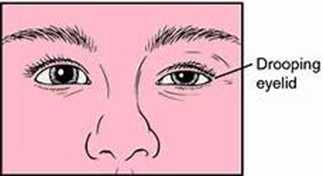
Ptosis refers to drooping of the eyelid. There are many causes of a ptosis, but the most common reason is age related changes in the eyelid. If this is affecting your visibility you can have this surgery performed on the NHS.
As part of your assessment, we request a visual field test. This will test whether your vision is affected significantly by your droopy eyelid. Once the test has confirmed that your vision is affected, your name may be placed on the waiting list for ptosis repair surgery. In addition to this test, the doctor will also need to perform appropriate measurements to confirm how to proceed with surgery.
Before surgery
Certain medications predispose to excessive bleeding such as aspirin, ibuprofen, warfarin, clopidogrel, rivaroxaban, apixaban, edoxaban and dabagatrin. You will be asked to check with your GP if it is okay to stop these for a short while before surgery. This can help reduce the amount of bleeding during the surgery and the amount of bruising you can expect afterwards.
You will be asked to sign a consent form after the eye doctor has explained the operation, the benefits and any risks involved. The main benefit is improved visibility (visual field). The risks include infection, bleeding, over-correction (the eyelid is lifted too high), under-correction (the eyelid not lifted high enough), asymmetry (if you are having this operation for both sides, one eyelid may be slightly higher than the other) and recurrence (the problem may come back again).
It is important for you to be aware of any potential risks, although every effort is made to avoid these problems.
What happens on the day?
This is day surgery, so you will be able to go home the same day. You cannot drive home after your operation, so any necessary arrangements should be made in advance.
The surgery is normally performed under local anaesthetic (injections are given to numb the skin but you are awake). This makes it easier to adjust the desired height of the eyelid more accurately.
The usual procedure involves making a cut on the upper eyelid in your natural skin crease. The tendon and muscle which have slipped, causing the droopy eyelid, is pulled forward and stitched into place. This will lift your eyelid. The technique used to lift your eyelid may vary from this in certain cases. If so, the surgeon will discuss this with you beforehand at your outpatient appointment.
Antibiotic ointment is applied to the eyes and to the eyelids at the end of your operation. You will have a pad over the eye that can be removed the next morning. You can remove this yourself at home. If you are having both sides done, you will have only one eye padded when you leave to go home so that you can see with the other eye. There is likely to be some dried blood when you remove your pad which you should clean gently from your eye with cooled, boiled water.
After the surgery
Ice packs should be applied for 10 minutes 4 times a day for 5 days after you have removed your eye pad. You will be given antibiotic ointment and lubricating drops to apply to the eyelid and the eye. It is best not to drive for a few days after surgery as your vision is likely to be blurred. You should avoid excessive physical activity for about a week. If there is any pain, you can take paracetamol.
Your eyelids will be bruised and swollen for about 2 weeks. It takes longer than this for things to settle down completely. A scar is present on your upper eyelid, but this normally heals very well and is well hidden in your natural skin crease.
A doctor or nurse practitioner will see you in the eye clinic 1-2 weeks later to remove your stitches. We will normally see you on a further occasion after a few months to check the eye when fully settled.
If you have any unexpected problems after the surgery, you should contact the eye ward on the following numbers for further advice:
| From 9am to 5pm Monday to Friday: | 0300 373 5884 |
| From 5pm to 9am and at weekends: | 0300 614 5000 and ask for the Eye Doctor on call |
Contact us
If you have any queries relating to this information, please contact the Ophthalmology service.
About this information
Service:
Ophthalmology
Reference:
QQ/020
Approval date:
2 August 2024
Review date:
1 July 2027
Click ‘show accessibility tools’ at the bottom of the page

Then click ‘select language’

Alternative formats
You can use the accessibility toolbar at the bottom of your screen to:
-
Change the text size
-
Adjust the font
-
Modify the colour contrast
-
Use the translate function
If you would like this information in another format, such as Braille, audio, or easy read, please speak to a member of staff.
You can also print as well as download as PDF using the “Print this page” button at the end of the page.
Staff will print a copy for you on request
Important note
This page provides general information only. It is developed by clinical staff and is reviewed regularly every 3 years for accuracy. For personal advice about your health, or if you have any concerns, please speak to your doctor.