

Advice after your nerve block for surgery
On this page…
This page aims to explain the procedure you will have whilst in hospital, it serves as a guide. If any questions arise from reading this information, please speak to one of the Kidney Cancer Nurse Specialists.
About your kidneys
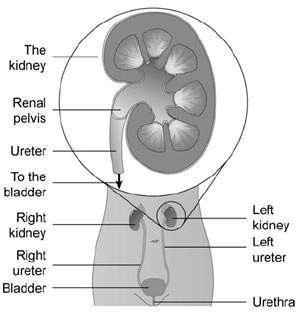
The kidneys are a pair of organs located at the back of the abdomen. They filter blood to remove waste products, producing urine. Urine travels from each kidney to the bladder via a tube called the ureter and leaves the body through the urethra.
Planning your treatment
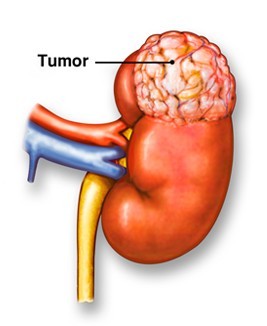
Several factors are considered when planning surgery for a kidney tumour;
• Location and size of the tumour
• Your age and other medical conditions
• Your current medications
• Your kidney function
• Any previous surgery abdominal or kidney surgery
• Involvement of renal vein or adrenal gland
The operation
What is a partial nephrectomy?
A partial nephrectomy is the surgical removal of a kidney tumour whilst preserving as much healthy kidney tissue as possible. It is the preferred treatment for most localised kidney tumours.
How is the operation performed?
Kidney surgery can be carried out in three ways:
- Open surgery - a single large incision in the abdomen or flank.
- Laparoscopic (keyhole) surgery - small cuts using long instruments passed through ports.
- Robotic-assisted surgery - small cuts using robot-mounted instruments with a high-definition 3D camera.
At Frimley Park Hospital, robotic-assisted partial nephrectomy (RAPN) is our standard approach for eligible patients. It offers the best combination of surgical precision, safety, and recovery.
How is the kidney reached?
There are two routes used to access the kidney:
- Retroperitoneal (retro) — access from the back or flank, behind the lining of the abdomen, directly onto the kidney. This avoids entering the abdominal cavity and is particularly suited to tumours at the back of the kidney.
- Transperitoneal (trans) — access through the main abdominal cavity. This provides more working space and is preferred for certain tumour positions or complex cases.
Frimley Park Hospital is nationally recognised for its expertise in the retroperitoneal approach. More than 90% of our RAPN procedures are performed retroperitoneally. Your surgeon will discuss which approach is most appropriate for you.
What happens during the operation?
You will receive a general anaesthetic and be positioned on your side. Small metal tubes (ports) are inserted into your back or abdomen. The cavity is inflated with carbon dioxide gas to create working space.
The Da Vinci robotic system is connected to the ports. Your surgeon views a magnified 3D image and controls the instruments with precision. Although called a robot, the Da Vinci cannot act independently — your surgeon is in complete control at all times.
The operation typically takes 90 to 180 minutes, plus approximately one hour for anaesthetic and recovery.
Risks and Complications
All surgery and anaesthesia carry some risk. These are generally small and will be discussed with you before the operation. Possible complications include:
- Shoulder tip pain and abdominal bloating from the gas used.
- Wound or urinary infection.
- Bleeding — in less than 5% of cases a blood transfusion may be required.
- Conversion to open surgery — less than 1% of cases.
- Conversion to radical nephrectomy (removal of the whole kidney) — less than 1% of cases.
- Injury to nearby structures such as bowel, liver, spleen, or blood vessels.
- Temporary reduction in kidney function.
- Urine leak.
- Anaesthetic risks including blood clots (DVT), pulmonary embolism, or chest infection.
Before the operation
You will attend a pre-operative assessment appointment to ensure you are fit for surgery and to arrange any necessary tests. Please bring a list of your current medications and inform staff of any drug allergies.
Important — Blood thinning medications
You must inform the hospital if you take any blood-thinning medication, including: Aspirin, Warfarin, Clopidogrel, Dipyridamole, Edoxaban, Apixaban, or similar drugs. These may need to be stopped before surgery.
On the Day of Surgery
• You may eat and drink up to 6 hours before your operation
• Bring a supply of your regular medications
• Bathe at home before coming in
• You will be given a theatre gown and compression stockings to reduce the risk of blood clots
• A surgeon and Kidney Cancer Nurse Specialist will go through the consent form with you
• The anesthetist will discuss your medical history and pain management.
After Your Operation
You will recover in the post-anaesthetic care unit until you are stable and comfortable, then transferred to the ward. A drip will keep you hydrated. Your blood pressure, pulse, oxygen levels and temperature will be monitored regularly.
You will be helped to sit up and move around as soon as possible. A urinary catheter will be in place and is usually removed the morning after surgery. A wound drain is occasionally used but is not routine.
Pain is expected but should be well-controlled with prescribed painkillers. Please tell the nursing staff promptly if your pain is not adequately managed.
The renal cancer team will review you the following morning to discuss the operation and your recovery plan. The removed tumour will be sent for laboratory analysis (histology) to confirm the tumour type and guide follow-up care.
Going Home
Most patients are discharged the day after surgery. You will be given painkillers and laxatives to take home. Please arrange for someone to collect you — you must not drive following a general anaesthetic.
- Avoid strenuous exercise for 4 to 6 weeks, even if you feel well.
- Do not drive until you can perform an emergency stop confidently — we advise waiting at least 4 weeks.
- Return to work will depend on the nature of your job — discuss this with your nurse specialist.
When to Seek Medical Advice
Contact us if you experience any of the following after discharge:
- Cloudy or foul-smelling urine
- Blood in the urine
- Fever or shivering
- Increasing pain not controlled by your medication
- Burning or increased frequency when passing urine
- A wound that is red, swollen, or producing discharge
- Any general feeling of being unwell.
Contact Details:
Office hours (Between 8:30 to 4:30): please contact the Kidney Cancer Nurse Specialists
- Sister Jo Oakley Kidney Cancer CNS 0300 613 2426
- Sister Kate Brown Kidney Cancer CNS 0300 613 5804
- Sister Carrie Pink, Kidney Cancer CNS 0300 613 3444
From 4:30 – 9pm: Contact the Surgical Assessment Unit (SAU) on 07990 528061.
Outside of these hours /weekends and in an emergency: dial 999 or 111, or attend your nearest A&E.
Useful Telephone Numbers/contacts
- FRCC Senior Clinical Admin Officer 0300 613 4450
- Appointments 0300 613 4201
- Radiology Department 0300 613 4140
- Pre-Operative Department 0300 613 2157
Contact us
If you have any queries relating to this information, please contact the Urology service.
About this information
Service:
Urology
Reference:
Z/042
Approval date:
29 June 2026
Review date:
1 June 2029
Click ‘show accessibility tools’ at the bottom of the page

Then click ‘select language’

Alternative formats
You can use the accessibility toolbar at the bottom of your screen to:
-
Change the text size
-
Adjust the font
-
Modify the colour contrast
-
Use the translate function
If you would like this information in another format, such as Braille, audio, or easy read, please speak to a member of staff.
You can also print as well as download as PDF using the “Print this page” button at the end of the page.
Staff will print a copy for you on request
Important note
This page provides general information only. It is developed by clinical staff and is reviewed regularly every 3 years for accuracy. For personal advice about your health, or if you have any concerns, please speak to your doctor.