

Advice after your nerve block for surgery
On this page…
These exercises are a method of treating Benign Paroxysmal Positional Vertigo (BPPV)
They succeed in 95% of cases but are more arduous than the Epley manoeuvre.
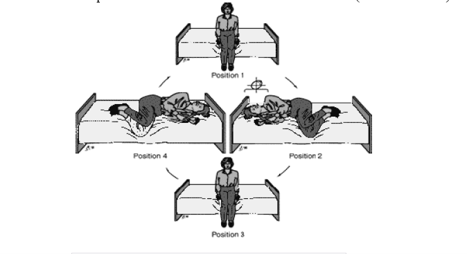
These exercises are performed in three sets per day for two weeks. In each set, one performs the manoeuvre below five times.
1 repetition = manoeuvre done to each side in turn (takes 2 minutes)
| Suggested schedule for Brandt-Daroff exercises | ||
| Time | Exercise |
Duration |
| Morning | 5 repetitions |
10 minutes |
| Afternoon | 5 repetitions | 10 minutes |
| Evening | 5 repetitions | 10 minutes |
- Start sitting upright. Then move into the side-lying position, with the head angled upward about halfway. An easy way to remember this is to imagine someone standing about 6 feet in front of you, and just keep looking at their head at all times.
- Stay in the ide-lying position for 30 seconds, or until the dizziness subsides if this is longer, then go back to the sitting position. Stay there for 30 seconds, and then go to the opposite side and follow the same routine.
These exercises should be performed for two weeks, three times per day, or for three weeks, twice per day. This adds up to 52 sets in total.
In most persons, complete relief from symptoms is obtained after 30 sets, or about 10 days. In approximately 30 percent of patients, BPPV will recur within one year. If BPPV recurs, you may wish to add one 10-minute exercise to your daily routine
Contact us
If you have any queries relating to this information, please contact the Ear or nose and throat (ENT) service.
About this information
Service:
Ear, nose and throat (ENT)
Reference:
G/045
Approval date:
5 August 2024
Review date:
1 August 2027
Click ‘show accessibility tools’ at the bottom of the page

Then click ‘select language’

Alternative formats
You can use the accessibility toolbar at the bottom of your screen to:
-
Change the text size
-
Adjust the font
-
Modify the colour contrast
-
Use the translate function
If you would like this information in another format, such as Braille, audio, or easy read, please speak to a member of staff.
You can also print as well as download as PDF using the “Print this page” button at the end of the page.
Staff will print a copy for you on request
Important note
This page provides general information only. It is developed by clinical staff and is reviewed regularly every 3 years for accuracy. For personal advice about your health, or if you have any concerns, please speak to your doctor.