

Advice after your nerve block for surgery
On this page…
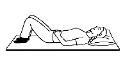
Diaphragmatic Breathing
| Lie down in a comfortable position with a pillow under your head. Bend your knees and put your fingertips on your belly button. Take a slow, deep breath for 3–4 seconds and let your stomach rise, gently pushing your fingers apart. Then breathe out or sigh and feel your fingertips move back together . Practice for 5 -7 minutes daily. |
 |
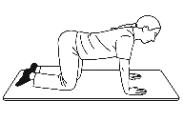
Pelvic Floor Relaxation
|
Start on your hands and knees. Try to keep your back in a neutral, comfortable position while you do this. Complete daily. |
|
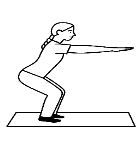
Pelvic floor Activation with Free Standing Squat
| Stand up straight with your feet the same width as your hips. Turn your toes out a little. Bend your knees and push your bottom back, like you’re sitting in an invisible chair. Look straight ahead. To activate your pelvic floor, squeeze the muscles you use to stop passing wind and to stop the flow of urine. You should feel the muscles lift upward inside your pelvis. Hold for 5 seconds then fully relax. Repeat x10 times Complete daily |
|
Contact us
If you have any queries relating to this information, please contact the Physiotherapy service.
About this information
Service:
Physiotherapy
Reference:
BB/007
Approval date:
29 June 2026
Review date:
1 June 2029
Click ‘show accessibility tools’ at the bottom of the page

Then click ‘select language’

Alternative formats
You can use the accessibility toolbar at the bottom of your screen to:
-
Change the text size
-
Adjust the font
-
Modify the colour contrast
-
Use the translate function
If you would like this information in another format, such as Braille, audio, or easy read, please speak to a member of staff.
You can also print as well as download as PDF using the “Print this page” button at the end of the page.
Staff will print a copy for you on request
Important note
This page provides general information only. It is developed by clinical staff and is reviewed regularly every 3 years for accuracy. For personal advice about your health, or if you have any concerns, please speak to your doctor.