

Advice after your nerve block for surgery
On this page…
What is intrathecal chemotherapy?
Intrathecal chemotherapy is when chemotherapy is given into the fluid which surrounds the spinal cord.
This fluid is known as cerebrospinal fluid (CSF), it acts as a cushion to the brain and spinal cord, protecting them from injury. Sometimes a small sample of this fluid is taken just before the chemotherapy is given.
Why do I need intrathecal chemotherapy?
With certain types of lymphoma and leukaemia there is a higher risk of these cells getting into the brain. Doctors use this type of treatment to treat or prevent lymphoma or leukaemia in the brain.
What preparation is needed before the test?
The reasons for doing it will be explained by the doctor, and you will be asked to sign a form to give your permission for this to happen – known as a consent form. They will talk about some of the risks and side effects detailed below.
You will need blood tests before the procedure which should be arranged by your doctor. Your blood pressure and pulse will be checked. You may want to go to the toilet beforehand to help you be more comfortable during the procedure.
How is it done?
It is done in a similar way to a lumbar puncture.
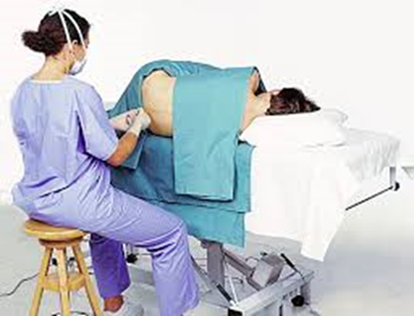
You will either lie on your side with your knees up to your chest or sit up and bend forwards over a table. This makes the gaps between the bones in your back bigger, making the procedure easier.
- The doctor or nurse will clean the skin over the lower part of your back with antiseptic.
- The doctor will then inject local anaesthetic to numb the area.
- A needle will then be inserted between the bones in your back. You will need to stay very still while it happens. You may feel some pressure but it should not be painful.
- Once the needle is in, the doctor may take a sample and will then inject chemotherapy medications.
Can I have someone with me during the procedure?
There are very strict guidelines with this type of chemotherapy. The doctors and nurses will do several safety checks before and during the procedure. No one is allowed to be present in the room other than the patient and trained members of staff which will include nurses and doctors. The staff in the room will offer support and comfort you during the procedure. Family and friends can only be present after the procedure is completed, not during it.
What happens after the procedure?
You will be asked to lie flat for 30 minutes to 1 hour. A small plaster may be put over the site of injection. Your blood pressure and heart rate will be rechecked. It is advised that you do not drive or operate machinery for 24 hours after the procedure.
What are the risks?
Common side effects include headache and this can be helped by lying down for 30 minutes following the procedure.
Other complications are very uncommon. The risks to be aware of are:
- Bleeding
- Infection - there is a small risk of infection at the injection site. If the area becomes red, hot or inflamed, please contact a member of the medical team for advice.
- Pain - there may be pain at the injection site. If this persists or is not managed with simple painkillers, please contact a member of the medical team.
Who to contact?
If you need to make or change an appointment
Macmillan Cancer Navigators (Mon-Fri, 08.30am – 16.30 pm): 0300 613 3535
Ask to speak to a Haematology Clinical Nurse Specialist
If you have questions about the test or your condition
Macmillan Cancer Navigators (Mon-Fri, 08.30am – 16.30 pm): 0300 613 3535
Ask to speak to a Haematology Clinical Nurse Specialist
If you experience problems after the test
Chemotherapy Hotline number (24hr number)
07769 365360 Wexham Site
0300 613 1620 Frimley Site
Contact us
If you have any queries relating to this information, please contact the Cancer care service.
About this information
Service:
Cancer care
Reference:
HH/015
Approval date:
29 April 2024
Review date:
1 April 2027
Click ‘show accessibility tools’ at the bottom of the page

Then click ‘select language’

Alternative formats
You can use the accessibility toolbar at the bottom of your screen to:
-
Change the text size
-
Adjust the font
-
Modify the colour contrast
-
Use the translate function
If you would like this information in another format, such as Braille, audio, or easy read, please speak to a member of staff.
You can also print as well as download as PDF using the “Print this page” button at the end of the page.
Staff will print a copy for you on request
Important note
This page provides general information only. It is developed by clinical staff and is reviewed regularly every 3 years for accuracy. For personal advice about your health, or if you have any concerns, please speak to your doctor.