

Advice after your nerve block for surgery
On this page…
Introduction
This page is intended to give you some information about your hospital stay and rehabilitation after your amputation.
What is a major lower-limb amputation?
Major lower-limb amputation is surgery to remove the leg at any level above the ankle. There are lots of reasons why people may need a major lower-limb amputation. These include:
- Infection
- Non-healing ulcers
- Gangrene
- Osteomyelitis (infection of the bone)
- Trauma (e.g. accident)
- Peripheral Vascular Disease (PVD)
- Cancer
The level of amputation needed will be different for each person and depends on a number of factors:
- The blood supply at the chosen level needs to be good enough to make sure the wound will heal
- Any infected/diseased tissue needs to be removed
- There needs to be a balance between removing tissue and keeping as much length of the leg as possible
- Function and mobility and rehabilitation goals will also be considered
Your amputation multi-disciplinary team (MDT) will discuss the most appropriate level of amputation with you.
Preparing for surgery
If your operation is planned (elective) you will given a date for admission. Please bring a list of all the medications you take with you. A nurse will admit you to a bed. The Vascular surgeon and Vascular anaesthetist will then see you.
Please make sure that you bring a supportive, comfortable shoe and loose fitting clothes into hospital as you will be going off the ward for some of your rehabilitation
If you are an inpatient and need an amputation as an emergency procedure you will be seen by the Vascular anaesthetist who will assess your fitness for surgery.
The multidisciplinary team (including: physio, OT, nurse) will see you to complete an initial review of your function and physical ability. They will also discuss the rehabilitation process with you.
Whether your operation is planned or an emergency, the Vascular surgeon will review you to talk through the operation and any potential complications, they will then obtain your consent to proceed with the operation.
If you have any personal wishes regarding your amputated limb please speak with your surgeon.
The Operation
Amputations can be done under general anaesthetic (where you're unconscious) or using either an epidural anaesthetic or spinal anaesthetic (both of which numb the lower half of the body). The choice of anaesthetic can depend on what part of your body is being amputated.
During the amputation, additional techniques can improve the function of the remaining part of the limb and reduce the risk of complications. Stitching the muscle to the bone (a technique known as myodesis) helps strengthen the residual limb.
Complications
There are a number of factors that affect the risk of complications from surgery, such as age, general health and the type of amputation.
The risk of serious complications is lower in planned amputations than in emergency amputations
Complications include:
- Heart problems (heart attack)
- Deep vein thrombosis (DVT)
- Bleeding
- Pneumonia
- Pain (including phantom limb pain)
- Slow wound healing and wound infection
Wound complications occur in 12-34% of Below Knee Amputations (BKA) and 6-16% of Above Knee Amputations (AKA).
- Revision of amputation to a higher level
- Rates of conversion from BKA to AKA is 9-28%.
- Death
- The 5-year mortality after major amputation varies from 30-70%; it is higher for AKA than BKA.
In some cases further surgery may be needed to correct problems that develop or to help relieve pain.
If you are having an amputation due to problems with circulation there is also a risk of developing similar symptoms in you remaining limb.
The vascular team will discuss this in more detail with you prior to your operation.
jvsgbi.com. (n.d.). All you need to know about Vascular Surgery – Journal of Vascular Societies Great Britain and Ireland JVSGBI.
Available at: https://
What Will Happen After The Operation?
Your stump will be heavily bandaged in theatre which helps to control swelling and prevent infection. This dressing will stay on for around five days. After this time, the vascular team will then remove the dressing to inspect your wound and apply a lighter dressing to your stump.
Your wound will have stitches or clips and these will be removed by a nurse twenty one days after your operation. This may be completed by the community team if you have already been discharged from hospital.
Most people are discharged from hospital within a couple of weeks of surgery. However, this is different for every patient and depends on your wound healing, safety and progress with rehabilitation.
How much pain can I expect?
After an amputation, it is normal to have some post operative pain. You may be given a nerve block during your surgery where a small tube will be inserted to provide continuous local pain relief for up to 5 days post surgery. Alternatively you may be given other types of pain relief. These will be discussed with you by a member of the pain team.
What is phantom limb sensation/pain?
Phantom limb sensation is feeling in the missing limb. These feelings are quite normal and generally non-painful and will normally reduce over time. Exercise, stump massage and movement will help in in reducing these feelings.
Phantom Limb Pain is a feeling of pain in the missing limb. Not every patient will experience Phantom Limb Pain however for those that do it is often described as a burning, throbbing or cramping pain.
It is important to speak to your Physio and the medical team as there are a variety of treatments including medication that can help with the management of phantom pain.
Residual limb oedema (stump swelling)
Stump swelling is normal after amputation. To prevent complications, you should avoid putting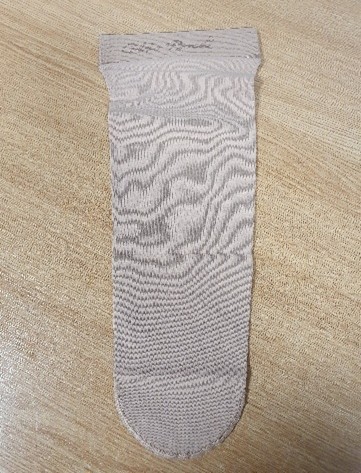
You will also need to start doing bed exercises as soon as possible, to improve your strength and pump fluid away from the end of your stump.
If you are a below knee amputee then you need to ensure that you do not sit with your stump hanging over the edge of the bed or a chair. You should sit in your wheelchair with your stump supported on a stump board.
Your Physiotherapist will inform you if you require a compression sock to control swelling in your stump. This is normally worn as soon as your stump has started to heal. It should only be worn during the day and should be taken off at night.
Psychological adjustment
An amputation is a life-changing operation. Facing such major surgery may bring out emotions that you find difficult to deal with on your own. You may experience a variety of emotions, such as feelings of numbness, desire to withdraw, feelings of anger, frustration or depression.
You may also have fears about your rehabilitation, or how you will cope at home. These feelings are common and very normal. It can help to talk about them, perhaps to the staff involved, family or friends.
Please talk to your therapy team about counselling services available to you after your discharge from hospital.
The team can also signpost you to charity-run support groups in your local area.
Health and Lifestyle
Smoking
If you are a smoker, reducing, or stopping will aid wound healing after the operation. It is also much better for your circulation in the long term and may prevent the need for further surgery or other medical conditions/problems in the future.
Staff on the ward can refer you to the tobacco dependency team for support with quitting.
Diet
A healthy balanced diet will aid wound healing. It is important that you try to eat normally after the surgery, to give the body the energy it needs to heal itself.
It may be helpful to discuss your diet with a dietician, particularly if you are diabetic. This can be arranged via the nursing staff on the ward, if you ask them.
Looking after your residual limb (stump) and foot
Following amputation it is very important to take care of your residual limb and remaining foot, even when all your wounds are healed and they are no longer being dressed.
This is especially important if your amputation was due to problems with your circulation. If your residual limb or foot becomes painful, skin abrasions occur, or unusual marks or reddening appears then you must seek medical attention.
It is recommended that you wash your residual limb and foot daily with a mild soap, ensuring both are dried with a clean towel. Both legs need to be checked regularly. Use a mirror if necessary.
Once the wound has healed you may massage the stump, with moisturising cream, (e.g. E45), to stop the scar becoming too thick.
Please speak with your occupational therapist regarding bathing/showering as you may require equipment or support with this, this may need assessment once you are home. You may shower following surgery as long as all wounds have a waterproof covering over them. If your dressings get wet please change them immediately. You may want to consider purchasing a waterproof reuseable cover e.g. Limbo bag.
You may be referred to podiatry services on discharge from hospital.
If in doubt about the condition of your legs contact your GP.
Rehabilitation
Physiotherapy and Occupational Therapy (OT) are an important part of your rehabilitation and recovery after amputation.
The Physiotherapist and OT will aim to see you the day after your operation to start your rehabilitation.
The Physiotherapist will teach you some exercises to strengthen and improve your movement.
You will require a wheelchair to sit in and will be issued with one on a short term loan by your OT. The OT will then make a referral to your local wheelchair service so that you get your own wheelchair in the long-term.
You will be shown how to safely use the wheelchair by your therapy team
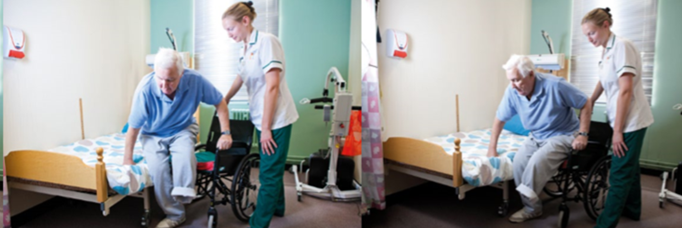
Provided you are well enough and your pain is controlled, you will also transfer out of bed into your wheelchair with the help of the Physiotherapist and OT.
You will be assessed and taught the most appropriate way to transfer throughout your stay in hospital.
Occupational Therapy
OT rehab will aim to maximise your independence in basic daily activities such as toileting, getting washed and dressed and preparing food/drink.
The OT will support in preparation for your discharge from hospital.
Some people are able to go straight back home from hospital, while some people require further in-patient rehabilitation in their local area.
If you are going home you may require some support from carers on discharge. This will be discussed with you and a referral for care can be made.
Before discharge your OT will make sure you can use a wheelchair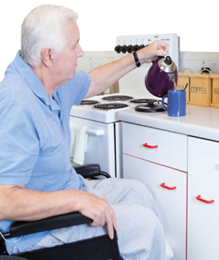
Your OT will provide advice on how to make your property as wheelchair friendly as possible. They will make recommendations on any home adaptations or equipment that you may require.
A referral can be made to the community team to assess for bigger changes or equipment that you may need. You may have limited access to parts of your home whilst awaiting these assessments.
Physiotherapy
You will see the Physiotherapist regularly to continue your exercises, work on your balance and improve your core strength.
It is important to remember that you will be discharged from hospital as a wheelchair user. We advise NOT to hop, crawl or use walking aids after your amputation due to the high risk of falls and the potential to hurt yourself and your stump.
Not everyone is suitable for a prosthesis/artificial limb. Your physiotherapist will assess your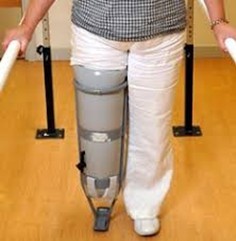
Part of the assessment may include rehabilitation with equipment that allows standing, weightbearing and early walking in the therapy setting with an early walking aid such as the Pneumatic Post Amputation Mobility Aid (PPAMaid) (pictured) or femurett.
This can be trialled once your stump has started to heal.
Frequently asked questions
If I am assessed as likely to get a prosthesis, how long does it take to get one?
Sometimes it can take a little while to get a prosthetic leg. If your Physiotherapist thinks you will meet the criteria for a leg then they will make sure you have some outpatient rehabilitation with a specialist Physio team when you go home and will also make a referral to a limb fitting centre (where the legs are made).
We currently use 3 specialist limb fitting centres depending on where you live:
- Queen Mary’s Hospital at Roehampton
- Portsmouth Enablement Centre
- Oxford Centre for Enablement
If the limb fitting centre are happy with your progress, they will take some measurements of your stump and start to make you a prosthetic leg. About 2 weeks later, you will return to the limb fitting centre to have the leg fitted. You will then need some more Physiotherapy so that you learn how to use your prosthetic leg safely.
Am I entitled to any benefits?
You may be entitled to some benefits and this depends on your circumstances. For more information about benefits please contact your local Citizens Advice Bureau (www.
When can I return to driving?
It is a legal requirement to inform the DVLA and your insurance company of your change in circumstance. You will need to fill in a form issued by the DVLA which can be found on the internet (www.
Some people may be entitled to an adapted vehicle through the motabiity scheme. You can check your eligibility at www.
When can I resume sexual activity?
You can resume sexual activity as soon as you feel comfortable following discharge from hospital. You should avoid weightbearing through your new stump and you may need to make some adjustments as your balance will be affected.
When can I return to work?
This depends on the type of job you have. Please talk to a member of the rehab team for further advice. Prior to discharge you can obtain a sick certificate from the ward. Sick certificates can also be obtained from your GP.
Contact Details
Secretaries at Frimley Park
Mr D J Gerrard, Mr Chong, Mr Chaudary - 03006132141
Mr K Jones, Mr Cleanthis, Miss Moore - 03006134291
Lt Col Sharrock, Mr Ali, Mr Dastur - 03006132487
North Hants Hospital Basingstoke Secretary - 01256 313569
Wexham Park Hospital Secretary - 03006153352
Vascular Specialist Nurses:
Claire Martin Lead Vascular CNS - FPH 0300 6136302
Tracey Craig Vascular CNS - FPH
Andrea Croucher Vascular CNS - FPH
Pabita Limbu Vascular CNS - FPH
Kirstie lane Vascular CNS - WPH 07770702053
Nessa Cababa Vascular CNS - ASPH 07522618600
Useful Contacts
Amputee-Coalition
www.
Blesma
020 8590 1124
www.
Living Made Easy
0300 999 0004
www.livingmadeeasy.org.uk
Disabled Motoring UK
01508 489449
www.
DVLA
0300 790 60801
www.
Frimley Limb-Impaired and Amputee Group (FLAG)
flag.
Talking Therapies
www.
Help for Heroes
0300 303 9888
www.
Limbcare
0800 052 1174
www.
The Limbless Association
0800 644 0185
www.
Limbpower
07502 276858
www.
Motability
0300 456 4566
www.
Pilgrim Bandits
07749969051
www.pilgrimbandits.org
The Ramp People
01372 569051
www.
Samaritans
Call: 116 123
Steel Bones
0333 3606930
www.steelbone.co.uk
Contact us
If you have any queries relating to this information, please contact the Physiotherapy service.
About this information
Service:
Physiotherapy
Reference:
BB/100
Approval date:
28 August 2026
Review date:
1 August 2029
Click ‘show accessibility tools’ at the bottom of the page

Then click ‘select language’

Alternative formats
You can use the accessibility toolbar at the bottom of your screen to:
-
Change the text size
-
Adjust the font
-
Modify the colour contrast
-
Use the translate function
If you would like this information in another format, such as Braille, audio, or easy read, please speak to a member of staff.
You can also print as well as download as PDF using the “Print this page” button at the end of the page.
Staff will print a copy for you on request
Important note
This page provides general information only. It is developed by clinical staff and is reviewed regularly every 3 years for accuracy. For personal advice about your health, or if you have any concerns, please speak to your doctor.