

Advice after your nerve block for surgery
On this page…
What Are Functional Symptoms?
Fact: ‘Functional Symptoms’ are sometimes called ‘Persistent Physical Symptoms’, ‘Medically Unexplained Symptoms’, ‘Psychosomatic Symptoms’, or ‘Psychologically Mediated Symptoms’.
Functional Symptoms is a term used to describe physical symptoms with no apparent biological cause. When symptoms seem to be caused by problems in the nervous system, but you do not have a specific neurological condition, doctors may refer to your symptoms as a ‘Functional Neurological Symptoms’. Just because symptoms have no obvious biological cause, it does not mean the symptoms are ‘imagined’ or not real!
Functional Symptoms can be frustrating because:
- The medical tests for your symptoms are all normal, but symptoms still occur.
- It can be hard to understand a diagnosis of Functional Symptoms.
- It can feel as though other people think your symptoms are imaginary.
However, you are not alone! Functional symptoms are common, with one in ten adolescents experiencing them! These symptoms account for up to 45% of all GP appointments, and half of all new visits to hospital clinics in the UK.
Examples:
| Common Functional Symptoms | Common Functional Neurological Symptoms |
| Abdominal Pain | Tingling in the hands or feet |
| Pain in the muscles or joints | A tremor in one or both arms |
| Tiredness | Headaches or migraines |
| Chest pain | Changes in eyesight, like blurred vision or seeing flashing lights |
| Heart palpitations | Movement difficulties (abnormal movement or positioning of part of the body). Specific movement difficulty can include arms of legs shaking uncontrollably, jerky types of movements, spasms, and gait (walking) problems. Collapsing and fainting are also common functional neurological symptoms. |
The Mind-Body Link:
The Computer Analogy
There are several ways of describing the link between the mind and body which can help us to understand Functional Symptoms. Let’s start with a ‘Computer Analogy’.
Terminology
Hardware: the collection of physical parts of a computer system. For example, the monitor, keyboard, and mouse. The hardware is comparable to the brain.
Software: the programme, or instructions, that tell the hardware what to do. The software is comparable to the mind.
Think of the brain and nerves as a computer that sits on a desk. But the electrical messages that run through the nervous system are like the computer’s software. When computers break, sometimes things go clearly wrong with the hardware (you can see the part is physically damaged, it can be fixed and replaced). However, sometimes things go wrong with the software. Whilst we cannot actually see these changes, sometimes reprogramming the software can help make positive changes towards fixing the computer.
The same can be said of Functional Symptoms. Sometimes the brain picks up messages that something is wrong, and we can experience symptoms because of this. However, we cannot see anything physically wrong in medical tests, such as scans or blood tests (there is nothing wrong with the hardware, and therefore it cannot be replaced or fixed). Software problems may include psychological and social components, and therefore some of our “reprogramming” needs to include these elements.
How does it work?
We can explain Functional Symptoms by talking about common examples of the link between psychology and biology.
Functional Symptoms are not ‘all in the mind’, but neither are they all in the body. To understand them we have to think about how the mind and body work together. Our body and mind work together and affect each other.
- Scientists tell us that our brain communicates with our body, and our body communicates with our brain. Messages travel down the nerves from the brain to the body, and back again from the body to the brain.
- Hormones are natural chemicals that travel the body through the bloodstream. Some hormones are produced in the brain and affect the body. Some are made in the body and affect our brain, which has an impact on our feelings and emotions.
Everyday thoughts, feelings, and stressors play a part in making changes in our bodies. For example;
Fear and Extraordinary Strength
In 1982 Angela Cavallo lifted a car off of her son, who was trapped beneath it. He had been fixing the underneath of the car when the tool holding it off of the ground broke. Seeing this accident made Angela fear for her son’s life. She was an average sized woman, but still managed to hold up the 3,000 pound vehicle for five minutes whilst the neighbours rescued her son from beneath it. This seemingly superhuman strength is a part of the ‘Fight vs. Flight’ response (explained on p.9). The release of adrenaline during the Fight vs. Flight response encouraged blood to rush to all of her
working muscles, meaning muscles can contract with more force and power than normal. It is possible that during situations of extreme psychological stress and/or danger, that the adrenaline rush enables us to unlock a muscle’s true potential that might otherwise not be achieved voluntarily. This example shows the interaction between an extreme psychological state, fear, and our biology; demonstrating the Mind-Body Link.
Examples
There are also many more common day-to-day examples of the Mind-Body Link…
Blushing
When you feel embarrassed, or shy, you may notice your cheeks going pink…this is blushing! Blushing is a physiological response to feeling shy or embarrassed.
Butterflies
Feeling worried or scared can sometimes give you the feeling that there are lots of butterflies fluttering in your tummy! For example, on your first day of your new secondary school you may feel butterflies in your tummy because you are worried or scared, but these go away once you feel more relaxed and comfortable.
Throat Lumps
You may notice that when you feel upset or anxious your throat may feel as though there is a big lump in your throat. Although your throat might feel tight, there is not actually anything blocking it. This is the body's physical response to psychological distress. However, when your level of anxiety or upset lowers, the ‘lump’ disappears.
Tears
Tears are a physiological response to emotions such as sadness, happiness, and anger – we cry when we feel strong emotions. This is an example of your body (hardware) and mind (software)
interacting.
Stress
Walking into an exam can be very stressful. You may notice that your heart rate increases as you walk into the exam room. Stress generated in the brain results in bodily changes, such as an increased heart rate. The mind influences the body.
Exercise and Mental Health
Physical activity causes the release of chemicals in our brains, such as endorphins, which improves our mood and makes us feel good.
The way you think and feel can make you feel physically unwell; feeling low or stressed can worsen any existing pain.
Fight vs. Flight for Younger Children
The Fight vs. Flight Response is a good example of how psychological distress can affect our physical symptoms! Anxiety is an excellent example of a psychological state which can contribute towards
Functional Symptoms.
Thousands of years ago, when we were cavemen, stress and anxiety were very useful emotions because they helped us take action in the face of immediate danger, keeping ourselves safe. For example:
A bear jumps out in front of you > you feel anxious > physical changes occur in your body, preparing you to either fight or run away > you fight or run away > you are now safe and your anxiety is relieved > your body returns to normal. Anxiety is not always as helpful in today’s environment. Our body still reacts in the same way as it did thousands of years ago, however, the world today is much more complicated and many of the things that make us worry cannot be
fixed immediately. This can leave us with feelings of anxiety, which are difficult to resolve instantly.
However, anxiety exists for a reason , and can be helpful in protecting us from immediate danger.
When you feel anxious you may notice a number of changes in your body.
These may be some of the signals you notice when you get anxious:
- Dry mouth/difficult to swallow
- Butterflies in stomach
- Lump in throat
- Sweaty hands
- Headache/Tense
- Blurry vision
- Shaky voice
- Faster heartbeat
- Difficulty breathing
- Jelly legs
- Needing the toilet
- Red face/Feel hot
Tip: When your child is in fight vs. flight, help them to focus on regulating their breathing. Avoid using phrases such as “calm down”. Instead, use “let's breathe” or “in through the nose, out through the mouth” or “you're okay, just breathe”.
- When we see something scary or think frightening thoughts, our bodies prepare us to take action
- This can either be to run away (flight) or stay and defend yourself (fight)
- To do this, the body produces chemicals called adrenaline and cortisol
- These chemicals make the heart beat faster in order to provide the muscles with the fuel they need
- This helps us become very alert and able to focus on the ‘threat’
- Blood gets diverted away from those parts of the body that aren’t being used (tummy)
- Other bodily functions stop working temporarily, we don’t need to eat at times like this so you may find you have a dry mouth and it is hard to swallow
- The body is now working hard, so it becomes hot
- In order to cool down, the body starts to sweat and pushes the blood vessels to the surface of the body, so some people may become flushed or red in the face. Sometimes due to breathing too quickly, too much carbon dioxide is breathed out for a time, this can make you feel faint, light headed, or feel wobbly in your legs
- Muscles that continue to be prepared for action (tensed) start to ache and people may notice headaches and stiffness
The Fight vs. Flight Response produces noticeable physical symptoms. By understanding this response, it becomes easier to see the difference between feeling symptoms of anxiety, and feeling symptoms of physical illness.
Info on this sheet taken from materials and worksheets from ‘Anxiety’ by Paul Stallard, published by Routledge
Changing Behaviour and Enjoying Yourself
When we experience Functional Symptoms, we can often stop doing things that we used to enjoy. However, avoiding things often makes us feel worse in the long-term.
- The first step is to think about things you have stopped doing/are doing less/are avoiding as a result of your symptoms. Make a note below of things you are avoiding because of how you are feeling.
|
Things around the home:
|
|
Things at work or school:
|
|
Hobbies and interests:
|
|
Social activities with friends and family:
|
|
Anything else:
|
2. Once you have filled in Section 1, the next step is to plan how easy it would be to start doing some of the avoided activities again. It may seem overwhelming in the beginning, however, it is much easier if you break the process down into smaller steps.
Create a ladder (hierarchy) of things you avoid with the ones you are most anxious about at the top, and the ones that bother you less at the bottom. Try to include a good mix of the things you wrote down in Section 1.
Start to tackle your fears and your abdominal pain by starting at the bottom of the ladder and gradually working your way through each step. Before completing each task, write down what you think will happen, and follow this up by writing down what actually happened after task completion. Hopefully you will start to see that it is mostly not as bad as you think it is going to be.
| Situation | Difficulty (0-10) |
| Example: Playing rugby again | 10 (most difficult) |
| Example: texting a friend | 1 (Least difficult) |
Changing How I Cope with Symptoms:
Doing Too Much or Too Little
Pacing
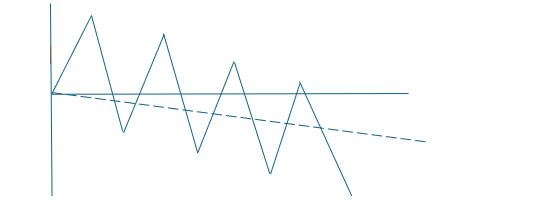
Some people who suffer with Functional Symptoms make the choice to do less, or even nothing. This makes sense, however, it can result in you missing out on important and fun activities. However, we know that missing out can negatively impact your mood. Some people take the opposite approach and try to stay very active on days they feel better. Again, this approach makes sense but can be counterproductive. You may push yourself too hard and end up suffering,
resulting in exhaustion and low-mood. This is referred to as a boom and bust pattern.
High activity
Low activity
Very high activity days alternating with very low activity days (solid, jagged line) will result in overall decreasing level of average activity (straight, dashed line).
Pacing is a skill which enables you to consistently carry out activities without causing excessive exhaustion or inactivity. Pacing is the middle ground between doing nothing and doing too much. Over time you may notice that pacing enables you to do more.
- Choose an activity, such as visiting your friends or housework.
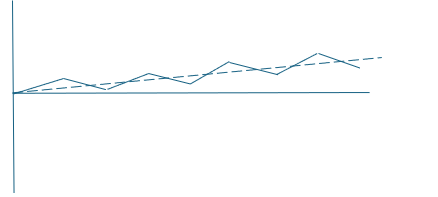
- Measure the length of time you feel physically and emotionally comfortable doing this. Do this at least 3 separate times on good and bad days.
- Take the average of these times. This helps you find your comfortable starting point to spend on these activities. Try to stick to this time, no more and no less.
High activity
Low activity
Using the comfortable starting point on both good and bad days will result in overall increasing level of average activity (straight, dashed line).
Remember:
- Pacing can give you more control.
- Pacing is about judging when to stop an activity based on time and not mood.
- The comfortable starting point should be used on both good, and bad days. It is normal to find it difficult to limit yourself on good days.
- Using a comfortable starting point leads to improved tolerances and achievement.
- Taking a break is not a sign of weakness or failure. You may find it helpful to gradually build up the amounts you are able to do on the bad days.
Smart Goals
Having Functional Symptoms can cause you to stop taking part in activities you enjoy. Goal setting is about working out what you would like to be able to do, and working towards achieving it. Goal setting is a powerful way of improving your quality of life and sense of control. It is important that goals are meaningful to you and feel good.
A goal is something that you are motivated to work towards and achieve. When you are working on activity levels, it is important to set goals that can help to both motivate you, as well as direct your efforts and energy.
Specific: clearly state what you would like to happen
Measurable: will you be able to say it was achieved?
Achievable: are you able to complete the task independently?
Realistic: are you going to do it?
Timely: think whether it is ‘the right time’ to do this. Set yourself a realistic time limit to achieve this goal.
Specific
To create a specific goal it must answer the 6 ‘W’s.
- WHO is this goal for/who is involved in it?
- WHAT is it that needs to be accomplished?
- WHERE should this goal take place?
- WHEN will this goal be completed, or how long will it take?
- WHICH things or requirements, and constraints, need to be identified?
- WHY does this goal need to be accomplished? What is its purpose?
For example:
I want to use Progressive Muscle Relaxation to help manage my symptoms’ as a SMART goal would be: ‘I want to use Progressive Muscle Relaxation 30 minutes, everyday at home for one month, to reduce my symptom severity’.
Measurable
Measurable goals make it easier to stay on track to meeting your goals. Questions like ‘how much’, or ‘how many’, or ‘how will I tell if I met my goal’ is a good way to determine what to measure. For example, practicing Progressive Muscle Relaxation for 30 minutes everyday is quantifiable and measurable. You can track your progress and see results.
Realistic
When you are coping with Functional Symptoms you need to have goals which are realistic and reasonable. It is easy to get ahead of yourself. Sometimes people fall into the trap of getting overwhelmed by goals which seem impossible. Make a realistic goal by breaking into smaller goals.
Timely
An important factor in achieving your goals is seeing the progress you have made. Set a time limit to complete your goal. For example, practice progressive muscle relaxation for 30 minutes each day, for a month before you tackle another goal. Write down your progress, seeing progress can motivate and encourage you.
A goal is something that you are motivated to work towards and achieve. When you are working on activity levels, it is important to set goals that can help to both motivate you, as well as direct your efforts and energy.
Doing more
Mood can be greatly affected by what we do, when we do it, and with whom.
Keep track of what you do each day and make sure you are spending your time doing enough
things that give you a sense of:
A - achievement
C – closeness to others
E – enjoyment
Being mindful of these 3 things when goal setting may help you to set meaningful SMART goals.
Doing more also allows less time for negative and unhelpful thoughts and overthinking, which
will have a positive effect on mood
Improving Sleep
Sleep difficulties are very common in individuals with Functional Symptoms. It is important to develop positive sleeping behaviours to help reduce anxiety and symptoms severity.
Routine
- Sleep at regular times each night, this programs the brain and internal body clock to get used to a set routine.
- It is important to try and wake up around the same time each day. If you have a bad night, still try to wake up at the same time in the morning. ‘Catching up on sleep’ on a regular basis can disturb your sleep routine.
- The amount of sleep you need changes as you grow.
Preparing Your Room
- Make your bedroom just for sleep, try to avoid eating your meals in bed, or playing games in bed. Your bed should be for sleeping only.
- Keep your bedroom tidy and free of distractions at bedtime. Clear away any toys or clothes lying around.
- Keep the room at a good temperature and try to reduce light. Keeping light levels dim encourages the body to produce the sleep hormone, melatonin. If you are worried about the dark, you could try having a small night light.
Wind Down Before Bed
- Having a warm bath can help your body to reach a temperature that is ideal for rest.
- Avoid using smartphones, tablets, or other electronical devices for roughly an hour before bed. The light from the screens of these devices may have a negative effect on sleep.
- Relaxation exercises, such as light yoga stretches and those included later in this pack can help to relax the muscles. However, vigorous exercise will have the opposite effect.
- If your mind is busy, write a to-do list for tomorrow or write down your thoughts. This will help to organize your thoughts and clear your mind of any distractions.
Self help Worksheets
Progressive Muscle Relaxation
| 1 | Get comfortable in a distraction free environment. You can either lay down or sit upright in a chair. Closing your eyes will help you focus on the different muscle groups, but you do not have to if you don’t want to! For all steps, hold the tense position for a couple of deep breaths, or however long is comfortable for you, then relax. Repeat each step three times. |
| 2 | Draw a deep breath in through your nose and feel your abdomen rise as you fill your body with air. Then slowly exhale from your mouth, pulling your belly-button towards your spine. |
| 3 | Start with your feet. Clench your toes with your heel pressing towards the ground. Squeeze tightly for a couple of breaths and then release. It may help to say ‘relax’ whilst you release the tension. Next, flex your feet with your toes pointing towards your head. |
| 4 | Next move to your legs. Stretch your leg out, with your toes pointing towards the sky, feel the back of your leg tightening. Hold this for a couple of deep breaths and then release. Then, point your toes down into the ground with your leg straight for a couple of deep breaths. |
| 5 | Now move onto your glutes. Squeeze your buttocks muscles for a couple of deep breaths. Remember, you should only feel tension and not pain. |
| 6 | To tense your stomach and chest, pull your belly button in towards your naval as tight as you can. Breath in deeply, filling up your chest and lungs with air. |
| 7 | Next, tense your shoulder blades and back. Push your shoulder blades backwards, as if you are trying to get them to touch. This will push your chest forwards. |
| 8 | Now tense the muscles in your shoulders as you bring your shoulders up towards your ears. |
| 9 | Be careful when tensing your neck muscles! Face forward, and SLOWLY pull your head back to look up at the ceiling. |
| 10 | Open your mouth as wide as you can, as if you are yawning, to tense your mouth and jaw. |
| 11 | To tense your eyes and cheeks, squeeze your eyes tight shut. |
| 12 | Raise your eyebrows as high as they will go, as if you were surprised, to tense your forehead. |
| 13 | To tense your upper arms, bring your forearms up to your shoulder to ‘make a muscle’. |
| 14 | Finally, to tense your hand and forearm, make fists with both of your hands. |
Practice means progress. Only through practice can you become more aware of how your muscles respond to tensions and relaxation. Training your body to respond differently to stress is like any training – practice is the key!
Calming The Body: Deep Breathing
During periods of anxiety, the body triggers the Fight or Flight Response. Breathing is shallow, uncontrolled, and muscles become tense. Deep breathing triggers the Relaxation Response, whereby breathing becomes deeper, controlled, slower, and the symptoms of anxiety reduce.
| Sit or lie down comfortably. Close your eyes if it makes you feel more comfortable. Place your hand on your stomach, if you breath deeply enough, you should notice your hand rising and falling with each inhalation and exhalation. Imagine a balloon blowing up in your stomach as you breath in, and deflating as you breath out. |
 |
Inhale. Breath in slowly through your nose for 4-8 seconds. |
 |
Pause. Hold the air in your lungs for 4- 8 seconds (however long is most comfortable for you). |
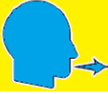 |
Exhale. Breathe out slowly through your mouth for 4-8 seconds. |
| Repeat. Practice for at least 2 minutes. As your technique improves, practice for 5-10 minutes. |
Tips
- Slow down. The most common mistake is breathing too quickly. Count each step slowly as you do so.
- Counting your breaths takes your mind off of the source of anxiety. Counting acts as a distraction, whenever you catch your mind wandering, return to counting.
Relaxing Safe Place Imagery
All visualisations can be strengthened by engaging all of your senses in creating your ‘Safe Place’. If you have any negative thoughts enter your positive imagery, discard that image and create another one.
Get comfortable in a quiet place where you won’t be disturbed. Sit, or lie, comfortably. Take a few minutes to practice some deep breathing, become aware of tension in your body, and
release it with each breath.
Imagine a place where you can feel safe and relaxed. Your safe place can be somewhere you have been on holiday, somewhere you have seen a picture of, or a completely new place you create. Avoid using your home as your safe place.
Look around your safe place, pay attention to all the colours and shapes around you. Describe what you see aloud.
Now focus on what you can hear. Listen to the sounds far away from you, and those close to you. Perhaps all you hear is silence. You may hear the sound of running water, or the crunch of leaves under your feet.
Now focus on any skin sensations. Notice the feel of the ground beneath your feet, or whatever is supporting you in this place. Pay attention to the temperature and direction of the wind, and anything else you can feel.
Take a deep breath in. Place your hand on your stomach, and imagine a balloon inflating in your stomach. Can you notice any smells there? Maybe you can taste the salty sea air as you inhale?
Pay attention to all of these sensations whilst you spend time relaxing in your safe place.
Whilst you’re in your safe place, give it a name that you can use to bring that image back at any time.
You can choose to stay for a while, enjoying the calmness and tranquillity. You can leave when you are ready by slowly opening your eyes and bringing yourself back to alertness in the present.
Worry Tree
(Start from the top, choose Yes/No alternative and follow the right colour down)
| What is making you worry? |
| Can I do anything about this issue? |
| NO: | YES: |
| Try to distract myself to ease my worry | Make a mind-map or list to show what things I can do to stop or improve my worry |
| Can I do anything about my worry right now? |
| NO - I can’t do anything about it at the moment. |
YES - I can
|
| Make a mind-map or action plan of what I can do in the future to help ease my worry. | Do this now! |
| Do my best to stop worrying by distracting myself until I can action my plan. | Stop worrying and distract myself. |
Guided Visual Imagery Relaxation: The Beach
Lay down, or sit comfortably in a quiet room. Use the deep breathing techniques you learnt earlier in this pack, close your eyes and listen to somebody read you the following script. You can also read this script to yourself. You may find it more relaxing to play an audio track of crashing waves on the beach; this can be sourced on YouTube, Spotify, and most other online music platforms.
You’re walking down a long wooden stairway to a big, beautiful beach. It is very quiet and stretches off into the distance as far as you can see. As you look down you notice that the sunlight is reflecting off of the golden sand. You step into the sand, it feels warm so you wriggle your toes. You notice the warmth from the sand between your toes and around your feet. You notice the sounds of the waves crashing and chasing you up the shore, the water sparkles like a diamond as it retreats back. The roaring sound of the waves is so soothing that you can just let go of any worries.
The ocean is a beautiful light blue, with patches of darker sapphire in the deep. As you look at these deep blue areas you notice a small sailboat on the horizon. All of these sights help you to let go of any worries and relax even more.
As you continue walking along the beach, you become aware of the fresh salty sea air. You look up take a slow deep breath in, and breath out. This breath makes you feel refreshed and relaxed. As you look up you notice two seagulls, the wind gusts and they appear to dance in graceful circles above you. It makes you wonder how it would feel if you could fly under the warm sun.
You find yourself settling into a deep state of relaxation as you walk further down the beach. You feel the sun wrap its warm arms around you, the warmth relaxes all of your muscles. You notice a beach chair as you walk down the beach, once you reach it you take a seat. Laying back in this comfortable chair makes you reflect on everything you have felt, seen and thought at this beach.
You drift into a deeper state of relaxation.
Now, feeling relaxed and at peace, you slowly rise from the beach chair and step into the warm sand to walk home. As you walk, you remember how relaxing this beach has been, and you know that you can come back to this place anytime you like. You start to climb the wooden stairs and gradually bring yourself back into the room. When you are ready, you can open your eyes.
Develop Coping Thoughts/Positive Self-Talk
Positive statement encourage us and help us cope through distressing times. We can act as our own coach by saying these encouraging thigs to ourselves. Creating a sentence that you can say to yourself when you are feeling low or struggling to cope with your symptoms can be very useful. Some choose to keep a copy of these in their pencil case or wallet so that they are always available.
“I can do this.”
“I can cope.”
“Keep calm and carry on.”
“Thoughts are just thoughts – they are not necessarily fact.”
“It is okay to feel this way, it is a normal reaction.”
“This is difficult and painful, but it is only temporary.”
“This won’t last forever.”
Activity:
| Situation: |
Coping Thought/Positive Statement: |
| Example: I have got a new doctor. I am worried about discussing my symptoms with him in case he/she thinks I am making them up. | These are just thoughts, they are not necessarily facts. The doctor will do his/her best to help me. |
| I have exams in the next couple of weeks, they are really important. I am worried I will miss an exam, or do badly in them, because my tummy hurts. | |
| My friend has invited people over to her house for a sleep over. I am scared I will get the tingling in my arm again. | |
| I am starting a new school. I am worried about meeting other children and new teachers. |
Supporting Young Children and Teenagers
Suffering From Medically Unexplained/Functional Neurological Symptoms
It can be difficult to see a child/teenager experience difficult symptoms. However, as an adult there are ways in which you can help improve their ability to cope with pain:
- Reassurance – Although we do not know the exact organic cause of functional symptoms, your doctor will have completed tests to check that there are no other concerns. It is important to reassure your child that although their symptoms are real (and you understand that they are not making them up), they are not dangerous.
- Record – When you notice symptoms, you may like to keep a diary. This may be helpful to learn about triggers and factors that make the symptoms better/worse. Please ask your doctor for a symptom diary if you plan to see them again, and they think that this would be helpful.
- Distract and reduce focus on Functional Symptoms - It can be difficult to know how to respond to a child/ young adult who is suffering with symptoms. Often, the natural urge is to pay attention to signs that the young person may be experiencing symptoms and to reassure them. It is important to avoid making the child/ young adult worry or become anxious, as they may focus on their symptoms more. Although it is challenging as a parent, it is important to minimise attention on the symptoms, for example, by not asking how they are. When symptoms start, you may find it more beneficial to help the young person focus on something other than the symptoms, perhaps by engaging them in something they enjoy.
- Encourage normal activities - It is important to not stop the young person doing the things they enjoy due to a fear of functional symptoms. You can reinforce ‘well behaviour’ (e.g. doing enjoyable activities) and give them confidence to resume their hobbies and interests, despite symptoms.
- Encourage – Children and young people will feel more confident in their ability to cope with their symptoms with your support. Your role is to provide positive encouragement that they can cope with, and manage their functional symptoms as well as utilise strategies in this pack.
- Support – Symptoms may also affect your child/teenager’s ability to complete homework, coursework, and revision. Offering support at home with studies may relieve some of stress, in turn decreasing the chance of reoccurring symptoms. You may like to provide this information sheet to their school/college so they can provide extra support where necessary.
Apps:
Mindfulness and Sleep:https:/
Meditation and Sleep:https:/
Meditation: https://
Websites:
Functional Neurological Disorder (FND) : a patient's guide. This website has been compiled by neurologists and gives detailed information about neurological symptoms (such as weakness, numbness or blackouts) which are not due to neurological disease: https:/
The Pain Toolkit. This source lists a collection of useful resources for healthcare professionals, families of, and people living in pain: https://
Resources for Teachers, Parents, Carers, and Children: http:/
Free Online Counselling: https:/
Mindful Breathing: www.
Mindful Activity: www.
Relaxation Techniques: www.
Relaxing Imagery: www.
Thought Distancing: www.
Supporting Sleep: www.
Headache Information: https:/
Social Anxiety UK: www.
Contact us
If you have any queries relating to this information, please contact the Paediatrics service.
About this information
Service:
Paediatrics
Reference:
P/106
Approval date:
1 July 2025
Review date:
1 July 2028
Click ‘show accessibility tools’ at the bottom of the page

Then click ‘select language’

Alternative formats
You can use the accessibility toolbar at the bottom of your screen to:
-
Change the text size
-
Adjust the font
-
Modify the colour contrast
-
Use the translate function
If you would like this information in another format, such as Braille, audio, or easy read, please speak to a member of staff.
You can also print as well as download as PDF using the “Print this page” button at the end of the page.
Staff will print a copy for you on request
Important note
This page provides general information only. It is developed by clinical staff and is reviewed regularly every 3 years for accuracy. For personal advice about your health, or if you have any concerns, please speak to your doctor.