

Advice after your nerve block for surgery
On this page…
Expectations at diagnosis
The Children’s Diabetes Team Aims to Provide the Following:
At presentation:
- The first education session will explain what type 2 diabetes is and outline the management and possibly treatment required.
- We will demonstrate how to carry out a finger prick test to measure blood glucose levels, demonstrate how to use the meter and interpret the data.
- We may provide you with a continuous glucose monitor to support you if you are using insulin injections, or we feel it would be beneficial for you.
- You will have the opportunity to discuss dietary requirements with our dietitian and agree a plan moving forward for diet and exercise goals.
- We will discuss how to reduce blood glucose levels.
- We will discuss any medication required so you know what it is, how to administer it and how to store it.
- We will provide initial treatment if required and inform you of how to obtain ongoing supplies.
- You will be introduced to the Psychologist within the team during your first clinic appointment (if available).
Continuation of care:
- You should be in contact with the diabetes team regularly.
- We will contact the school/college if appropriate to organise training and put together a diabetes care plan.
- We aim to offer you a clinic appointment within 2 weeks of diagnosis. This is when we also give you the results of your new diagnosis blood tests. This includes cholesterol levels, liver function tests. A liver US will be requested as there is a high risk of fatty liver disease when diagnosed with type 2 diabetes.
- If not done so at diagnosis, you will be asked to bring in an early morning urine sample to check for protein leak. This is a marker of how the kidney’s are working.
3 monthly check ups
Every 3 months we will see you in diabetes clinic. During this appointment we will discuss and agree some lifestyle and/or treatment goals and review them when we see you next. You will be supported to achieve these goals by all the diabetes team.
During the appointment we will check your:
- Height
- Weight
- HbA1c test-via blood glucose
- Blood pressure check (if over 12 years)
- Sleep hygiene
Annual Review
You will have an annual review once a year, usually around the month of your birthday. This is to check your overall health and ensure we try to reduce your risk of long-term complications. This will include:
- Blood tests: to check your kidney function, liver function, blood count, and cholesterol (fat) levels.
- Urine test: to check for the presence of protein (can be a sign of early kidney disease)
- Examination of your feet and legs.
- Advice regarding your retinopathy screening: this is arranged through your GP annually when they are older than 12.
- A psychology questionnaire: you will be asked to complete this in the waiting area before your appointment, it helps us to know how diabetes may be affecting your mood and feelings.
- A dietician appointment, which can be done at the same clinic visit or arranged for a later date.
- An education checklist will be discussed.
- Support with any sexual problems
- Help to stop smoking if needed.
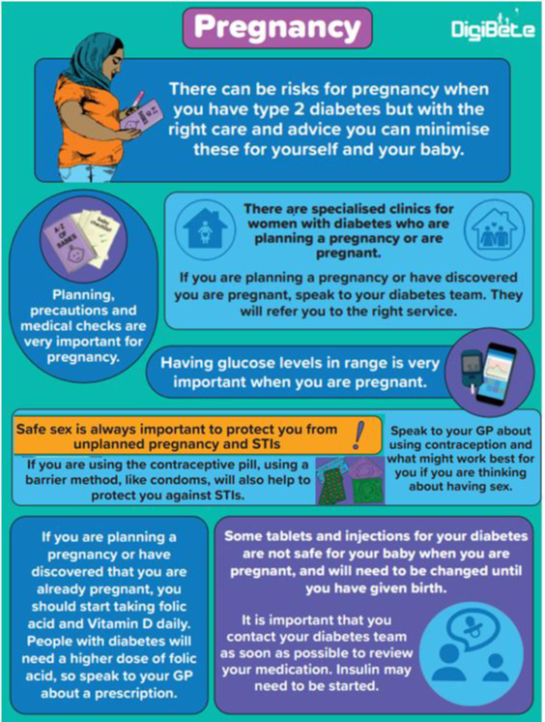
- Specialist care if you’re planning to have a baby
Please note: All diabetes monitoring equipment is needed at every clinic appointment to ensure appropriate support.
Diabetes Team Contact Details
Paediatric Diabetes Specialist Nurses:
Carolyn Hill – Email: C.
Sharon Holt – Mobile: 07747008713 Email: Sharonholt1
Blaithin Donohoe – Mobile: 07827246261 Email: Blaithin.
Lauren Pope – Mobile: 07342067124 Email: lauren.
Specialist Paediatric Diabetes Dietitian:
Tamsin Thompson: tamsin.
Consultants for the team:
Dr Patel
Dr Edate
Dr Lelliott
Clinical Psychologist for the team:
Dr Hayley Thompson - hayley.
Administrator:
Krupali Ramji – Email: krupali.
Emergency telephone advice:
This Emergency telephone service runs from 17.00 – 8.30 Monday to Friday and 24 hrs Saturday, Sunday and bank holidays; outside of these hours please contact your key worker or a member of the diabetes team.
Emergency Mobile number: 07824320846
Clinic appointments
If you need to cancel or change your clinic appointment, please contact the diabetes team on 03006154843. If unavailable, please leave a message and we will get back to you as soon as possible. Please do not just miss the appointment without contacting us, as this is taking away an appointment someone else could have used.
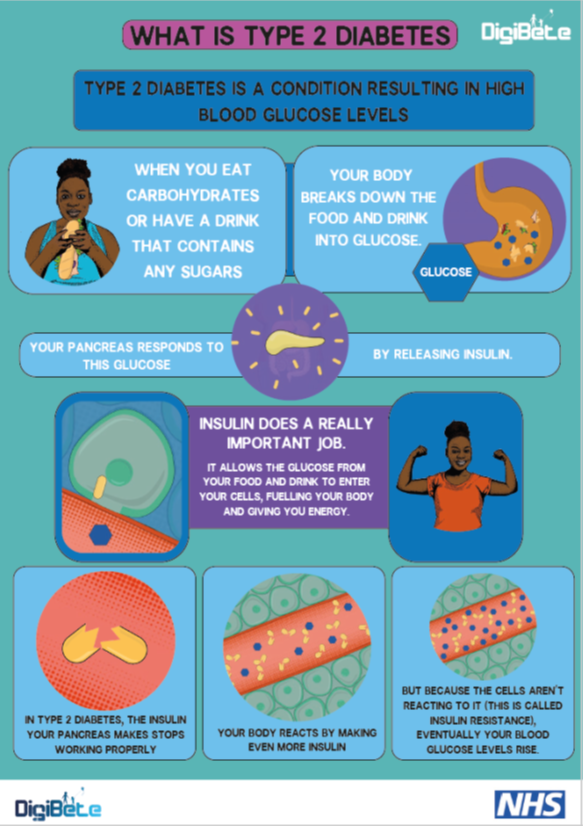
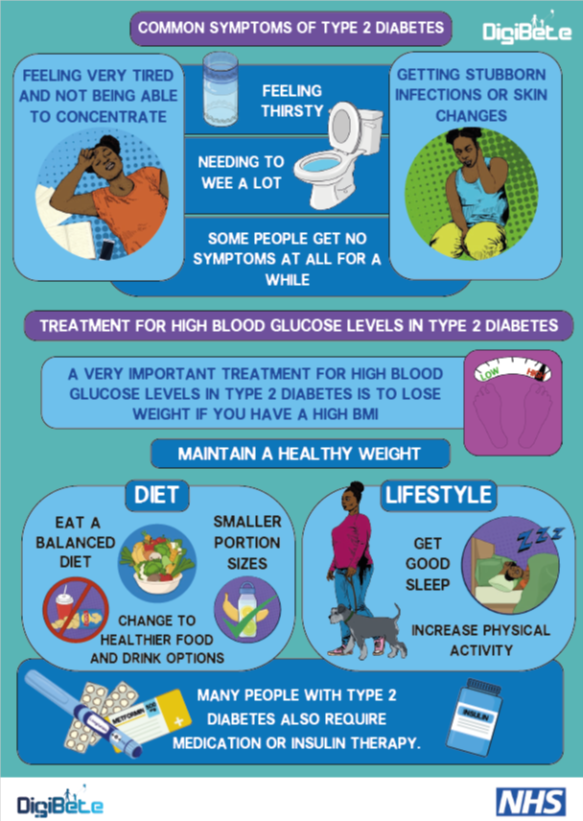
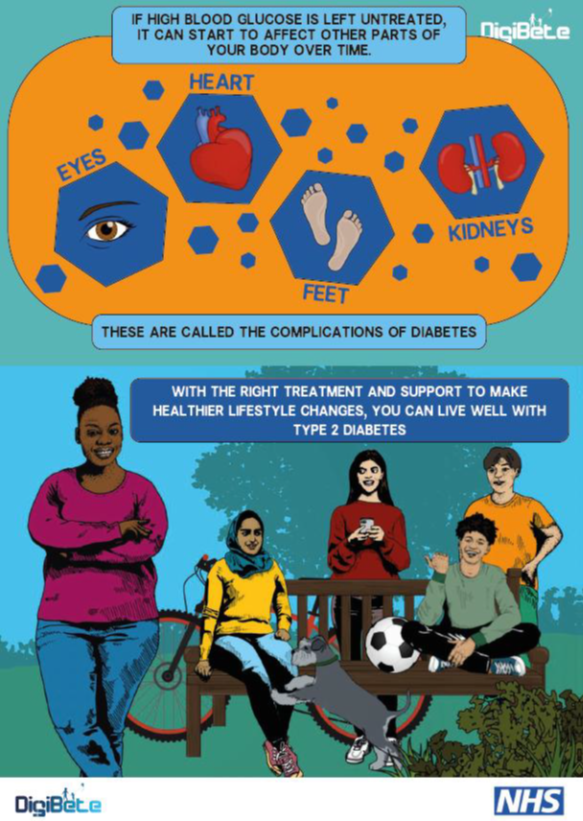
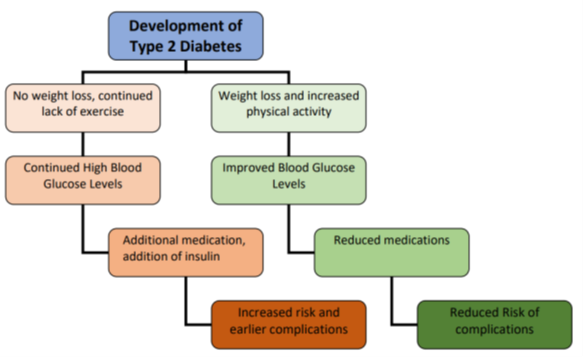
Goals of Type 2 Diabetes Management
- Healthy Lifestyle changes for the whole family
- Weight loss of 5-10% (This is the only way to slow down development of diabetes)
- Increased exercise and daily activity
- Good sleeping habits
- Managing Blood Glucose levels
- Reducing HbA1c to < 48mmol/mol (average glucose levels over 2-3 months)
| HbA1c % | HbA1c mmol/mol | Risk of future problems |
| Old measurement | New Measurement | e.g. eyes, kidney, heart, nerves, feet |
| 5.5% | 37 | No risk |
| 6.5% | 48 | Extremely low |
| 7.0% | 53 | Low |
| 7.5% | 58 | Low/Medium |
| 8.0% | 64 | Medium |
| 8.5% | 70 | High |
| 9.5% | 80 | High/Very High |
| 10.5% | 91 | Very High |
Lifestyle Weight Management Programme
Lifestyle guidance is centred around a whole family approach.
The Goal:
To establish and maintain a combination of healthier dietary habits and increased physical activity and to achieve and maintain energy balance.
Energy balance
Energy balance is when energy intake from all food and drink (measured as calories) matches energy used for all bodily functions and physical activity.
Dietary Habits
Dietary changes should reduce calorie intake whilst remaining flexible. Total energy intake should be below your energy expenditure.
All family members should try to:
- Have a variety of healthy foods available (e.g. vegetables, fruits)
- Remove all sugary drinks.
- Reduce the number of snacks available.
- Eat together at mealtimes.
- Have routine mealtimes.
- Don’t skip meals.
- Take part in daily physical activity.
Physical Activity
Physical activity includes the full range of human movement, from active hobbies, walking, cycling and the other physical activities involved in daily living, such as walking upstairs and playing in the garden to competitive sport and exercise.
Carbohydrates
Your blood glucose levels are affected by what you eat. The key to controlling your BG levels is by first understanding how and why different foods affect it. Food consists of 3 main nutrients (known as 'macronutrients'). These are carbohydrates, protein and fats:
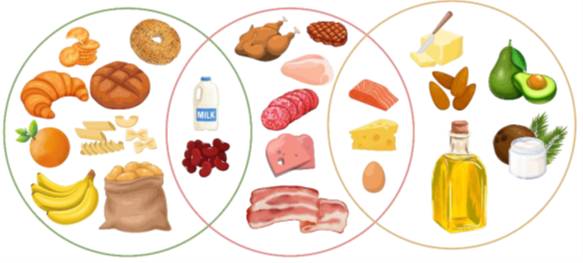
These nutrients are digested in the intestine and broken down into their basic units:
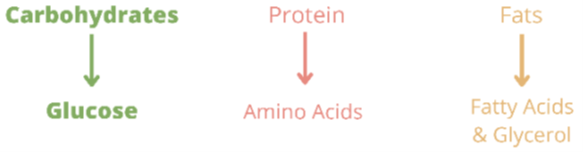
All foods and drinks containing carbohydrate are digested and absorbed into the bloodstream as glucose at different speeds and the Glycaemic Index (GI) is a measure of this.
Foods with a high GI can increase your blood glucose levels quickly. Foods with a low GI are absorbed more slowly, which can help keep your blood glucose levels more stable. Eating lower GI foods can also help reduce your cholesterol, maintain good bowel health and keep you feeling fuller for longer making them better choices.
Some examples of lower GI foods are:
- Pulses: beans (baked beans, red kidney beans, butter beans, mung beans). Peas and all lentils. Ways to include more of these may be to have baked beans on toast, lentils in stews and soup, red kidney beans in chilli con carne and butter beans in casseroles
- Oats: porridge, oat cereals, low sugar muesli, oat cakes, oatmeal crackers
- Breakfast cereals: All Bran, Oatibix, Branflakes, Porridge (made with jumbo oats)
- Breads: granary, wholegrain, multigrain, soya and linseed, rye, pumpernickel, wholemeal pitta and wraps, roti and chapattis (made with brown flour or breads made from millet and juwar flour)
- Potatoes: sweet potato, new and old potatoes in skin
- Rice: basmati, brown
- Pasta: all
- Milk & dairy: milk, natural, Greek or low sugar yoghurts, quark, fromage frais
- Fruit & vegetables: apple, pear, citrus fruits, plums, grapes, berries, cherries, dried apricots, salad, all vegetables
- Others: bulgur wheat, egg noodles, quinoa, couscous, barley, fruit loaf
Dietary Guidelines
It’s important to eat the right foods in the correct amounts for a well-balanced, healthy diet. These principles will help to control your diabetes:
Principles of a Healthy Diet:
- Choose wholegrain or higher fibre versions of starchy carbohydrates
- Choose lean protein foods including 2 portions of fish per week
- Limit treats to a maximum of 2 times per week
- Choose lower fat and lower sugar dairy options
- Eat at least 5 portions of fruits & vegetables per day
- Choose unsaturated oils / low fat spreads
A Healthy Plate
Use this as a guide to help you get a healthy balance of each food group at your meals:
- Fill ½ of your plate with vegetables.
- Fill ½ of your plate with lean protein.
- Fill ¼ of your plate with starchy carbohydrates.
Salt
Too much salt can put us at risk of high blood pressure and heart disease later on in life.
We should be having 6g of salt a day max, which is less than a teaspoon!
Remember that food, especially packaged food, can be really high in salt even if it does not taste particularly salty. The following foods are all ones to watch out for and cut back on if you can:
- Sausages, bacon and ham
- Crisps and salted nuts
- Pastries, pizza and cheese
- Gravy, brown sauce, mustard, ketchup and soy sauce
The traffic light labelling system will tell you whether a food has high, medium or low amounts of fat, saturated fat, sugars and salt. It will also tell you the number of calories and kilojoules in that particular product.
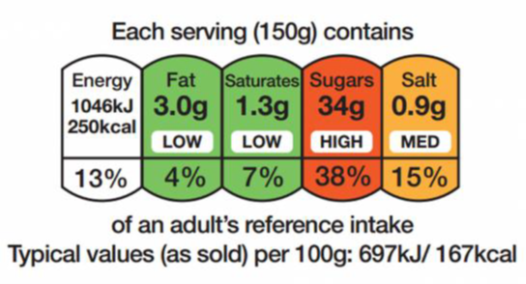
- Red means the product is high in a nutrient, and you should try to cut down, eat less often or eat smaller amounts.
- Amber means medium. If a food contains mostly amber, you can eat it most of the time
- Green means low. The more green lights a label displays, the healthier the food is.
Healthier Food Swaps
These simple food swap ideas can help cut down on sugar, salt and fat in your and your family's diet, plus discover easy ways to make a swap when you next shop. Even just 1 or 2 everyday swaps can really make a difference and go a long way to making each day healthier – but the more you make, the better!
Breakfast Swaps
Sugar and fat are the biggest things to watch out for at breakfast time – try some of these easy swaps!
Swap From |
Swap To |
| Chocolate Cereal | Wheat Biscuit Cereal |
| Frosted Flakes | Shredded Whole Grain Cereal |
| Honey crunch cereal | No-added-sugar muesli |
| Croissants | Plain natural yoghurt topped with chopped fruit |
| Cereal bars | Wholemeal toast |
Lunchtime Swaps
When lunchtime rolls around, it’s easy to eat more sugar or salt than we might realise. Try some of these simple lunch time swaps:
Swap From |
Swap To |
| Split pot yoghurts and pudding pots | Lower sugar fromage frais or plain natural yoghurt |
| Cake cars and cereals bars | Sugar-free jelly |
| Muffins and chocolate | A slice of malt loaf or a fruited teacake |
| Crisps | Porridge |
| Juice pouches and fizzy drinks | Wholemeal toast |
| Tinned soup | Plain natural yoghurt topped with chopped fruit |
Dinner Swaps
Salt and saturated fat can really add up at dinnertime without us noticing – there can be a surprising amount of both in everyday foods. Consider giving some of these dinner swaps a go!
Swap From |
Swap To |
| Sausages | Lower-fat mince |
| Pizza | Different herbs, spices and seasoning, like paprika, oregano or lemon juice |
| Salt & Soy sauce | Reduced-salt and reduced-sugar versions of sauces |
Snack and pudding swaps
Whether it's fighting the after-school tummy rumbles or rounding off dinner with a tasty pudding, sugar is the main watch-out here. But even if they don't taste of it, some of these snack foods can contain a lot more salt (and fat) than you might realise too!
Swap From |
Swap To |
| Biscuits | Chopped veg with lower-fat hummus |
| Chocolates | A bagel topped with sliced banana |
| Crisps | A scotch pancake or crumpet |
| Doughnuts | Bread or toast with lower-fat spread |
| Muffins | Crackers topped with lower-fat cheese |
| Salted Peanuts | Unsalted mixed nuts |
| Split-pot and higher sugar yoghurts | Lower-sugar yoghurts or lower-sugar rice pudding |
| Chocolate pudding pots | Sugar-free jelly or lower-sugar custard |
| Cake Bars | Fresh or tinned fruit (in juice, not syrup) or fruit salad |
Drink Swaps
Swap From |
Swap To |
| Fizzy Drinks | Water |
| Juice Drinks | Sugar-free Drinks |
| Milkshakes | No added sugar Drinks |
| Whole Milk | Lower-Fat Milks |
When Eating Becomes Difficult
We know that eating a healthy and balanced diet as a family is one of the main ways that you can help lower your blood-glucose levels and manage Type 2 Diabetes. But we also know it is not always easy to do. You might have had very different eating habits to those described in the pages earlier on in this booklet, and that is ok. If it feels overwhelming to make changes, you can look at the recommendations and think about which of these would be easiest for you to change first, as a family. Start there and build on making other changes gradually.
Everyone Needs Treats!
Remember that a balanced diet doesn’t mean cutting out all the foods you love. We want you to enjoy eating and look forward to having the foods you like best. It may be that your favourite foods are those that are highest in carbohydrates. If so, try swapping these for the healthier options most of the time, or having a smaller portion (like a couple of slices of pizza with salad instead of a whole pizza). But still have the foods you are craving 1-2 times a week. If you restrict yourself from eating the foods you love completely, there is a risk you will end up craving them more and then overeating (also known as binge-eating).
We know that binge-eating can be a common difficulty for people with Type 2 Diabetes and if you notice this, please tell us so we can support you with it. At your Annual Review, we will also ask you some questions about your eating so we can identify if there are any areas you might need help with. These questions are:
| Do you make yourself sick because you feel uncomfortable full? |
| Do you worry you have lost control over how much you eat? |
| Do you believe yourself to be fat when others say you are too thin? |
| Do you ever take less insulin that you should? |
Physical Activity
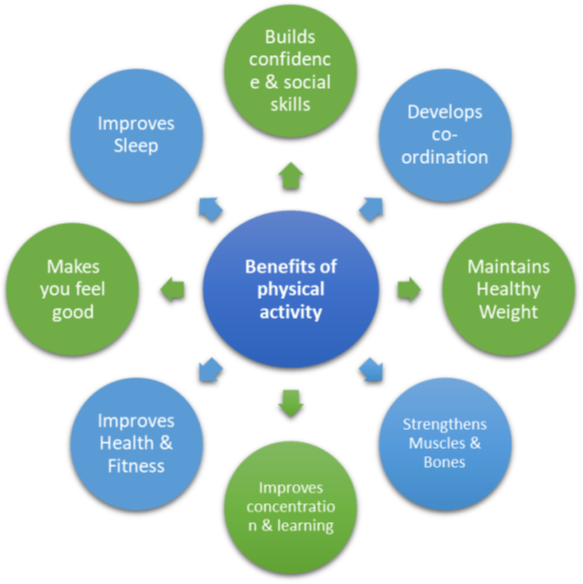
The physical activity levels recommended for 5–18-year-olds is the same for those living with or without type 2 diabetes:
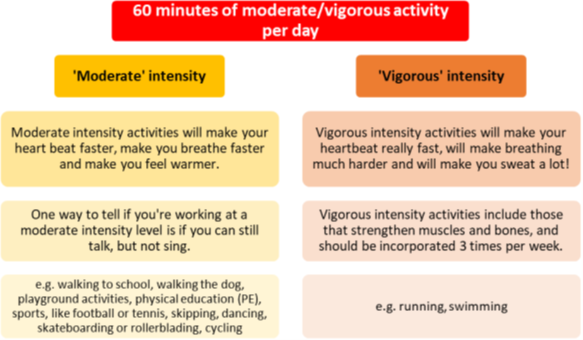
Exercise should be fun and there may be activities you didn’t know you would enjoy until you give them a go. Look up what is available in your local area.
Slough
Active Slough
The Active Slough team want to help the community get healthier. Active Slough works to make physical activity an easy, practical, attractive choice, especially for people who are currently less likely to take part in sport or activity. Contact activeslough
Outdoor gyms
The council have installed a number of outdoor gyms in parks and recreation grounds across Slough.
Enjoy the great outdoors and get fit at the same time!
Equipment in the outdoor gyms includes cross trainers, static cycles, resistance machines, hand cycles, sit up benches, parallel bars and box jumps. Outdoor gyms are free! http://
Everyone Active Slough
Parent and instructor supervised gym sessions (includes The Centre, Slough, Chalfont Leisure centre, Bracknell Leisure Centre, & Langley Leisure Centre)
11-15 Years Fitness Team Supervised Gym Sessions
Suitable for children aged from 11 to 15 years, these gym and studio-based sessions help to improve general fitness and to promote healthy lifestyles.
11-15 Years Parent Supervised Gym Sessions
These gym and studio-based sessions are specifically designed for children aged 11-15 and are ideal for improving general fitness and promoting healthy lifestyles. Participants must, however, be supervised by a parent or guardian at all times – ideally training alongside them
Each session is £4.95 for non- members.
Membership for under 16s is £17.49 per month or £174.90 for the year.
The Centre (Slough) | Gym, Swimming & Fitness | Everyone Active
Windsor, Ascot, and Maidenhead
Leisure Focus gyms run Windsor leisure centre, Braywick leisure centre, Cox Green leisure centre, Furze Platt leisure centre, and Charters leisure centre.
They offer junior (13-18 years) and family memberships- for more information see their website: Memberships (leisurefocus.org.uk)
Wycombe
Wycombe Leisure Centre – Supervised gym sessions
Supervised gym sessions - gym sessions available to 11–15-year-olds, some require supervision from a parent, some are supervised by instructors. Priced at £6.50 per session.
A range of memberships are available:
Wycombe Leisure Centre | Gym & Pool | Places Leisure – Places Leisure
Free activities
Park Run / home | parkrun UK
Park runs are free, weekly, community events all around the world. Saturday morning events are 5k and take place in parks and open spaces. On Sunday mornings, there are 2k junior park runs for children aged four to 14. Parkrun is a positive, welcoming and inclusive experience where there is no time limit, and no one finishes last. Everyone is welcome to come along, whether you walk, jog, or run.
Online activities and ideas
- Activities for kids - Healthier Families - NHS (www.
nhs.uk ) - NHS 12-week weight loss app. Lose weight - Better Health - NHS (www.
nhs.uk ) - PE with Joe online workouts. The Body Coach TV - YouTube
- Couch to 5k. Get running with Couch to 5K - NHS (www.
nhs.uk )
School & Exercise
- We will contact your school and carry out education, so that they have an awareness of type 2 diabetes and can support you in school.
- It is important for every child and young person to participate in their P.E lessons. Alongside this, we would encourage your school to sign up to ‘mile a day’ if they haven’t already.
Social Stories
Please use the link below to access social stories from families living with type 2 diabetes: https://
Type 2 Diabetes and Emotional Wellbeing
We want you to live a happy and healthy life. But many young people, with or without type 2 diabetes, experience feelings of low mood and anxiety. Low mood can be temporary, and pass within a couple of days or weeks, or it can last longer. It is sometimes referred to as depression, especially if it lasts longer than two weeks and starts to affect all areas of life.
What does low mood or depression feel like?
- Depression can affect people very differently. Here is how some people feel.
- Depressed (low) mood most of the day almost every day
- Reduced interest or pleasure in activities most of the day
- Significant weight loss or gain or decrease/increase in appetite.
- A slowing down of thought and being less physically active (observable by others)
- Fatigue or loss of energy most days
- Feelings of worthlessness
- Thoughts of/actually self-harming
What does anxiety feel like?
Anxiety can affect people very differently. Here is how some people feel:
- Stop enjoying normal life.
- Constantly worrying about diabetes
- Obsessively researching diabetes and complications
- Avoiding any reminders of diabetes
- Fatigue or loss of energy
- Difficulty sleeping
- Inability to relax.
- Unable to concentrate.
- Feeling constant ‘butterflies’ or a ‘lump’ in your throat
- Heartbeat racing
- Often causes tummy ache/headaches.
Avoiding v Overthinking
If something feels difficult, sometimes we try to avoid thinking about it. But then we never fully understand the problem enough to be able to solve it, and the difficult feeling remains. If we avoid our difficulties then when we come to relax at night, our brains suddenly want to remind us of all the things we need to worry about, and it can be difficult to get to sleep. On the other hand, sometimes when things feel difficult, we can overthink about then and it can spiral to the point where we feel worse. This applies to everyone, however when you have diabetes there are additional things to think about, therefore we can easily end up in a spiral of overthinking. It can be helpful to get a good balance between avoiding and overthinking, by setting a designated ‘worry time’ during the day. To set this up:
- Create a set worry time (should be no longer than 10-15 minutes). What time works best? When you’re home from school? Ideally not just before bed.
- Postpone overthinking/worries. When a worrying or stressful thought appears during the day remind yourself ‘I don’t need to worry about this now, I can worry about it later.’ Make a brief note of thoughts if you’re worried, you’ll forget, then do something to distract yourself.
- Complete worry time at agreed time, for up to 15 minutes Maybe write down your worries? Or talk to a parent or friend? Or draw how you’ve been feeling? You might want to spend the time exploring your feelings, or problem-solving some solutions.
It is important that we allow ourselves time to explore how we feel, but not think about it all day.
How are our thoughts, feelings and behaviour connected?
Some people experiencing low mood and depression can get caught in an unhelpful cycle, resulting in withdrawal from previously enjoyed activities, disrupted diabetes management, sleep disturbances, and isolation. It is important to recognise this cycle is so we can break it and begin enjoying life again. Below is an example…
| Situation Who? What? Where? When? How? A friend makes a rude comment about my diabetes (there is a lot of misunderstanding about diabetes, and people can make unhelpful comments) |
|
Thoughts What went through my mind at the time? |
Emotions What emotions did I feel at the time? |
|
Behavior How did I respond to the current situation? |
Bodily Sensations What did I notice in my body? What did I feel? Where did I feel it? |
How can I improve my wellbeing?
The good news is a lot of the ideas already discussed in this booklet to help you manage your blood-glucose levels will also help you to feel better about yourself. Eating healthily, exercising and ensuring you get enough rest/sleep, will all help you to feel better emotionally as well as physically.
When you are diagnosed with diabetes it is completely understandable to feel worried, low in mood, anxious, confused (and lots of other things too!). Often when we feel these emotions we stop doing things that we used to enjoy, however, doing this often makes us feel worse in the long-term. The first step is to think about the things you have stopped doing or are doing less, because of your mood around your diabetes.
Motivation
Think of something you would like to change or are trying to change at the moment. For example, it might be to eat a healthier meal in the evening, reduce the number of snacks you eat, or to increase the amount of exercise you do.
Sleep Hygiene
This information is taken from www.
There are many reasons for not sleeping well which may include worries, physical discomfort or physical illness. Sleep needs vary. A baby starts life needing 16 hours or so of sleep each day, and the time we need for sleep decreases as we get older. People's needs vary, but most people feel they need 7-8 hours, whilst others feel they need 9-10 hours a night. Teenagers will need more sleep than adults!
We might have difficulty getting off to sleep, wake up frequently during the night, or wake early in the morning and not be able to get back to sleep. These all result in our feeling that we haven't slept enough - we feel tired, tense and are likely to worry about not sleeping. This worry can then make it even harder for us to sleep well.
If you have trouble sleeping, there are some things you can do to help yourself get a good night’s rest. These include making changes in:
- Our environment (bedroom)
- Our behaviour
- Our thinking
Change our Environment
- Are there any helpful changes you can make?
- Bedroom too light (or dark)
- Bedroom too hot or too cold
- Bedroom too noisy
- Bed too uncomfortable
- Someone you share a room with keeping you awake. (snoring, restless etc)
Change our Behaviour
Reset your body clock
If you're a night owl and you fall asleep in the early hours of the morning then wake up later in the morning, you can take these steps for 3 weeks to reset your body clock:
- Wake up 2-3 hours earlier than usual and get plenty of outdoor light in the morning
- Eat breakfast as soon as possible
- Have lunch at the same time every day, and eat nothing after 7pm
- No caffeine after 3pm
- No naps after 4pm
- Go to bed 2-3 hours earlier than usual and limit light in the evening
- Maintain the same sleep and wake times every day
Other behavioural strategies
Use your choice of relaxation technique before going to bed (whatever works for you) (www.
- Don’t go without sleep for a long time – keep to a regular pattern of going to bed and getting up at the same time every day, whether you are tired or not
- Keep bed for sleep. Don't use it for watching television, using computer etc.
- Get some regular exercise during the day. Try some regular swimming or walking. Avoid exercise late in the evening.
- Cut down on caffeine (tea, coffee, some soft drinks) in the evening. Try a milky drink instead.
- Don’t drink a lot of alcohol.
- Don’t eat or drink a lot late at night. Try to have your evening meal early rather than late.
- If you’ve had a bad night, resist the temptation to sleep the next day – it will make it harder to get off to sleep the following night.
- If something is troubling you and there is nothing you can do about it right away, try writing it down before going to bed and then tell yourself to deal with it tomorrow.
- If you can’t sleep, don’t lie there worrying about it. Get up and do something you find relaxing like reading or listening to quiet music. After a while you should feel tired enough to go to bed again.
- Keep a sleep diary for a week. When complete, you can look back and notice what helps you sleep better and what doesn't, so you can make positive changes and do more of what helps, and less of what doesn't. If nothing seemed to help, try something different.
- Speak to your doctor about your medication and how that might be affecting your sleep.
- Avoid clock watching when in bed - put your attention somewhere restful, use imagery (www.
getselfhelp.co.uk/ ), mindful breathing (www.imagery.htm getselfhelp.co.uk/ ), or your relaxation technique.mindfulness.htm
Change our Thinking
- Worrying about not sleeping will keep you awake! Rather than put your focus of attention on the worrying thoughts, notice that they are just thoughts, then put your attention somewhere restful, use imagery, mindful breathing, or your relaxation technique. (website addresses in previous paragraph)
- Distract yourself by thinking about a random sequence of objects for a few seconds each. E.g. a table, a tree, a saucepan, a flower, a cow, a cloud etc. Or you could think about a few items beginning with the letter "B", then move on through the alphabet.
- Tell yourself that worrying about it will not help, and that you probably are getting enough, just less than you think you need. Our needs change as we get older.
- If you're worrying about a particular problem, write it down, and tell yourself you can sort it in the morning.
Blood Glucose Monitoring
- Wash your hands with soap, rinse and dry thoroughly. Avoid using hand gel and/or wipes as this may affect the blood glucose reading, using warm water may help the blood flow.
- Insert a strip into the meter, the meter will turn on automatically.
- Choose your finger pricking site, avoiding areas already used. Please only use the sides of your fingers as this is more comfortable
- Follow the manufacturer’s instructions to prepare the lancing device, ensuring needle depth is set at 2 and get a drop of blood from the side of your fingertip.
- Apply the blood sample to the test strip until it has absorbed enough blood to begin the test.
- View your test result and take appropriate action.
- Rotate the needle barrel after each use. When all 6 needles have been used, dispose of barrel and replace with a new one.
- Record the results in a logbook, hold them in the meter's memory or download to a computer so you can review and analyse them.
Medical Management of Type 2 Diabetes
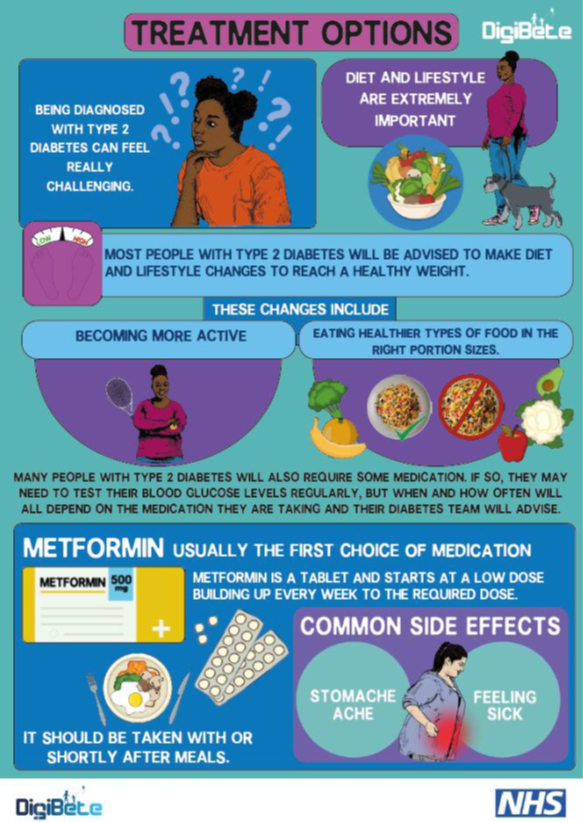
Diabetes is managed with lifestyle changes, increased activity, and diet. Additionally, you may be started on medication which could be stopped if lifestyle changes are successful.
Why check your blood glucose levels?
- To help you and your diabetes team know if you are on the correct treatment plan
- So, you know about your health and can take action
- To monitor symptoms of high and low blood glucose
- To view patterns and understand the effect of food and exercise on your blood glucose
Blood Glucose Targets
You will be healthiest if:
- Your blood glucose before meals are below 7mmol/l
- Two hours after meals your blood glucose are below 8.5mmol/l
- You contact your diabetes team If you are on metformin and your blood glucose is below 2.5mmol/L more than once, because that is unusual.
How often should I test my blood glucose?
When you are first diagnosed you will be asked to test regularly
Before meals, 2 hours after meals and before bed
Once blood glucose levels are stable, you will only need to test your blood glucose 4-6 times per week.
1 x fasted (prior to a meal or when you wake up)/day
1 x 2 hours after a meal/day
These tests are especially important prior to clinic appointments so that your medications can be adjusted.
Treatment for Hypoglycaemia
Hypoglycaemia or a ‘hypo’ is a Blood glucose of less than 4 mmol/L.
Either there are no symptoms or just “feeling” or “looking” different when having a “hypo” E.g.
- Hungry Sweaty Pale
- Grumpy Irritable Wobbly
- Shaky Tearful Headache/stomach ache
- Feel or behave strangely for them
ALWAYS CHECK THE BLOOD GLUCOSE IF ANY OF THESE SIGNS OR SYMPTOMS DEVELOP AND ONLY TREAT IF THE BLOOD GLUCOSE BELOW 4.0MMOL/L
Remember to contact the Diabetes Nurse if there are frequent hypo episodes
Hypo treatment can promote bacteria build-up in the mouth. Make sure to brush teeth after treatment as much as possible. To keep your mouth healthy, maintain a daily routine of proper brushing and flossing and see your dentist for regular preventive check-ups.
Treatment for Illness
When you are ill your body needs more energy to fight the infection. Glucose is released from your body’s stores to do this, so your blood glucose tends to go up even if you are not eating.
- Drink sugar free fluids regularly to prevent dehydration if glucose levels are rising.
- If you are not eating or you are vomiting, please drink sugary fluids to prevent low blood glucose levels.
- Please call for advice if the blood glucose levels continue to rise or you are concerned. Ring the diabetes team or see your GP or go to A&E.
- Remember to look at which medication should be stopped when unwell
Related Illnesses
The good news is, Type 2 Diabetes can be managed well through a healthy lifestyle and the use of medications.
When Type 2 Diabetes isn’t managed well, there are increased risks in the longer-term. These include:
Cardiovascular Disease (Heart and blood vessel disease)
People with diabetes are more likely to develop problems with their heart and circulation. This includes:
- high blood pressure
- heart attack
- stroke
This is caused by narrowing or blocking of the arteries (major blood vessels). Blocking of the arteries occurs by fat (lipid) deposits in the arteries.
You can successfully reduce your risk of cardiovascular disease by:
- Maintaining blood glucose levels within target range
- Eating a healthy diet rich in fibre with plenty of fresh fruit and vegetables
- Not smoking
- Not being overweight
- Regular exercise, 60 minutes of moderate exercise per day is recommended for young people ≤ 18 years of age
- Maintaining normal cholesterol levels
- Maintaining normal blood pressure
Kidney Disease
Kidney disease is caused by damage to small blood vessels. This damage can cause the vessels to become leaky making the kidneys work less efficiently. The longer you have diabetes, the greater the risk of kidney disease, and the risk increases as HbA1c increases. Sometimes we see leaky kidneys during teenage years, which then goes away of its own accord.
You can successfully reduce your risk of getting kidney disease by:
- Maintaining blood glucose levels within target range
- Eating a healthy diet rich in fibre with plenty of fresh fruit and vegetables
- Not smoking
- Maintaining normal blood pressure
Eye Disease (Diabetic Retinopathy)
Diabetic Retinopathy affects the retina, the layer at the back of the eye, which is sensitive to light. Long term diabetes causes damage to the capillaries (tiny blood vessels) in the retina. The longer a person has diabetes the greater the likelihood of developing Diabetic Retinopathy. The initial changes, called background retinopathy, can be reversible and go away with improvement in diabetes control.
You can successfully reduce your risk of getting Eye Disease by:
- Maintaining blood glucose levels within target range
- Not smoking
- Maintaining normal blood pressure
Nerve Damage (Neuropathy)
There are several types of neuropathy but the commonest one that affects people with diabetes is known as ‘Sensory neuropathy.’ The main problem is loss of feeling in legs and feet so you may
not sense pain and discomfort as well as previously. This means you may not notice minor injuries, such as cuts, blisters and burns. These can lead to more serious infections or ulcers. The symptoms of neuropathy include tingling, numbness or severe pain in your lower legs and feet. If you experience any of these symptoms, speak to your diabetes nurse or doctor. It is unusual to have these problems in childhood.
You can successfully reduce your risk of getting problems with your feet by:
- Wear shoes that fit well
- Cut toenails straight across and keep them short
- Dry in between toes after swimming, bathing etc.
- If your feet get wet change into dry socks as soon as possible
- If you get athletes foot or verruca’s, go to your GP.
A large research study called the Diabetes Control and Complications Trial (DCCT) proved what many people already believed – the more time spent within target range for blood glucose (4-7mmol/L), the lower your risk of complications.
Polycystic ovary syndrome (PCOS)
Polycystic ovary syndrome (PCOS) is a common condition that affects how a woman's ovaries work. PCOS is also associated with an increased risk of developing health problems in later life, such as type 2 diabetes and high cholesterol levels. The 3 main features of PCOS are:
- Irregular periods – which means your ovaries do not regularly release eggs (ovulation)
- excess androgen – high levels of "male" hormones in your body, which may cause physical signs such as excess facial or body hair
- polycystic ovaries – your ovaries become enlarged and contain many fluid-filled sacs (follicles) that surround the eggs (but despite the name, you do not actually have cysts if you have PCOS)
If you have at least 2 of these features, you may be diagnosed with PCOS.
Other Symptoms of PCOS
- no periods at all
- difficulty getting pregnant as a result of irregular ovulation or no ovulation
- weight gain
- thinning hair and hair loss from the head
- oily skin or acne
If you feel you are experiencing any signs and/or symptoms of PCOS, please let a member of the team know and we can support you with this.
If you have been diagnosed with PCOS please follow the links below for further information and support:
- NHS https://
www. nhs.uk/ conditions/ polycystic-ovary-syndrome-pcos/ - Patient https://
patient.info/ womens-health/ polycystic-ovary-syndrome-leaflet - Royal College of Obstetricians and Gynaecologists https://
www. Available in different languages.rcog.org.uk/ for-the-public/ browse-our-patient-information/ polycystic-ovary-syndrome-pcos-what-it-means-for-your-long-term-health/
Supplies
Supplies obtained from GP on repeat prescription:
- Accu-Chek Instant test strips 6 X box 50
- Accu-Chek FastClix 24 lancets x 7 box
- Metformin tablets
- Liraglutide/Dulaglutide injections
Supplies obtained from the relevant company:
- Finger pricking device
- Roche Accu-Chek Instant Blood Glucose Meter
- Batteries
Sharps Bin
Your local authority (council) is responsible for collecting and disposing of full sharps boxes. This must be arranged directly with your local authority for sharps waste collection in your area. Some may require a form to be completed by a healthcare professional before they will collect.
If you are not sure who your local authority is, please visit www.
You will be asked to enter your postcode which will then direct you to the local authority for your area.
Education Resources
- Digibete video and written resources: https:/
/ www. youngtype2.org/ - ‘Cooking on a Bootstrap’, by Jack Munroe.
- Diabetes UK https://
www. diabetes.org.uk/ guide-to-diabetes/ your-child-and-diabetes/ type-2
Other support available within the community
Slough refugee & immigration welfare: https://sloughadvicecentre.co.uk/category/immigration/
English classes can be organised for you to help you understand and support your child or young person better.
- Support with benefits: https:/
/ sloughadvicecentre.co.uk/ category/ benefits/ - Family & childcare support: https://
sloughadvicecentre.co.uk/ category/ family/ - Housing support: https://
sloughadvicecentre.co.uk/ category/ housing/
Contact us
If you have any queries relating to this information, please contact the Paediatrics service.
About this information
Service:
Paediatrics
Reference:
P/077
Approval date:
30 June 2025
Review date:
30 June 2028
Click ‘show accessibility tools’ at the bottom of the page

Then click ‘select language’

Alternative formats
You can use the accessibility toolbar at the bottom of your screen to:
-
Change the text size
-
Adjust the font
-
Modify the colour contrast
-
Use the translate function
If you would like this information in another format, such as Braille, audio, or easy read, please speak to a member of staff.
You can also print as well as download as PDF using the “Print this page” button at the end of the page.
Staff will print a copy for you on request
Important note
This page provides general information only. It is developed by clinical staff and is reviewed regularly every 3 years for accuracy. For personal advice about your health, or if you have any concerns, please speak to your doctor.