

Advice after your nerve block for surgery
On this page…
What is a Chest Drain?
A chest drain is a small plastic tube inserted through the chest wall to remove air (pneumothorax) or fluid (pleural effusion) from the space between the lung and chest wall. It is typically connected to a drainage bottle. The drain is secured with stitches, and a dressing is applied to hold it in place.
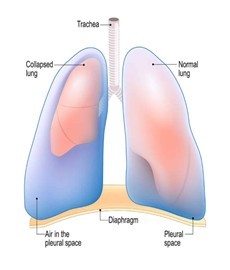 |
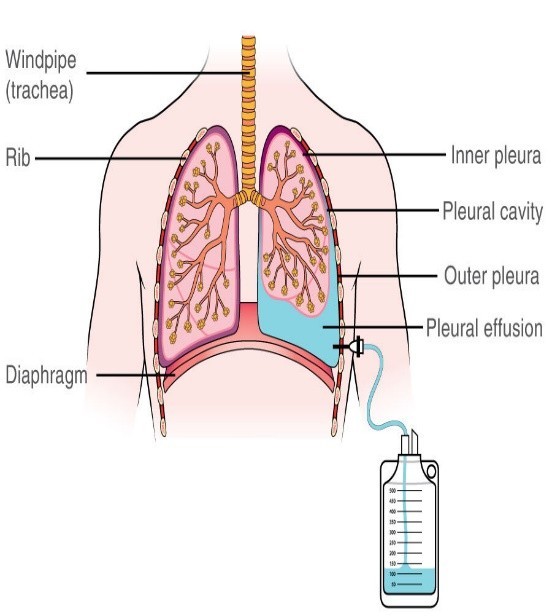 |
Why might I need a Chest Drain?
• Removal of air or fluid
• Symptom relief (e.g., breathlessness)
• Diagnostic testing of pleural fluid
Preparations for a Chest Drain
- This procedure is usually performed in a hospital setting, often in a High Dependency Unit (MADU).
- Tell your healthcare team if you are taking blood-thinning medications (e.g., Aspirin, Clopidogrel, Warfarin, Apixaban, Edoxaban, Ticagrelor). These may need to be stopped in advance.
- Blood tests will be performed to assess your suitability for the procedure.
- Inform the team if you have any allergies to local anaesthetics.
Length of Hospital Stay
Your hospital stay will depend on the resolution of the air or fluid. The respiratory team will review your progress daily.
Risks of the Procedure
- Pain: Local anaesthesia will be used to minimize discomfort.
- Bleeding: Blood thinners may need to be stopped to reduce the risk of bleeding.
- Infection: The procedure will be performed under sterile conditions to minimize infection risk.
- Damage to Surrounding Structures: Ultrasound guidance will be used to avoid injury to nearby organs (e.g., kidney, liver, spleen).
- Damage to Intercostal Vessels: The procedure will be performed between the ribs to avoid large blood vessels, with ultrasound guidance.
- Pneumothorax: Rarely, a lung may be accidentally punctured. A chest drain may be inserted to treat this.
- Death: While rare, any procedure carries inherent risks.
- Procedure Failure: Various factors can cause the procedure to fail. If something feels wrong during the procedure, please inform the team.
- Surgical Emphysema: If the procedure involves air removal, air may occasionally leak under the skin, causing a “bubble wrap” sensation. Notify the team if this occurs.
- Chest Drain Blockage: If the drain becomes blocked, a new drain may be inserted.
Post Procedure Expectations
- You can resume normal activities, including walking, to help your lungs expand.
- Ensure the drainage bottle stays below your waist when mobilizing.
- If you experience pain or need assistance, notify the nursing staff.
Additional Treatments
For Fluid in the Lung:
- Talec Pleurodesis: If fluid reaccumulates, a sterile talc powder may be used to prevent further build up. Risks include pain, infection, and, rarely, Acute Respiratory Distress Syndrome (ARDS).
- Fibrinolysis: A clot-busting medication may be used to break up fluid pockets in the pleural space. The primary risk is bleeding.
For Air in the Lung:
- Thoracic Wall Suction or Thopaz Suction: If air persists in the pleural space, additional suction may be used.
Referral to Specialized Care
If the procedure does not resolve the issue, we may refer you to a specialized thoracic surgeon for further evaluation and potential intervention.
If you have any questions or concerns, please feel free to ask your healthcare team.
Contact us
If you have any queries relating to this information, please contact the Respiratory medicine service.
About this information
Service:
Respiratory medicine
Reference:
W/016
Approval date:
6 December 2024
Review date:
1 November 2027
Click ‘show accessibility tools’ at the bottom of the page

Then click ‘select language’

Alternative formats
You can use the accessibility toolbar at the bottom of your screen to:
-
Change the text size
-
Adjust the font
-
Modify the colour contrast
-
Use the translate function
If you would like this information in another format, such as Braille, audio, or easy read, please speak to a member of staff.
You can also print as well as download as PDF using the “Print this page” button at the end of the page.
Staff will print a copy for you on request
Important note
This page provides general information only. It is developed by clinical staff and is reviewed regularly every 3 years for accuracy. For personal advice about your health, or if you have any concerns, please speak to your doctor.