

Advice after your nerve block for surgery
On this page…
What is MASLD?
Metabolic Dysfunction-Associated Steatotic Liver Disease (MASLD) is a condition caused by the accumulation of fat in the liver cells of people who do not drink alcohol in excess. Initially, fat deposits may not cause you any symptoms; however, in some people, it might progress to inflammation. This, in turn, may lead to scarring of the liver, fibrosis and cirrhosis.
Risk factors:
You may be more likely to develop fatty liver disease if you:
- Are overweight or obese (BMI >25kg/m2)
- Carry excess weight around your middle (apple-shaped)
- Have diabetes (this risk is lowered with good control)
- Do not exercise enough (roughly 30mins per day gentle exercise e.g. walking, swimming, climbing the stairs, walking to work)
- Drink more alcohol than is recommended
The good news is that MASLD may well be reversible with lifestyle changes.
These include:
- Eating a healthy balanced diet
- Having a healthy weight to height ratio (BMI)
- Limiting alcohol intake
- Being more active
This diet sheet is designed to cover the dietary recommendations for those with MASLD and may help you identify areas for change.
What is a Healthy Diet?
A well-balanced diet contains all the nutrients our body needs to function. It limits components that can be detrimental in higher quantities such as saturated fat, salt and sugar, and includes more positive elements in greater amounts e.g. fibre and unsaturated fats.
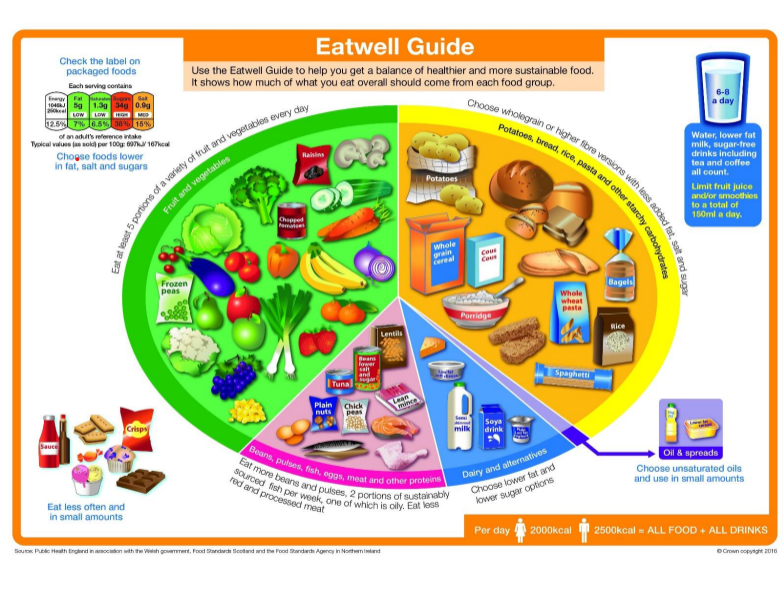
The Eatwell Guide (shown on page 8) is produced by Public Health England and depicts what we should be aiming for with a healthy diet.
A well-balanced diet typically contains:
- Fruit and vegetables (at least five portions per day)
- Starchy/wholegrain carbohydrates
- Lean protein sources
- Unsaturated fats/oils
- Dairy/non-dairy alternatives
- Fluid for hydration
The Eatwell Guide also recommended avoiding foods high in salt, sugar and saturated fats.
Energy in Food
A calorie (kcal) is a measure of the energy content of food. If you consume more calories than your body uses, you will be in a positive energy balance and gain weight.
The average daily recommended energy requirements for weight maintenance is 2500kcals for men and 2000kcals for women, however, this depends on numerous factors such as body weight, physical activity and future weight goals.
To lose weight you should aim to use or burn more calories than you eat. A small reduction in energy/calorie intake may be more realistic longer term and a safe level of weight loss would be 0.5kg-1kg per week. Avoid crash dieting or overly restrictive diets, as these rarely work and are often not sustainable.
Fruits and Vegetables
Fruits and vegetables are a good source of fibre and are high in the essential micronutrients your body requires to function. They are lower in calories and the fibre content helps to promote a feeling of ‘fullness’, thus they can help with weight loss.
Aim for at least five portions of fruit/vegetables per day; this can be in the form of fresh, frozen or tinned. A portion is typically a palmful of fresh fruit/vegetables, 30g of dried fruit or a small glass of fruit juice.
Below are some practical ideas to increase intake:
- Two vegetable portions with your main meal
- Dried or fresh fruit on cereal
- Small side salads with smaller meals
- A glass of fruit juice with breakfast
- Snack on fruit between main meals
- Use frozen/tinned vegetables
- Try making smoothies
Starchy Carbohydrates
Starchy carbohydrates (e.g. bread, cereals, pastas, rice, muesli, oats etc.) are a good source of energy and fibre, which promotes heart and bowel health.
Try to have wholegrain sources of carbohydrates where possible (e.g. wholegrain/50:50 bread vs white bread). Fibre also slows the digestion of food, so can help with blood sugar management (porridge would be a higher fibre option compared with puffed-rice cereal).
Protein
Protein is required for growth and repair in the body. Good sources of protein
include meat, fish, beans, tofu, soya protein and pulses e.g. lentils.
Leaner cuts of meat can help reduce fat and energy intake. Red meats are often higher in saturated fats and so opting for white meats/fish/plant-based proteins can be a healthier option.
Aim for at least two portions of fish, e.g. tinned tuna/cod, plaice per week, one of which is oily, e.g. pilchards, sardines, salmon, as this also provides ‘healthy’ fats.
Nuts, e.g. walnuts are also a good source of protein and beneficial fats.
Fats, Oils and Spreads
A ‘Mediterranean diet’, high in unsaturated fats and low in saturated fats, can help promote better health.
Fats are higher in calories per gram in comparison to carbohydrates and protein, thus it is advised to consume them in moderation to help with weight management.
Unsaturated fats are usually liquid at room temperature (e.g. olive oil) whereas saturated fats tend to be solid (e.g. olive oil). Avoid excess saturated fats where possible.
You can reduce fat by:
- Opting for ‘unsaturated, reduced-fat products e.g. low-fat olive oil spread
- Poaching, grilling or baking foods rather than frying them
- Trying to reduce/avoid cakes, pastries, pasties etc. or swap them for other healthier choices i.e. fruit
- Opting for lower fat dairy options e.g. skimmed/semi-skimmed or plant-based milk
Dairy/Non-dairy Alternatives
Dairy is a good source of calcium. Calcium is important for bone health and deficiency can result in early osteoporosis/osteopenia.
Aim for three portions per day of dairy/fortified non-dairy products.
Examples of one portion of dairy can include the following:
- Glass of milk/plant-based milk (200mls)
- Matchbox size slice of cheese (30g)
- Small yoghurt (125-150g)
If consuming non-dairy alternatives, ensure they are fortified with calcium.
Fluid
Fluid is important for hydration. Often dehydration can cause headaches, fatigue and lack of concentration.
We typically suggest aiming for 2-2.5L of fluid per day (preferably water); if you are active or it is a hot day you may well require more.
Coffee
Coffee has recently been demonstrated to be beneficial to liver health. Research has suggested that those that drink roughly between one to three
cups per day have reduced rates of liver cancer, liver scarring and have improved liver function tests (although it is not fully understood why). Some studies suggest that decaffeinated coffee drinkers also have similar improvements.
Be mindful of increasing your caffeine intake however if you have an eye disease, cardiovascular disease or high blood pressure, as it may worsen
these issues - consult your medical team if you are unsure.
Alcohol
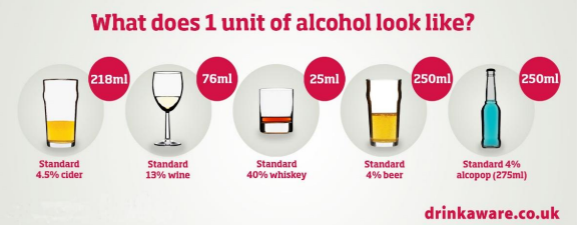
The government recommendation for alcohol is to limit consumption to under
14 units per week. The picture below shows what one unit looks like.
Your liver is responsible for processing alcohol and so overconsumption can damage your liver, particularly over a long period of time.
Alcohol is also quite calorific; therefore, overconsumption can cause weight gain; it does not contain much other nutritional value either.
Support is available should you feel that you have an alcohol addiction problem, so speak to your healthcare team if you are concerned.
Herbal Supplements/Remedies
Complementary or alternative medicines may be advertised or promoted for liver conditions. These may not work or in fact could be damaging or unsafe.
Doctors, nurses and registered dietitians provide evidence-based and safe advice. Other non-regulated professionals e.g. Chinese herbalists, wellbeing practitioners etc. may recommend other supplements, however, many of these supplements are processed by the liver and so can be toxic or harmful to those with liver problems. If you are considering using any alternative treatment, then speak with your healthcare team first, to ensure it is safe to do so.
Exercise
Alongside diet, exercising regularly is also important for good health and maintaining a healthy weight.
Adults should aim to complete some form of moderate exercise for at least 150 minutes per week or more vigorous exercise for 75 minutes (or a combination of both).
Moderate exercise could include:
- 30 minutes’ walk (or a combination of shorter walks over the course of the day), swimming, cycling
More intense exercise could include:
- Running, playing sports, taking the stairs, weight training
Evidence does suggest that losing 7-10% of your body weight over 6-12
months does help to reverse fatty liver deposits in those who do not already
have a healthy weight.
SMART Goals
For many, making large lifestyle changes all at once can be overwhelming, decreasing the likelihood of success and leading to demotivation, therefore setting SMART goals may help.

Sustainable
Ensure your goal is something you will be able to maintain longer term.
Measurable
Be specific about your endpoint so you can measure if you have met it.
Achievable
Smaller goals can often be easier to achieve a boost in motivation.
Realistic
Be realistic about what you can achieve in a given time frame. Consider other commitments that may come into play e.g. work/family.
Timely
Set a time when you will review your progress and consider if you have met your goal, this will help with staying on track.
For example:
Avoid saying: ‘I’m going to eat healthily from now on’.
Instead say: ‘I currently have one to two portions of fruit and vegetables a
day, for the next three weeks I will try to eat three to four portions’.
OR
Avoid saying: ‘I’m going to exercise more’.
Instead say: ‘I am going to take the stairs at work 3 days out of 5 for the next
2 weeks.’
The more specific you can be the better, try adding in more specifics.
Ensure you do not set too many goals at once, as this can be overwhelming and lead to frustration. Aim for the maximum of three goals at a time.
Contact us
If you have any queries relating to this information, please contact the Dietetics service.
About this information
Service:
Dietetics
Reference:
DT/067
Approval date:
1 March 2026
Review date:
1 March 2029
Click ‘show accessibility tools’ at the bottom of the page

Then click ‘select language’

Alternative formats
You can use the accessibility toolbar at the bottom of your screen to:
-
Change the text size
-
Adjust the font
-
Modify the colour contrast
-
Use the translate function
If you would like this information in another format, such as Braille, audio, or easy read, please speak to a member of staff.
You can also print as well as download as PDF using the “Print this page” button at the end of the page.
Staff will print a copy for you on request
Important note
This page provides general information only. It is developed by clinical staff and is reviewed regularly every 3 years for accuracy. For personal advice about your health, or if you have any concerns, please speak to your doctor.