

Advice after your nerve block for surgery
On this page…
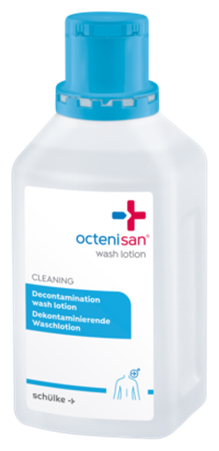
Why is a pre-operative skin wash necessary?
It is important to wash your skin before surgery to make sure that it is as clean as it can be. Using an antimicrobial wash will help reduce the number of bacteria that are normally found on the skin. It will also help to reduce the risk of you having a wound infection after surgery.
Who needs a pre-operative skin wash?
All patients having the following procedures are advised to have a pre-operative wash with Octenisan®:
• Orthopaedic implant surgery
• Vascular implant surgery
• Breast implant surgery
• Hernia mesh
• Pacemaker insertion
Your surgeon may also advise the pre-operative skin wash prior to other surgical procedures.
When does the wash happen?
You are advised to use the wash on the day before your procedure, and on the morning of your procedure.
What is the wash?
You will be provided with a bottle of Octenisan® wash lotion by your Pre-operative Assessment Clinic. The bottle contains more than enough solution for two washes.
Is it safe to use?
The Octenisan® wash is mild and gentle on skin, however should not be used if you have known or suspected allergies to any of its ingredients. Please read the label carefully before using Octenisan®.
Storage of Octenisan®
Store the Octenisan® wash at room temperature in the original container, away from heat or direct sunlight. The recommended storage temperature is 15 to 25°C. If you have any problems using the Octenisan® wash, please use your usual hair shampoo and soap or body wash. You should follow the procedure set out on this page and let your nurse know on arrival at the hospital.
Instructions for use
The evening before surgery/ procedure
Step 1: Wet your skin and hair.
Step 2: Apply a small amount of the Octenisan® wash directly onto wet hair and massage in. If you are unable to wash your hair, please use the wash around your hairline.
Step 3: Apply enough of the Octenisan® wash undiluted onto a damp wash cloth as needed for each area of your body starting with your face, avoiding your eyes and mouth. Then work downwards from your neck, paying attention to the armpits, groin and perineum (area of skin between your anus and genitals) and any skin folds in the stomach.
Leave the Octenisan® wash on your hair and skin for the recommended contact time of one minute.
Step 4: Rinse off with water.
Step 5: Dry yourself with a clean towel.
Step 6: Put on clean clothing and make sure your bedding is clean before going to bed.
The morning of your surgery/ procedure
Step 1: Wet your skin.
Step 2: You do not need to wash your hair again.
Apply enough of the Octenisan® wash undiluted onto a damp wash cloth as needed for each area of your body starting with your face, avoiding your eyes and mouth. Then work downwards from your neck, paying attention to the armpits, groin and perineum (area of skin between your anus and genitals) and any skin folds in the stomach.
Leave the Octenisan® wash on your skin for the recommended contact time of one minute.
Step 3: Rinse off with water.
Step 4: Dry yourself with a clean towel.
Step 5: Put on clean clothing.
Contact us
If you have any queries relating to this information, please contact the Infection prevention and control (IPC) service.
About this information
Service:
Infection prevention and control (IPC)
Reference:
LL/019
Approval date:
1 November 2025
Review date:
1 November 2028
Click ‘show accessibility tools’ at the bottom of the page

Then click ‘select language’

Alternative formats
You can use the accessibility toolbar at the bottom of your screen to:
-
Change the text size
-
Adjust the font
-
Modify the colour contrast
-
Use the translate function
If you would like this information in another format, such as Braille, audio, or easy read, please speak to a member of staff.
You can also print as well as download as PDF using the “Print this page” button at the end of the page.
Staff will print a copy for you on request
Important note
This page provides general information only. It is developed by clinical staff and is reviewed regularly every 3 years for accuracy. For personal advice about your health, or if you have any concerns, please speak to your doctor.