

Advice after your nerve block for surgery
On this page…
What is diverticular disease?
This is a “wear and tear” problem of the large bowel (colon). Small pouches form in areas of weakness of the wall of the bowel. This can cause problems when they become inflamed or infected (diverticulitis)
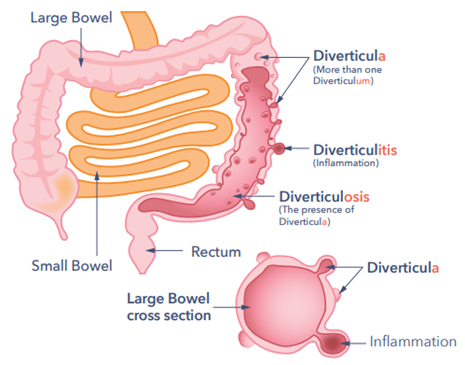
What causes it?
We don’t know why some people get this problem and some don’t. It is more common with age, as the bowel wall becomes more stretchy and floppy.
How is it diagnosed?
It can be seen on CT scans, and at colonoscopy.
How can diverticular disease affect you?
It is important to remember that most people with diverticular disease will never have any complications and can carry on with their lives as normal.
The most common symptoms include:
• Lower abdominal pain
• Bloating
• Change in bowel habit
• Mucus or blood in the stool
The pattern of symptoms differs from one person to the next, but pain is often crampy, and left sided. Pain and bloating can often start after food is eaten, and may ease after passing wind or stool.
Complications
Relatively few people ever get symptoms severe enough for them to be admitted to hospital. However, complications can occur and these include:
Inflammation (diverticulitis)
This is the most common complication, affecting 1 in 10 people with the condition. It causes worsening abdominal pain, fever, and diarrhoea. This is normally treated with antibiotics and plenty of oral fluids
Perforation
The bowel wall of a diverticulum is thin, and when inflamed can perforate. This lets bowel content into the abdomen and causes sepsis. This requires admission hospital for intravenous antibiotics. A small proportion may require emergency surgery.
Bowel blockage
Repeated episodes of inflammation can cause scar tissue around the inflamed diverticulum. Over time, this can narrow the bowel, making it hard for stools to pass.
Bleeding
A blood vessel in the thin walled divertulum can rupture, causing large volume fresh rectal bleeding. This may seal up by itself, or may require admission to hospital to help stop the bleeding. It may require a blood transfusion.
Fistula
Rarely, persistent inflammation related to diverticular disease can create abnormal connections from the bowel to other organs (e.g., bladder, vagina). If diagnosed, then an operation can usually fix this.
What can I do to live well with diverticular disease?
Most people with diverticular disease learn to live with it.
- Diet A healthy diet is advised, eating plenty of fibre. A good water intake
- (1+ litre fluid a day) will help the fibre to pass through the gut. There is no need to avoid seeds, nuts, or fruit skins.
- Exercise You should take regular exercise, watch your weight, and refrain from smoking.
- Medicines There is no medicinal cure for diverticular disease. A bulk forming laxative such as fybogel can help to avoid constipation, if that is a problem for you.
- Surgery This is usually a treatment of last resort, as complication rates are high. An operation would normally remove the affected part of the bowel, and can often necessitate a temporary stoma (end of the bowel brought to the surface of the skin).
Further sources of information
Contact us
If you have any queries relating to this information, please contact the General surgery service.
About this information
Service:
General surgery
Reference:
Y/052
Approval date:
27 March 2024
Review date:
1 December 2027
Click ‘show accessibility tools’ at the bottom of the page

Then click ‘select language’

Alternative formats
You can use the accessibility toolbar at the bottom of your screen to:
-
Change the text size
-
Adjust the font
-
Modify the colour contrast
-
Use the translate function
If you would like this information in another format, such as Braille, audio, or easy read, please speak to a member of staff.
You can also print as well as download as PDF using the “Print this page” button at the end of the page.
Staff will print a copy for you on request
Important note
This page provides general information only. It is developed by clinical staff and is reviewed regularly every 3 years for accuracy. For personal advice about your health, or if you have any concerns, please speak to your doctor.