

Advice after your nerve block for surgery
On this page…
What is TNO?
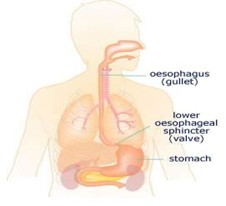
Trans-nasal oesophagoscopy is an investigation to look at your oesophagus (the food tube that goes from your mouth into your stomach) and hypopharynx (lower throat). This is done by a procedure numbing your nose and throat with a local anaesthetic spray, then passing a flexible viewing tube through your nose and the back of your throat into the oesophagus. We do this investigation to find the cause of difficulty or discomfort in swallowing, or when you have the sensation of a persistent lump in your throat.
Pictures may be taken or a small sample of tissue removed (biopsy). This depends on what your doctor finds.
Diagram showing the oesophagus:
Before the procedure
Do not eat for 4 hours before the test. Do not drink for 2 hours before the test. Continue taking your medication as normal. Inform the doctor if you are an insulin-dependent diabetic.
Tell the doctor if you have any allergies to local anaesthetics such as Lidocaine, or other medications ending with ‘caine’.
If you have an artificial heart valve or heart murmur, please tell us before your test. You may need antibiotics to prevent infection.
About the procedure
The procedure will be done within the operating department or in an adjacent room. It will take about 30 minutes. You will be sat upright and be awake
throughout the procedure. The doctor will numb your nose and throat with a local anaesthetic spray, which sometimes tastes unpleasant. A small tube will be passed through your nose and down into your oesophagus. During the examination you will be asked to swallow. Small puffs of air will be put into your oesophagus which may make you feel a little bloated, cause minor discomfort, or cause you to burp.
What to expect after the procedure
You will remain alert and should not have any pain, although you may notice a slight soreness in your nose and throat for a few hours, and occasionally, you may suffer from an indigestion-like sensation. You will be able to breathe and swallow as before, but do not eat or drink anything for 1 hour after the examination. After this you may eat and drink as before and can return to work as normal.
Your doctor may be able to give you a diagnosis at the time, or if samples of tissue have been taken, we will arrange to see you again in the clinic with the results of these.
Risks
- Bleeding—occasionally it is possible to scratch the lining of the nose or the oesophagus during the investigation, or cause bleeding from where a tissue biopsy has been taken. This should be minor and will resolve on its own. If however after discharge from hospital you are spitting out bright red blood, you should contact the ENT ward, and if necessary attend A&E.
- Perforation—again, scratching the lining of the oesophagus during the procedure occurs very rarely, but if you find that shortly after your procedure whilst at home you have chest pain, or pain between your shoulder blades, a fever, sweats, or difficulty breathing, you need to contact the ENT ward, and if necessary attend A&E.
If any of these problems arise after you have gone home please contact the wards:
Frimley Park Hospital: Short Stay Surgery ward Direct No: 0300 613 3216
F1 (children’s ward) 0300 613 4252
Additional resources
British Association of Otorhinolaryngologists: www.
www.
National Institute for Health and Clinical Excellence (NICE) www.
Contact us
If you have any queries relating to this information, please contact the Ear or nose and throat (ENT) service.
About this information
Service:
Ear, nose and throat (ENT)
Reference:
G/039
Approval date:
23 February 2026
Review date:
1 February 2029
Click ‘show accessibility tools’ at the bottom of the page

Then click ‘select language’

Alternative formats
You can use the accessibility toolbar at the bottom of your screen to:
-
Change the text size
-
Adjust the font
-
Modify the colour contrast
-
Use the translate function
If you would like this information in another format, such as Braille, audio, or easy read, please speak to a member of staff.
You can also print as well as download as PDF using the “Print this page” button at the end of the page.
Staff will print a copy for you on request
Important note
This page provides general information only. It is developed by clinical staff and is reviewed regularly every 3 years for accuracy. For personal advice about your health, or if you have any concerns, please speak to your doctor.