

Advice after your nerve block for surgery
On this page…
Introduction
Glaucoma is the name given to a group of conditions which cause progressive damage to the optic nerve (the nerve responsible for vision), which in turn leads to defects in the field of vision. The intra-ocular pressure (the pressure within the eye) is the key modifiable risk factor in Glaucoma.
Glaucoma can lead to permanent blindness and worldwide it is the second leading cause of blindness. Once vision is lost it cannot be restored. However, there are treatments which can help to delay progression of this condition by lowering the eye pressure.
What does the surgery involve?
Even though eye drops or laser treatment may be used to lower the pressure, there is increasing evidence that surgery offers the best chance of preventing further loss of vision.
Surgery is more successful if performed early in the course of the disease.
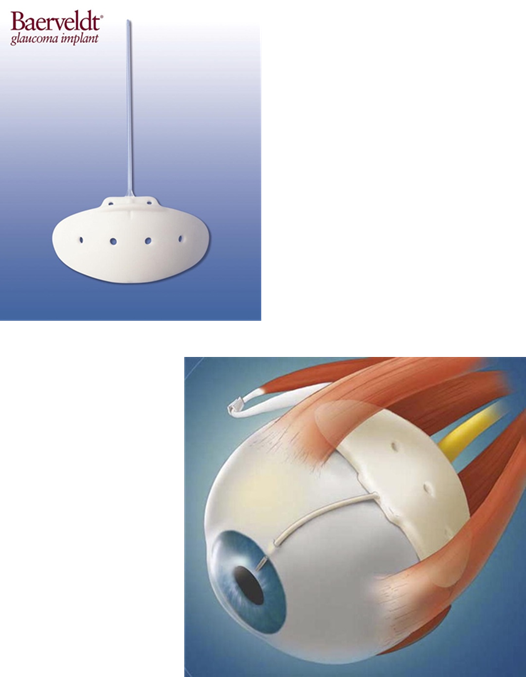
Glaucoma tube surgery, such as the Baerveldt implant, involves the placement of a microsurgical drainage device to control the pressure inside the eye. The Baerveldt implant consists of a small silicone tube that transports the fluid from the aqueous humour inside the eye to a plate underneath the conjunctiva (the white of the eye).
This allows fluid to flow out of the eye when the pressure inside the eye reaches above a certain level. Following the surgery, a raised ‘bleb’ is hidden under the upper lid which is where the fluid is being drained to.
During the operation to insert the Baerveldt implant, anti-scarring chemicals are used to allow the bleb to form. A stitch is also placed in the tube to protect against the pressure in the eye dropping too low. This dissolves after 5 - 6 weeks.
Following the operation, further anti-inflammatory drops will be given for several months and regular visits to the eye clinic will be needed to measure the pressure in the eye and monitor the progress.
On the operation day
You cannot drive on the day of your operation. This is usually day case surgery so you should be able to go home the same day.
The surgery will be performed under local anaesthetic.
To ensure you have your drops and an eye outpatient appointment before leaving hospital.
After the operation
It is normal for the eye to feel slightly gritty and to water for a few days after the operation.
You will require at least 2 types of eye drops for several weeks after surgery. The nursing staff will show you how to put these in safely.
You may resume normal activities after a week. Lifting, heavy work and running should be avoided for at least the first month after surgery. Swimming should be avoided for at least six weeks.
You may have blurred vision in the eye for 2 to 3 weeks after surgery.
However, if after leaving hospital, the eye becomes more painful, sticky and red or the vision worsen, contact the hospital immediately.
Possible complications
Glaucoma surgery is delicate and can be difficult. Complications do occur, but these are unusual and very rarely sight threatening. If you wish to discuss these in further detail, please ask at your next eye appointment or at the time of surgery.
- Infection
- With modern techniques, the risk of serious infection is less than one in every thousand cases.
- Poor vision
- It is important to realise that glaucoma surgery will not improve your vision. Indeed, vision may be slightly worse for a few weeks after the operation.
- Cataract
- Glaucoma surgery can make a cataract worse. Although it does not cause the cataract, it may speed up its development. Cataract, of course, does not cause permanent blindness and vision can be restored by surgery.
Things to avoid after operation
- Rub the eye.
- If the eye waters, dab the corner with a clean tissue.
- Poke the eye.
- Use an eyebath until told it is safe to do so.
Post-op appointments
Return to be seen in clinic, or on the ward, 1 or 2 days later.
Please remember to bring your glasses and all eye drops with you when you attend the clinic.
If you have any concerns after your operation, please contact the staff in the eye treatment centre on the following numbers:
|
From 9am to 5pm Monday to Friday: |
0300 373 5884 |
| From 5pm to 9am and at weekends: | 0300 614 5000 and ask for the Eye Doctor on call |
Contact us
If you have any queries relating to this information, please contact the Ophthalmology service.
About this information
Service:
Ophthalmology
Reference:
QQ/006
Approval date:
2 August 2024
Review date:
1 July 2027
Click ‘show accessibility tools’ at the bottom of the page

Then click ‘select language’

Alternative formats
You can use the accessibility toolbar at the bottom of your screen to:
-
Change the text size
-
Adjust the font
-
Modify the colour contrast
-
Use the translate function
If you would like this information in another format, such as Braille, audio, or easy read, please speak to a member of staff.
You can also print as well as download as PDF using the “Print this page” button at the end of the page.
Staff will print a copy for you on request
Important note
This page provides general information only. It is developed by clinical staff and is reviewed regularly every 3 years for accuracy. For personal advice about your health, or if you have any concerns, please speak to your doctor.