

Advice after your nerve block for surgery
On this page…
Understanding Meibomian Gland Disease
Meibomian Gland Disease (MGD) is a common condition affecting the eyes. It is a disorder of the tiny glands (meibomian glands) that are found in our eyelids. These tiny glands produce oils that are necessary for healthy tears.
If these glands become blocked or don’t work properly, their ability to produce this oily substance is impaired. The oil formed helps produce a film that keeps the water in our tears from evaporating. Without meibomian glands, tears can evaporate too quickly causing dry and uncomfortable eyes.
Why is it important?
The oily substances in tears are essential for clear and comfortable vision. If the tear film is impaired, your eyes might feel irritated and gritty and you may experience blurry vision
Common Symptoms
You may experience some, or all the following symptoms:
- Crusting around the eyelids, especially in the morning
- Dry and red eyes or eyelids
- Grittiness, or a feeling of having something stuck in your eye
- Blurry vision with a film that clears after blinking
- Light sensitivity
- Burning after instilling eyedrops
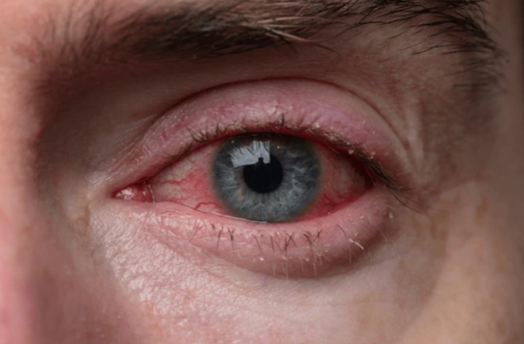
What causes MGD and how does it affect the eye?
Normal tears
There are three layers to our tears, going from outermost to innermost:
- An oily layer (produced by the meibomian glands), this prevents evaporation of the watery layer.
- A watery layer, this layer prevents the eye from drying out, it also provides oxygen and nutrients to the frontmost surface of the eye.
- A mucus layer that helps spread tears smoothly over the eye.
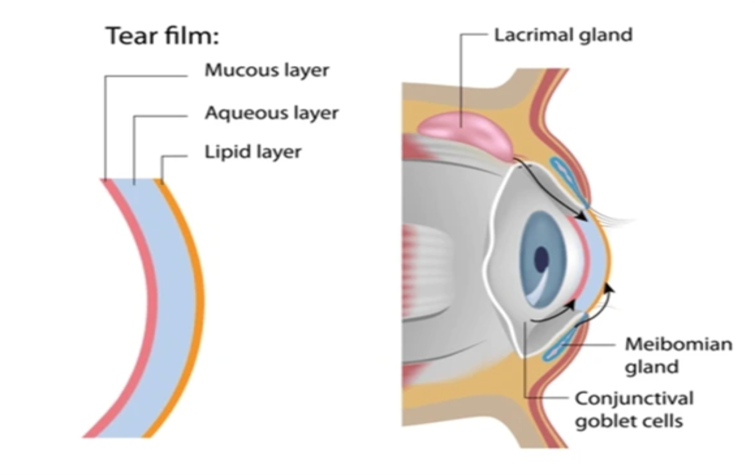
In MGD
The oil layer is missing or poor in quality, allowing tears to evaporate too quickly. This causes the eye surface and eyelids to become dry and inflamed.
Why does this happen?
MGD can occur for a number of reasons, including:
1. Natural ageing.
2. Skin conditions like rosacea or acne.
3. Hormonal changes (especially after the menopause).
4. Environmental factors (air conditioning, dust).
What is the treatment of MGD?
MGD is typically a condition that might affect you long-term, but it can be well controlled with regular self-care.
What can I do to help with my symptoms?
Warm compress.
This is an important step to treatment and must become part of a daily routine, especially when symptoms first flare. You should heat a flannel or cotton pad with hot water. Hold it against your eye for 5 minutes, ensuring the water isn’t so hot that you burn your eye. Massage it against your closed eye for up to five minutes to melt the wax. Repeat this if necessary. Heat masks/ eyebags may also be helpful.
Artificial tears.
Use lubricating drops as advised by your optician or ophthalmologist.
Modifying your environment.
Increase humidity at home (cold mist humidifiers). Avoid wind and hot air or smoke.
Other factors.
Wiping eyes with tea tree oil (non-perfumed as this can irritate the eye). A diet high in omega-3 can help with eye surface health.
Intense pulsed Light
A handheld device that can emit pulses of broad light to target meibomian glands and improve their function. This treatment is currently not available on the NHS.
Medical management.
In some cases, oral antibiotics might be used such as doxycycline (this must be prescribed by a doctor).
When to seek extra help
Most symptoms can be well controlled with daily care. You should consider seeking further help from your optician or ophthalmologist if you experience the following symptoms:
1. Severe or worsening pain.
2. Increasing redness or swelling around the eyes.
Contact us
If you have any queries relating to this information, please contact the Ophthalmology service.
About this information
Service:
Ophthalmology
Reference:
QQ/064
Approval date:
30 June 2026
Review date:
1 June 2029
Click ‘show accessibility tools’ at the bottom of the page

Then click ‘select language’

Alternative formats
You can use the accessibility toolbar at the bottom of your screen to:
-
Change the text size
-
Adjust the font
-
Modify the colour contrast
-
Use the translate function
If you would like this information in another format, such as Braille, audio, or easy read, please speak to a member of staff.
You can also print as well as download as PDF using the “Print this page” button at the end of the page.
Staff will print a copy for you on request
Important note
This page provides general information only. It is developed by clinical staff and is reviewed regularly every 3 years for accuracy. For personal advice about your health, or if you have any concerns, please speak to your doctor.