

Advice after your nerve block for surgery
On this page…
What is Videofluoroscopy?
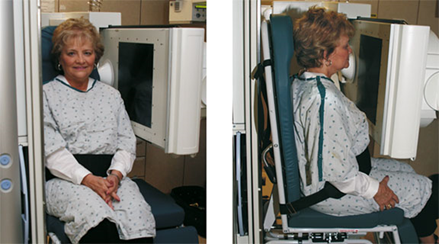
A “Videofluoroscopy” or “video swallow” is a moving x-ray picture of the swallow which is captured on film. It enables examination of the movement patterns taking place in the mouth, throat (pharynx) and upper oesophagus during the swallow.
What does Videofluoroscopy tell us?
Capturing a moving image of the swallow provides us with the following information:
- What, if anything, is going wrong with the process of swallowing
- How severe are the swallowing difficulties
- Is one consistency (e.g. liquids, semi solids, solids) easier and safer than another
- Is any food/fluid is entering the airway – this is known as “aspiration”
- If aspiration is occurring, how severe or risky this is
- If changing posture, positioning or introducing swallowing strategies or exercises help to reduce the risk of choking or aspiration
- The results of the videofluoroscopy will help the Speech and Language Therapist (SLT) and the rest of the team provide the best advice to you on how to manage your eating and drinking safely.
Where does the Videofluoroscopy take place?
The Videofluoroscopy will be carried out in the x-ray department. Please proceed to the x-ray department’s front desk to check in.
Who will be there?
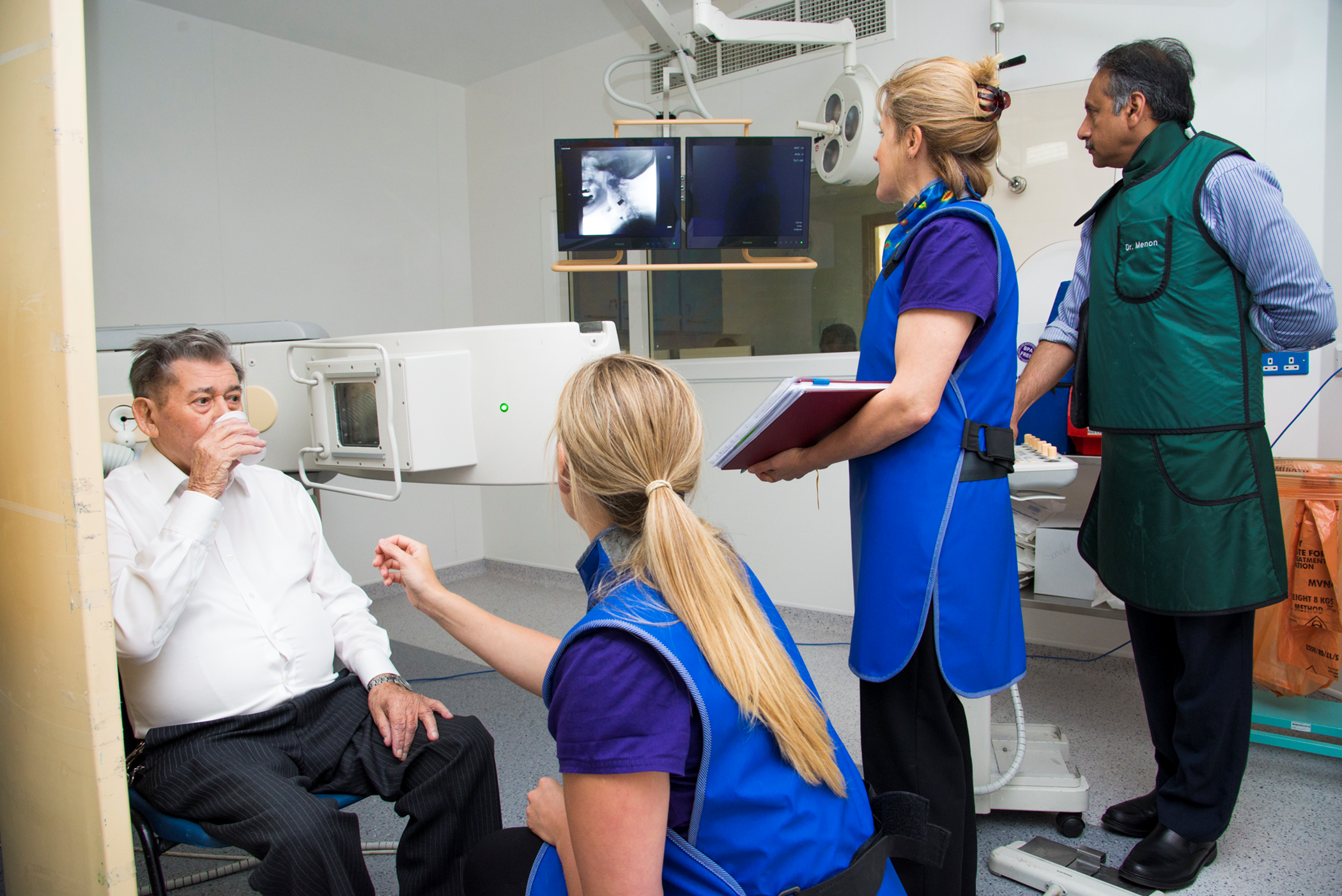
- An SLT to read the x-ray and to advise on food consistencies, positioning and any swallowing strategies
- A Radiographer (a technician) to operate the equipment and oversee the procedure
- We may ask a Radiologist (a specialist x-ray doctor) to attend or offer opinion
- If you have been referred by a community SLT, they may also attend.
What will happen during the study?
You will be greeted by the SLT or radiographer and brought into the room. They will ask you to remove outer layers and anything metallic around your neck.
They will then seat you in the machine and explain what will happen. You will be asked to drink or eat some food and water of different textures and thickness which are mixed with a special dye which is iodine based and shows up on x-ray. It has a bitter orange taste.
What will happen next?
You will be provided with a brief summary of what was seen during the investigation.
More detailed information will be provided in due course and a report will be written. This will help you and others involved in your care make the best decision about your options for eating and drinking.
What can I do if I have any worries or questions?
Please contact your Speech and Language Therapist or the person who referred you for this procedure. Please let the team know if you are allergic to anything swallowed, including iodine.
Contact us
If you have any queries relating to this information, please contact the Speech and language therapy service.
About this information
Service:
Speech and language therapy
Reference:
VV/015
Approval date:
20 September 2024
Review date:
1 July 2027
Click ‘show accessibility tools’ at the bottom of the page

Then click ‘select language’

Alternative formats
You can use the accessibility toolbar at the bottom of your screen to:
-
Change the text size
-
Adjust the font
-
Modify the colour contrast
-
Use the translate function
If you would like this information in another format, such as Braille, audio, or easy read, please speak to a member of staff.
You can also print as well as download as PDF using the “Print this page” button at the end of the page.
Staff will print a copy for you on request
Important note
This page provides general information only. It is developed by clinical staff and is reviewed regularly every 3 years for accuracy. For personal advice about your health, or if you have any concerns, please speak to your doctor.