

Advice after your nerve block for surgery
On this page…
Introduction
Blepharitis means inflammation of the eyelid margins. It can give symptoms of irritation, burning, grittiness & red eyelid margins, and sometimes cysts or infections in the lids. Blepharitis can impair the normal functioning of the tear film, which keeps your eye comfortable and keeps you seeing well. Blepharitis can be divided into two separate entities:
- Anterior blepharitis
- Posterior blepharitis - Also known as meibomian gland disease (MGD) / dysfunction
It is possible to have just one entity or both. Your ophthalmologist can guide you to the treatment that target the type of blepharitis you have.
Anterior blepharitis
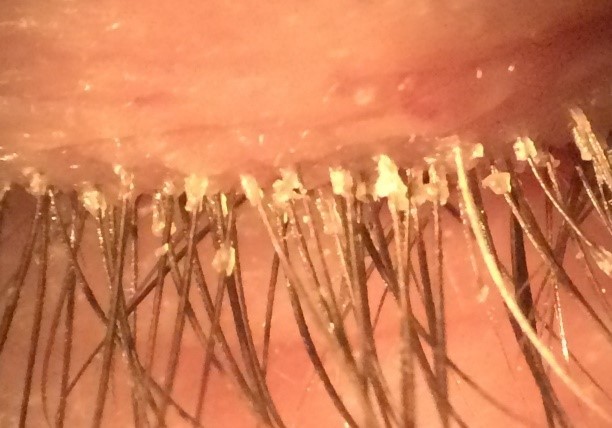
Crusts and debris develop at the lid margins especially at the roots of the eyelashes. This debris can be made up of bacteria, waxy deposits called seborrhea, or debris caused by the demodex mite, a tiny mite that lives on our skin and, in blepharitis, in our eyelash follicles. This sounds disgusting but is not a sign of being dirty!
Meibomian gland disease (MGD)
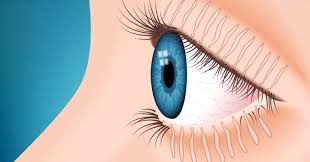
The meibomian glands are arranged in vertical columns in the upper and lower lids - about 30 in each lid. They push oil into the tear film. When diseased the gland openings become inflamed and closed. This reduces oil the tear film, and allows tears to evaporate more quickly, leading to dry eye. It is more common in the condition rosacea.
Lash cleaning for anterior blepharitis
Lash cleaning is used in anterior blepharitis to remove the crusts from the lashes. These can be very adherent, so a gentle wipe with a cotton pad is not usually sufficient. You could try using a cotton bud soaked in a shampoo solution to clean the lashes of all four eyelids by carefully wiping the cotton bud along the lash roots several times in a sideways motion, and then along the length of the lashes in an up-down motion. Over-the-counter lid wipes for blepharitis can also be convenient and effective.
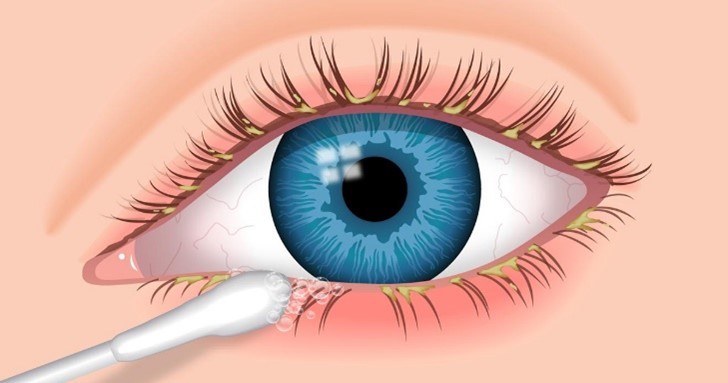
If you are mixing your own solution, baby shampoo has often been recommended because it doesn’t sting as much as other shampoos. Baby shampoo is fine when the culprit is bacteria, but it does not effectively treat demodex or sebhorroeic blepharitis. In these types of blepharitis, you will need to use diluted tea-tree shampoo, available from some chemists. If tea-tree shampoo stings, dilute it further. Do not use tea-tree oil - it is incredibly stingy! Some pads pre-soaked in tea-tree shampoo are available to buy.
The water you use to dilute your shampoo does not need to be boiled. Our eyes and eyelids do not mind tap water at all (except if we wear soft contact lenses).
Cleaning the lashes, yourself is difficult. You will almost certainly need a mirror or a friend! If you have only just been diagnosed with blepharitis, you should scrub the lashes every day. After a week or two this can be reduced and eventually once a week may be adequate to keep it at bay, especially if it is done thoroughly. It may only be necessary to clean the lashes during an exacerbation, but some patients clean the lids more regularly.
Antibiotic for anterior blepharitis
Antibiotic in the form of eye ointment is occasionally needed, when there is a lot of bacterial anterior blepharitis. Apply the antibiotic, after lid cleaning, in the following way: wash your hands, then put some ointment onto a fingertip. Rub the ointment into the eyelashes. This kills off the offending bacteria.
Heat for meibomian gland disease / dysfunction
Heat applied to the eyelids for 10 or more minutes a day can help thin the normal oily secretions produced by the meibomian glands in the eyelids and encourage blood flow to the area. This can prevent meibomian gland blockages, improve the tear film, and prevent meibomian cyst / chalazion formation. Reusable eye masks, which can be heated up with or without a microwave can be purchased at many opticians, chemists, or online; many patients find these a convenient way to treat the eyelids with heat. If not, a hot flannel can be used.
Eyelid massage for MGD
After heat application, massaging the eyelids with a finger or a cotton bud can help bring the softened meibomian oil to the surface of the lid margin, and unblock any meibomian gland openings which have closed.
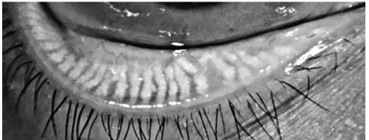
This infrared image shows normal meibomian glands arranged in columns in the lid. Massage is done from bottom to top in the lower lid, pushing oil towards the lid margin just behind the lashes where the meibomian glands open onto the eye. In the top lid massage is done from top to bottom.
Omega-3 oil for MGD
We always used to recommend this in the form of oily fish or supplements, but a major new study has put its effect into doubt; other studies have previously shown a benefit. If you are a believer in omega-3 oil, we don’t think it will do any harm.
Antibiotics for MGD
Sometimes oral antibiotics are necessary. The most frequently used are the tetracycline family of antibiotics. These can stain developing teeth so are not used in children or women who could possibly be pregnant. The antibiotics help oily gland function but often take two to three months to work. If helpful, the three-month course can be repeated.
Corticosteroid for anterior blepharitis or MGD
Steroid drops or ointment are also sometimes used in more severe blepharitis, when there is a lot of lid inflammation. Typically, they are given as a short course for two to four weeks. Steroid given around the eye can cause a rise in eye pressure, so steroid treatment does not tend to be used long-term.
In general, blepharitis can be well-treated by the above methods. Some patients will only need a short course of treatment to achieve a cure, which may occasionally need repeating; some patients will need an ongoing weekly regime of lid treatment to keep the eyelids healthy. The lids can then do their job of looking after the tear film and thereby your own beautiful eyes.
Contact us
If you have any queries relating to this information, please contact the Ophthalmology service.
About this information
Service:
Ophthalmology
Reference:
QQ/004
Approval date:
2 August 2024
Review date:
1 July 2027
Click ‘show accessibility tools’ at the bottom of the page

Then click ‘select language’

Alternative formats
You can use the accessibility toolbar at the bottom of your screen to:
-
Change the text size
-
Adjust the font
-
Modify the colour contrast
-
Use the translate function
If you would like this information in another format, such as Braille, audio, or easy read, please speak to a member of staff.
You can also print as well as download as PDF using the “Print this page” button at the end of the page.
Staff will print a copy for you on request
Important note
This page provides general information only. It is developed by clinical staff and is reviewed regularly every 3 years for accuracy. For personal advice about your health, or if you have any concerns, please speak to your doctor.