

Advice after your nerve block for surgery
On this page…
What is a Cardiopulmonary exercise test?
This is a test which allows your doctor to see how your heart and lungs and muscles react to exercise.
The test can be used to help diagnose problems with the heart and lungs. If you are considering having an operation the results are used to help inform you of the specific risks an operation may pose for you. The information from the test will allow the doctors to discuss your treatment options with you to help you decide what is most suitable care for you.
The appointment will last for about an hour.
You will be asked to cycle on a stationary bike (or occasionally turn an arm crank) for around 10 – 15 minutes. You will wear a facemask during the test (see below).
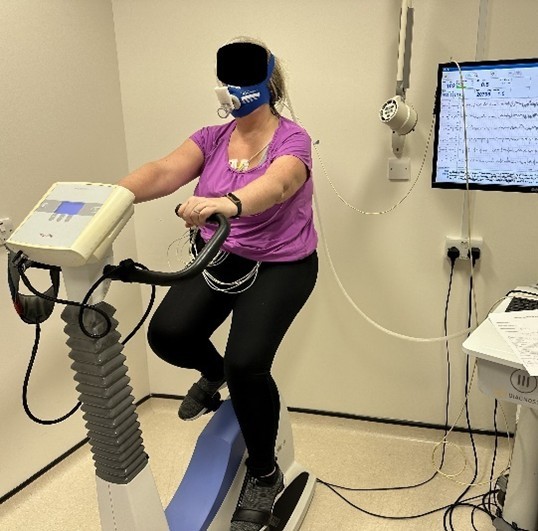
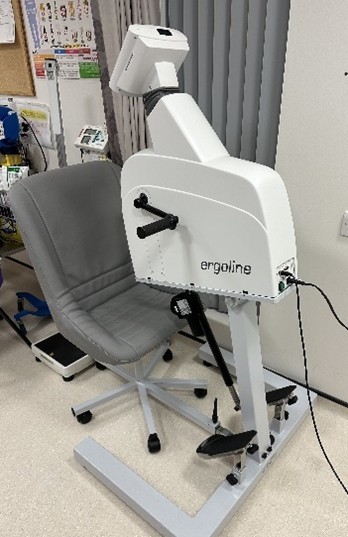
Your blood pressure, heart rate and oxygen levels will be monitored throughout the test.
Risks of Cardiopulmonary exercise testing
The test is very safe but the doctor will discuss potential risks with you.
1. Chest pain
2. Dizziness
3. Breathlessness
4. Heart attack or stroke (very rare)
5. Death (extremely rare 2-4/100,000)
Preparation for the test
- Please bring a list of your current medications with you and details of your medical history. Take all your regular medication on the day of the test as normal.
- Wear comfortable clothing (preferably trousers) and flat shoes for the test.
- DO NOT apply creams, powders or oils to skin on the day of the procedure.
- Only eat a light breakfast or light lunch before your test.
- AVOID smoking and caffeinated drinks for 4 hours before the test (this includes tea and coffee and fizzy drinks).
Conduct of the appointment
The doctor will take a detailed medical history from you. They will particularly concentrate on any heart or breathing problems you have.
The doctor will ask for your consent to undertake the test and explain the risks to you.
The clinic nurse will weigh you and measure your height – this allows us to standardise the test for you.
Prior to settling on to the bike or the arm crank, you will do some breathing tests.
You will then then be helped onto the bike (or crank seat) and the blood pressure, heart and Oxygen monitors will be put on.
Initially you will be asked to sit quietly on the bike to allow the doctors to record some baseline readings. Then you will be asked to cycle with very little resistance in the pedals, as the test progresses, increasing resistance will come into the pedals so that you have to work harder to turn them at a steady speed.
The doctors will be carefully watching the monitors and will encourage you to work as hard as you can so that they can record the heart and lung function when the body is under ‘stress’. When you have clearly done as much as you can, the doctors will then reduce the resistance in the pedals of the bike and ask you to continue turning the pedals slowly and your ‘recovery’ will be recorded.
After the procedure: The nurse will give you a drink of water. Most people sit quietly for 10 minutes or so and are then quite happy to go home and resume their normal routine.
The doctors will review the results of the test and then discuss them with you and one family member (if you are accompanied). It is often useful to have someone accompany you to help you retain all the information you may be given after the test.
Discussions with the doctor
If you have been sent for a CPET test before an operation, the following questions may help you in your discussion with the doctor about surgical options.
FOUR QUESTIONS TO ASK MY CLINICIAN OR NURSE TO MAKE BETTER DECISIONS TOGETHER
1. What are the Benefits?
2. What are the Risks?
3. What are the Alternatives?
4. What if I do Nothing?
A number of online information sites are referenced below which you may find useful to read before coming to the clinic and may help in discussions with the doctor.
We look forward to welcoming you to the clinic.
Patient information resources which you may find useful if you are having vascular surgery
From the charity, the Circulation Foundation:
From the Vascular Society of Great Britain:
https://
https://
From the Royal College of Anaesthetists:
If you require further information or advice, then please contact the anaesthetic department at the hospital you were treated at:
Frimley Park Hospital – 0300 613 4161
Wexham Park & Heatherwood Hospitals – 0300 615 3195
Contact us
If you have any queries relating to this information, please contact the Anaesthetics service.
About this information
Service:
Anaesthetics
Reference:
B/078
Approval date:
15 February 2024
Review date:
1 February 2027
Click ‘show accessibility tools’ at the bottom of the page

Then click ‘select language’

Alternative formats
You can use the accessibility toolbar at the bottom of your screen to:
-
Change the text size
-
Adjust the font
-
Modify the colour contrast
-
Use the translate function
If you would like this information in another format, such as Braille, audio, or easy read, please speak to a member of staff.
You can also print as well as download as PDF using the “Print this page” button at the end of the page.
Staff will print a copy for you on request
Important note
This page provides general information only. It is developed by clinical staff and is reviewed regularly every 3 years for accuracy. For personal advice about your health, or if you have any concerns, please speak to your doctor.