

Advice after your nerve block for surgery
On this page…
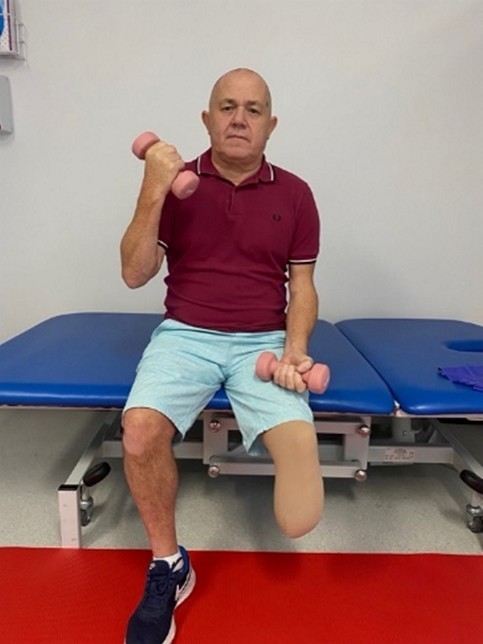
Before you get started with the exercises
- Ensure you are sat upright and balanced – engage your core to sit upright.
- If you are sat in a wheelchair, ensure the brakes are on.
- You can add resistance bands or small weights to progress these exercises when advised by your physiotherapist.
- Unless advised specifically by your physiotherapist, repeat each exercise 10 times, aiming for three times a day.
- If any of the exercises give you any pain, please stop immediately and inform your physiotherapist.
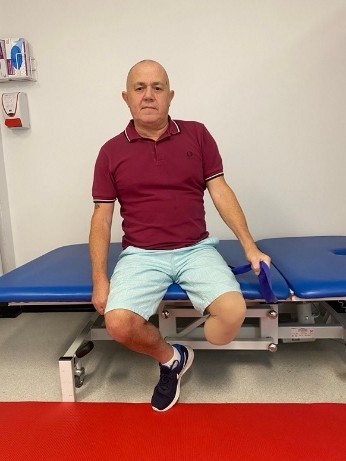
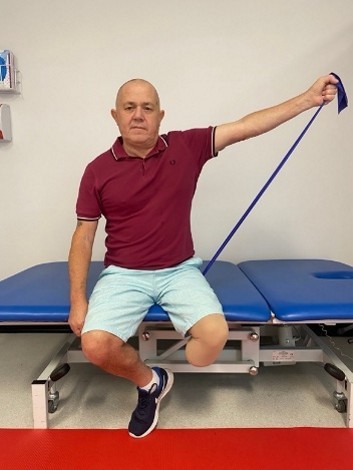
1. Shoulder abduction
Holding your arm out straight to the side, raise and lower your arm slowly as far as you can.
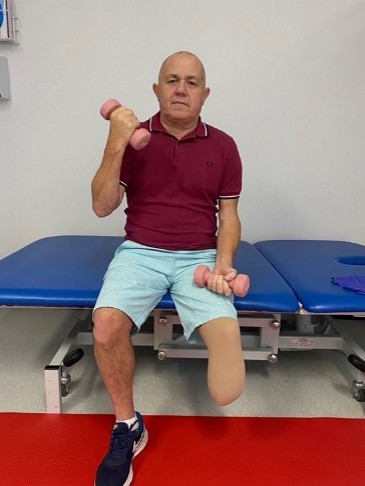
2. Biceps curls
With your palms facing up, bend your elbow before straightening again.
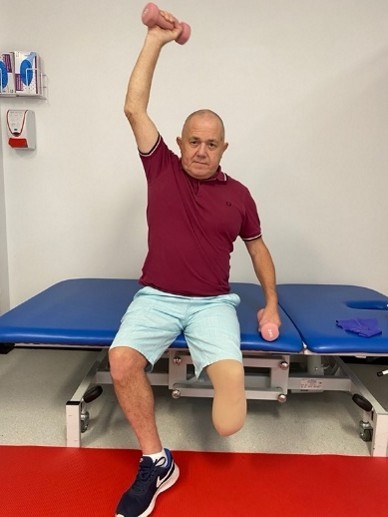
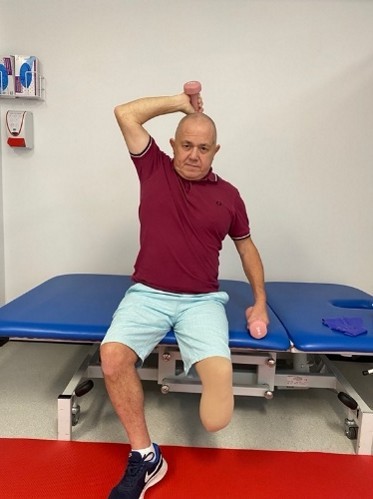
3. Triceps extension
Hold your arm straight above your head then bend and straighten your elbow whilst keeping your shoulder still.
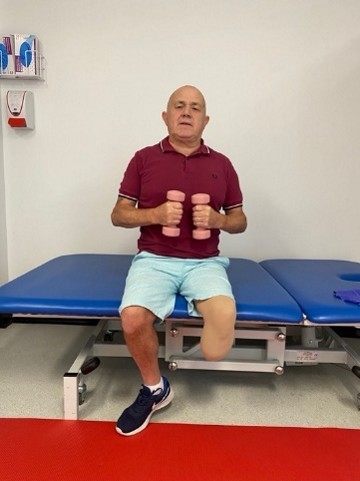
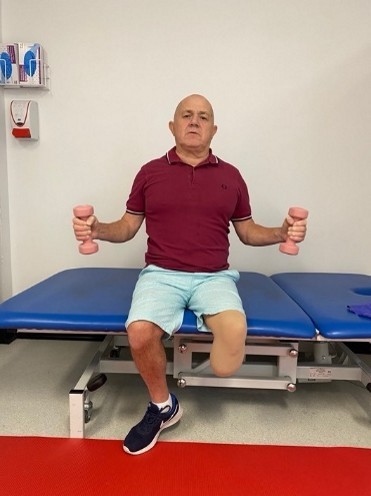
4. Internal and external shoulder rotation
Place your arms by your side and bend your elbows to 90 degrees. keeping your elbow tucked into your side, move your arms inwards towards your stomach and then outwards to the side.
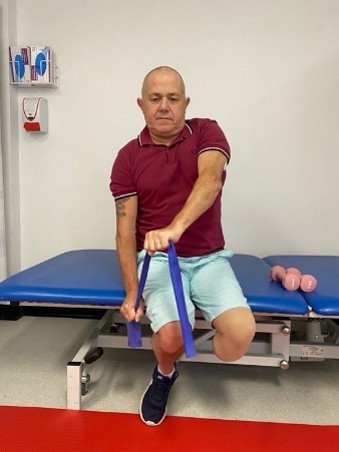
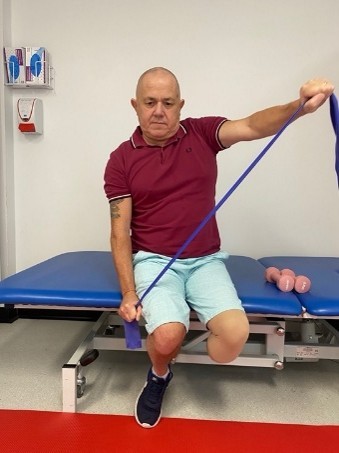
5. Cross body rotation
Place both of your arms to one side of your body and lift one arm across and in front of your chest until it is straight out in front of you. Hold this for a few seconds before lowering it back down.
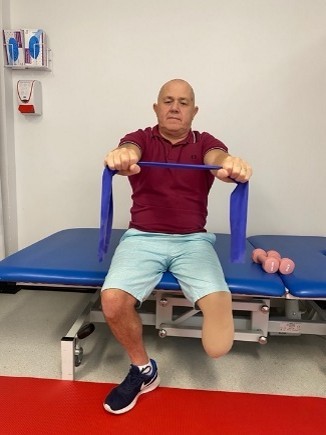
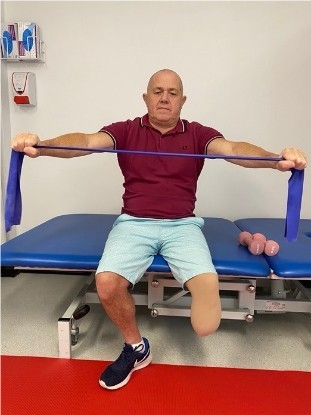
6. Horizontal abduction
Place your arms straight out in front of you. Move your arms out to the side and back to the middle. Ensure you keep your shoulders at 90 degrees throughout the movement.
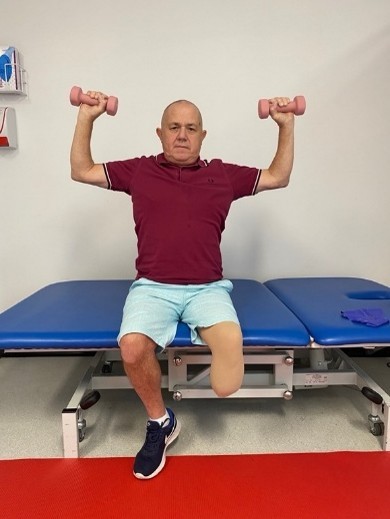
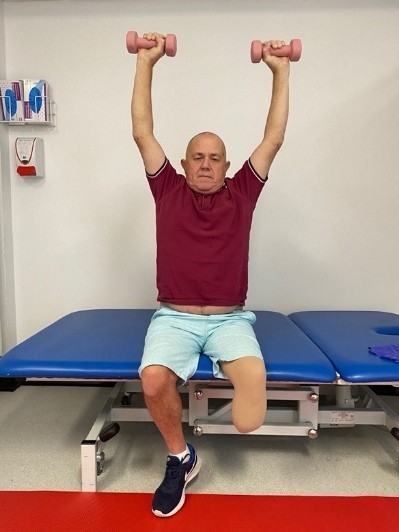
7. Shoulder press
Lift your arms out to the side, bend your elbows to 90 degrees and lift your arms above your head, straightening your elbow, then bring them back down slowly.
Contact us
If you have any queries relating to this information, please contact the Physiotherapy service.
About this information
Service:
Physiotherapy
Reference:
BB/104
Approval date:
10 January 2025
Review date:
10 January 2028
Click ‘show accessibility tools’ at the bottom of the page

Then click ‘select language’

Alternative formats
You can use the accessibility toolbar at the bottom of your screen to:
-
Change the text size
-
Adjust the font
-
Modify the colour contrast
-
Use the translate function
If you would like this information in another format, such as Braille, audio, or easy read, please speak to a member of staff.
You can also print as well as download as PDF using the “Print this page” button at the end of the page.
Staff will print a copy for you on request
Important note
This page provides general information only. It is developed by clinical staff and is reviewed regularly every 3 years for accuracy. For personal advice about your health, or if you have any concerns, please speak to your doctor.