

Advice after your nerve block for surgery
On this page…
Introduction
There is no ‘quick fix’ or easy way to lose weight.
To lose weight you need to burn more energy (calories) than your body consumes from food and drink. There are three ways you can do this:
- Eating fewer calories
- Burning more calories by increasing your activity
- A combination of both
Evidence suggests that combining both achieves the best results.
Food and drink doesn’t just provide us with energy, it also provides us with protein for growth and repair of muscles, vitamins and minerals essential for good health and fibre to promote a healthy bowel. Including a variety of food from all the food groups will provide your body with the range of nutrients it needs to function.
Alongside choosing the correct foods for a healthy diet, regular physical activity can promote weight loss. By gradually increasing your physical activity, you can burn more calories to promote weight loss.
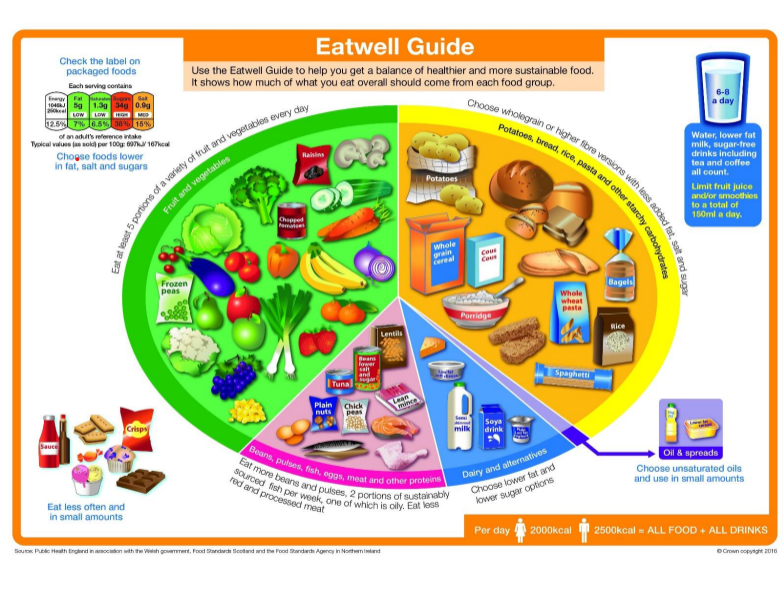
The Eat Well Guide
The Eatwell Guide shows the proportions of each type of food we should be eating. Each different food group contains essential nutrients our body needs to function and therefore no food should be avoided.
All food and drink we consume fits into one of the groups in the Eatwell Guide
Healthy Eating Tips to Help Weight Loss
- Follow a regular meal pattern for example, breakfast, midday and evening meal, including starchy food at each meal, plus two to three snacks if needed.
- Fibrous foods can keep you feeling fuller for longer, as they are harder to digest and therefore stay in the stomach for longer. By including wholemeal or granary bread, high fibre cereals, fruit and vegetables, salad and whole-wheat pasta or brown rice in your diet, it will help to keep your fibre intake high and maintain your satiety between meals.
If you are not used to fibre in your diet, gradually increase the amount and remember to drink at least 8-10 cups of fluid a day.
- • Top tip: Brown bread is not always higher in fibre. Opting for agranary bread would be the healthiest option, as it has a higher fibre content.
- Sugar is a carbohydrate in its simplest form and takes very little breaking down after consumption. This means when we eat foods high in sugar, we absorb it very quickly into our blood. If we eat too much sugar it will be stored in the body as fat. Try reducing your sugar intake using these top tips:
- Having no sugar or a no-calorie sweetener in hot drinks instead of sugar
- Flavoured drinks tend to contain sugar. Try drinking mineral water, ‘diet’ drinks or ‘no added sugar’ drinks. Although fruit juice contains one of your 5-a-day, it is also high in sugar, therefore important to keep to one portion per day
- Keep sweets, chocolate, cakes and biscuits as occasional treats rather than everyday snacks; these foods are usually high in fat too
It is important to reduce your fat intake, as fat is the most concentrated source of calories in our diet and can be related to health complications, including heart disease and some cancers.
There are different types of fat: monounsaturated, polyunsaturated, saturated and trans fats:
- Monounsaturated fats - avocado, olives, olive & rapeseed oil, almonds, cashews and nut butters
- Polyunsaturated fats - oily fish, sesame & soy oil, flaxseed and pine nuts
- Saturated fats - processed meats, pastry, batter, pies, mayonnaise, butter, full-fat milk and fatty meats
- Trans fats - fried foods, hard margarines and biscuits
Try reducing your saturated fat intake by:
- grilling, baking, poaching, steaming, dry roasting, casseroling or microwaving instead of frying
- use less butter, margarine and spreads
- choose spray or use less oils
- swap from full-cream milk to semi-skimmed or skimmed milk, lower fat cheese and reduced fat yoghurts
- choose lean cuts of meat and trim off any fat from the meat
- avoid deep fried foods, including chips and onion rings. Try dry roasting (without added oils) instead
- avoid processed meats, e.g. burgers, sausages
Although mono and polyunsaturated fats are essential for our bodies, it is important we do not consume too much when trying to lose weight, as these are very high in calories.
Be aware of fat-free, as this is not always the better option. It is important to check the label and ingredients for fat and sugar content, as some fat-free products have an increased sugar content compared to their full-fat varieties, e.g. fat-free yoghurts tend to be higher in sugar. Therefore, a ‘diet’ yoghurt would be a healthier option as this is lower in fat and sugar.
Limit Alcohol
All alcohol is high in calories, so cut back on your usual intake. The recommended guidelines for alcohol intake is no more than fourteen units per week, with at least two alcohol free days.
For more information on calorie and unit content of alcohol, visit this link: https:/
Be More Physically Active
To prevent significant weight gain and the development of chronic diseases, it is recommended to do at least 150 minutes of moderate-intensity aerobic activity every week, alongside strength sessions for all major muscles at least twice a week. For weight loss, you need to achieve up to 250 minutes of moderate-intensity aerobic activity every week.
Moderate intensity physical activity depends on each individual’s previous exercise experience and their level of fitness. It requires a moderate amount of effort and noticeably accelerates the heart rate:
- brisk walking
- dancing
- gardening
- housework and domestic chores
- games and sports with children
- building tasks (roofing/painting)
- carrying or moving loads (<20kg)
Eating Less Calories than You are Burning
To lose weight, you need to be in a negative energy balance. To do this, you will need to eat fewer calories than you burn. Find some of our top tips on how to save calories on the next page.
'Swaps to save calories'
| Food | Swap to | Save approx calories |
| 1/2 pint full cream milk | 1/2 pint semi-skimmed milk | 56 |
| 1oz ordinary cheddar | 1oz reduced-fat cheddar | 50 |
| Chicken portion with skin | Chicken portion without skin | 100 |
| Meat pie | Portion of beef stew | 400 |
| Fried egg | Boiled/poached egg | 35 |
| 1 tbsp double cream | 1tbsp fromage frais | 85 |
| Fish in batter | Grilled fish | 280 |
| 1 cup of tea with 2 sugars | 1 cup of tea without sugar or with sweetener | 40 |
| Cream cake | Currant bun | 85 |
| Large packet standard crisps | Small packet reduced-fat crisps | 160 |
| Bar of milk chocolate | Low-fat chocolate mousse | 195 |
| 1 can ordinary cola drink | 'Diet' cola drink | 130 |
| Thick butter on 1 slice of bread | Thin low-fat spread on 1 slice of bread | 60 |
| 1 rasher fried bacon, including fat | Grilled lean bacon | 80 |
| Fruit fool | 'Diet' yoghurt | 160 |
| 1 tbsp mayonnaise | 1 tbsp fat-free vinaigrette-type dressing | 150 |
| Standard creamy cooking sauce per portion | 'Healthy eating' type cooking sauce per portion | 60 |
| Large burger, large fries | Regular burger, regular fries | 450 |
Example Meal Plan
Breakfast
- Fruit (without sugar) or unsweetened fruit juice
- Wholegrain cereal with skimmed or semi-skimmed milk
- Wholemeal bread with low-fat spread and Marmite or reduced sugarjam or marmalade
Lunch
- Fish, poultry, lean meat, pulses, eggs or reduced-fat cheese
- Wholemeal bread, crisp breads or jacket potato
- Large serving of vegetables or salad
- Fruit or sugar-free dessert/yoghurt
Main Meal
- Fish, poultry, lean meat, pulses, egg or reduced-fat cheese
- Potato or rice or pasta
- Large servings of vegetables or salad
- Fruit or sugar-free dessert/yoghurt
Tea and coffee without sugar, water and low-calorie/sugar-free drinks may be taken freely throughout the day.
Portion Sizes
Alongside following the Eatwell Guide for a healthy, balanced diet, it is important to ensure you are keeping to portion sizes that meet your micronutrient requirements, without being too large to reduce weight loss. Your Dietitian will be able to advise you on how many portions of each food group you should be having.
Average portion sizes:
- Meat, fish, eggs, beans and pulses: one palm size for red meat, one cheque book size for white fish, a cupful of nuts, three tablespoons of beans or lentils or two eggs
- Starchy carbohydrates: one slice of toast, ½ medium jacket potato, three tablespoon rice/pasta/cereal
- Dairy: small matchbox size cheese, 150ml milk or small yoghurt
- Fruit/vegetables: handful/80g
Helpful Hints to Promote Weight Loss
Some diets fail because they focus on food content rather than eating habits.
You may find the following hints helpful:
- Eat regularly and do not miss meals
- Sit down and enjoy meals rather than eating ‘on the run’
- Eat slowly and chew well
- Concentrate on eating your food and enjoy your meals - avoid doing anything else, like reading or watching television, while eating
- Use a smaller plate
- Try to avoid shopping when you are hungry, and make a weekly menu and shopping list, and stick to it
- Try not to bring unsuitable foods, such as foods high in fat or sugars, into the house. If you have to buy them, keep them out of sight and easy reach
- Keeping a food diary for a week or two may help you reveal ‘problem areas’, these may be danger times or situations. Take action by carrying a low-calorie snack or make yourself busy, e.g. going for a walk, phoning a friend
- If you have a bad day, do not give up, accept it, put it behind you and get back onto your sensible eating pattern again
- Ensure you meet the minimum recommendations for physical activity of 150 minutes of moderate intensity per week. This can be broken down into 30 minutes over five days of the week. If you are struggling alone ask one of your friends if they would like to join you
- Including more fruits and vegetables on your plate to keep you fuller for longer
Set Yourself a Weight Target
- Weight targets need to be realistic - recommended weight loss is no more than 1-2lb (0.5-1kg) per week
- Try to avoid weighing yourself more than once weekly. If you weigh yourself at a similar time of day its more comparable
Set Goals to Achieve Your Weight Target
- Your goals need to be set by you. These goals might be food-related
- e.g. eating three portions of vegetables per day, or activity-related
- e.g. going swimming for 30 minutes twice weekly
Record Your Progress
- No matter how small the progress, it is still progress towards your weight target and should be recognised. To congratulate yourself on achieving your goal, you could give yourself a non-food ‘reward’ e.g. going to see a film, having a hot bath with a magazine, or buying a new item of clothing
- If you do not achieve your goals or weight target within the initial time frame expected, do not give up; accept it and move forward.
Remember! It is not just about losing weight to look good; it is about improving your future health.
Losing 10% of your body weight can lead to a 50% reduction in risk of developing type two diabetes, a 10% fall in total cholesterol and a 10mmHG fall in blood pressure.
Weight Management Services
If you struggle to control your weight, there are many weight loss and weight management programmes that are available to help you.
You may require a few tips or maybe some signposting to some activities and organisations. If you need something a bit more structured or intensive to succeed, there are options there too.
Below is a link to information for different weight management services available in different parts of the Thames Valley care area: https://
Contact us
If you have any queries relating to this information, please contact the Dietetics service.
About this information
Service:
Dietetics
Reference:
DT/051
Approval date:
1 March 2026
Review date:
1 March 2029
Click ‘show accessibility tools’ at the bottom of the page

Then click ‘select language’

Alternative formats
You can use the accessibility toolbar at the bottom of your screen to:
-
Change the text size
-
Adjust the font
-
Modify the colour contrast
-
Use the translate function
If you would like this information in another format, such as Braille, audio, or easy read, please speak to a member of staff.
You can also print as well as download as PDF using the “Print this page” button at the end of the page.
Staff will print a copy for you on request
Important note
This page provides general information only. It is developed by clinical staff and is reviewed regularly every 3 years for accuracy. For personal advice about your health, or if you have any concerns, please speak to your doctor.