

Advice after your nerve block for surgery
On this page…
Knee MUA Exercises
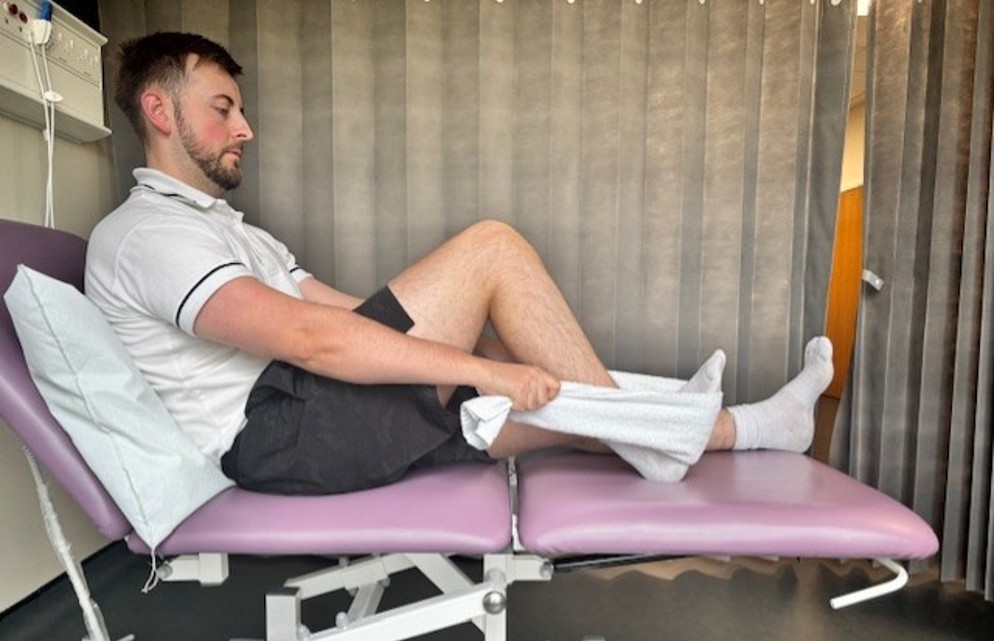
| 1. Assisted Knee bends in bed
Secure a band or towel around your foot and hold both ends. Bend your knee as far as you can, then gently assist further with the band until you feel a stretch. Hold briefly, then return to the starting position with control. 10 reps x3 a day |
 |
|
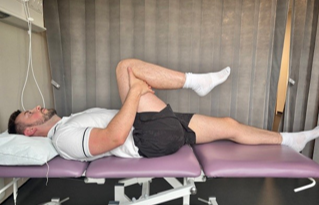
2. Gravity assisted knee bend Lie on your back and hold the back of your thigh with both hands, keeping your hip at a comfortable angle. Relax your lower leg and let gravity slowly bend your knee. Allow your foot to drop down naturally toward the bed. Hold for 5 seconds 10 reps x3 a day |
 |
|
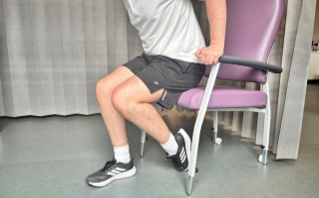
3. Assisted knee bend in the chair Sit in a chair and bend your operated knee back as far as you can. Place your good leg in front to gently help push it further. Hold the position for 5 seconds, then relax. 10 reps x3 a day |
 |
|
4. Reverse assisted knee bend in the chair Sit in a chair. Slowly slide the foot of your affected leg backward under the chair, bending your knee as far as is comfortable. Hold this position. To increase the stretch, gently shift your body forward on the chair while keeping your foot in place. Hold the stretch for 5 seconds 10 reps x3 a day |
|
|
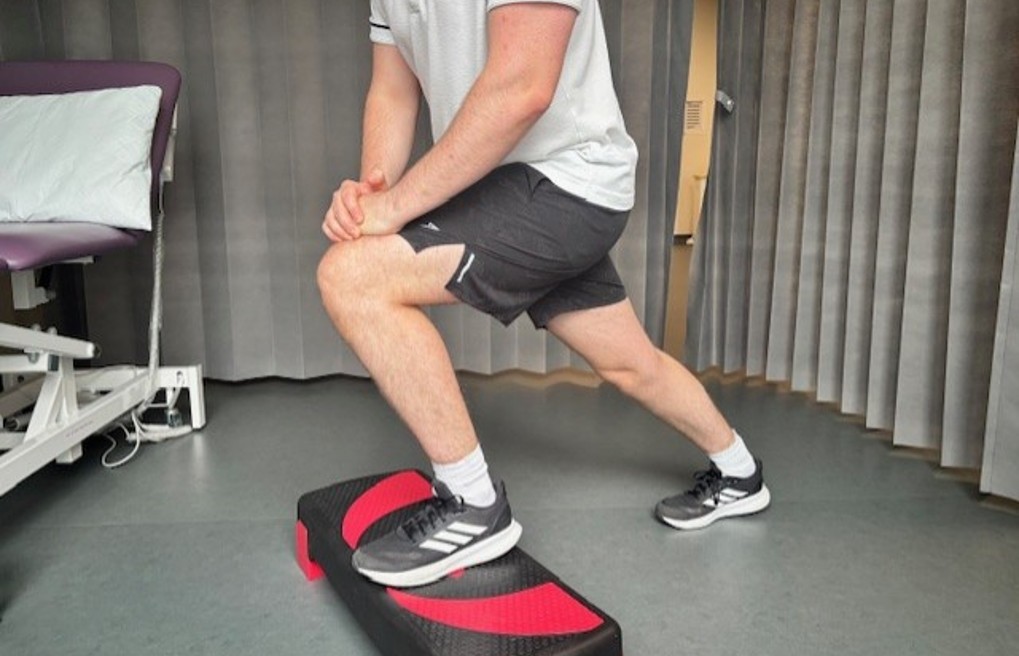
5. Knee bend stretch on step Place your operated leg on a step and gently lunge forward, pushing your weight through the knee to increase the bend. Hold the stretch for 5 seconds, then relax and repeat. 10 reps x3 a day |
 |
|
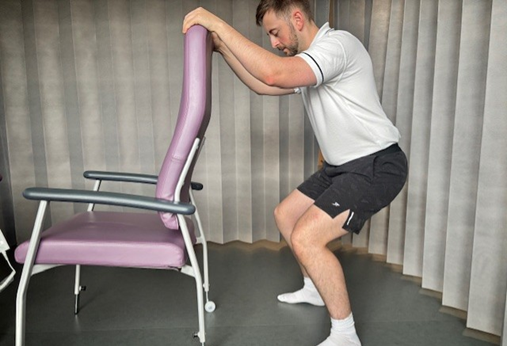
6. Mini squats Stand with feet hip-width apart, hold onto a support if needed. Bend knees and squat down as far as you can comfortably, then return to standing. Keep heels down and weight evenly through both legs. 10 reps x3 a day |
 |
Contact us
If you have any queries relating to this information, please contact the Physiotherapy service.
About this information
Service:
Physiotherapy
Reference:
BB/053
Approval date:
30 April 2026
Review date:
1 April 2029
Click ‘show accessibility tools’ at the bottom of the page

Then click ‘select language’

Alternative formats
You can use the accessibility toolbar at the bottom of your screen to:
-
Change the text size
-
Adjust the font
-
Modify the colour contrast
-
Use the translate function
If you would like this information in another format, such as Braille, audio, or easy read, please speak to a member of staff.
You can also print as well as download as PDF using the “Print this page” button at the end of the page.
Staff will print a copy for you on request
Important note
This page provides general information only. It is developed by clinical staff and is reviewed regularly every 3 years for accuracy. For personal advice about your health, or if you have any concerns, please speak to your doctor.