

Advice after your nerve block for surgery
On this page…
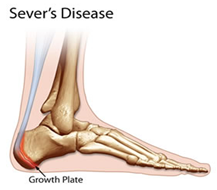
Sever's Disease is not really a disease but an inflammation of the growth plate of the heel bone (calcaneus) of growing children.
The condition presents as pain in the heel and is caused by repetitive stress to the heel; it is particularly common in active children. It usually resolves once the bone has completed growth or activity is lessened.
The Achilles Tendon can pull on this soft area of bone, lifting the cartilage and bone, which causes the pain. This pain is localised at the back of the heel and also underneath it.
It can affect just one heel or both.
External appearance of the heel is almost always normal, with no signs of swelling or redness visible.
There will be pain when pressure (squeezing) is put on either side of the heel bone in the area of the growth plate.
X-rays can be inconclusive as often the area on the heel bone can still look crumbly without it being Sever’s disease.
Causes
It can be directly related to overuse of the tendons in the heel. This can come from playing sports, or anything that involves a lot of heel movement. It can be associated with starting a new sport, or the start of a new season.
Children who are going through adolescence are also at risk of getting it because the bones grow quicker than the muscles and tendons leading to extra stretch on the soft area of bone.
Pain on weight bearing will be less when the weight is taken on the toes, but this leads to a difficult walking gait and limping.
A lump can form where the tendon attaches to the bone and over time this lump ossifies to become bone.
Sever’s affects the following
• boys more than girls, usually from the ages of 9 to 11.
• children who are having a fast growth spurt.
• those who love sport and are involved in running and jumping activities.
Relieving the symptoms
- Rest
- Reducing the time spent playing sport until the pain has gone
- Avoid sports that involve a lot of running or jumping. Swimming can be a useful alternative.
- Ice the affected area for 10 to15 minutes, especially after activity, protecting the skin by wrapping the ice in a towel.
- Pain relieving medication may reduce pain and swelling, but you need to discuss options with a pharmacist or GP.
- Avoid activities in bare feet.
- Choose a supportive shoe or trainer with a higher air-heel and with the laces done up.
- Gentle stretching exercises as below:
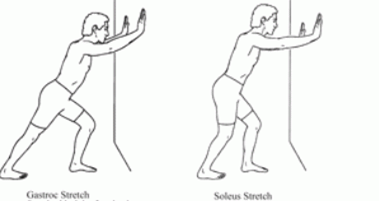 |
Calf muscle Hold each stretch for 20 seconds, three times a day. Make sure the toes face forward and the exercise is repeated with the back leg straight and then bent. |
Treatment
There is nothing that can be done to stop Sever’s disease. The pain will stop when growth is completed.
It may help to get gel heel pads, which will lift and pad the heel.
Putting the ankle into a plaster cast may relieve the symptoms in the short term if the pain is very bad; but there is a high possibility that it will return when the cast is removed.
Ongoing care
- With future growth spurts the pain may return; so continue with the stretches and advice.
- Return to sport gradually, increasing the level of activity as pain allows.
- Unfortunately, sometimes this condition continues until the bones are no longer growing; but in most cases it can be managed effectively.
- Sever’s does improve gradually with time and rest, but will resolve completely once the soft cartilage on the growing part of the bone hardens once the growth has finished.
Contact us
If you have any queries relating to this information, please contact the Orthopaedics service.
About this information
Service:
Orthopaedics
Reference:
N/033
Approval date:
27 February 2024
Review date:
1 February 2027
Click ‘show accessibility tools’ at the bottom of the page

Then click ‘select language’

Alternative formats
You can use the accessibility toolbar at the bottom of your screen to:
-
Change the text size
-
Adjust the font
-
Modify the colour contrast
-
Use the translate function
If you would like this information in another format, such as Braille, audio, or easy read, please speak to a member of staff.
You can also print as well as download as PDF using the “Print this page” button at the end of the page.
Staff will print a copy for you on request
Important note
This page provides general information only. It is developed by clinical staff and is reviewed regularly every 3 years for accuracy. For personal advice about your health, or if you have any concerns, please speak to your doctor.