

Advice after your nerve block for surgery
On this page…
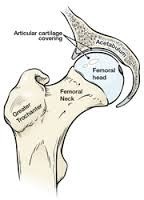
Perthe’s disease affects children (boys more than girls) usually between the ages of 3 and 12 years, with the majority being aged 5 to 7 years. It is a common hip disorder but there is very little understanding about why it happens.
 |
 |
Cause
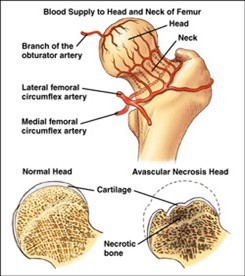
There is temporary loss of blood supply to the head of the femur (bone in the hip) causing the bone to become soft and collapse. Eventually the blood supply returns and the femoral head heals, but it may result in a deformity of the femoral head.
The time for the disease to run its course is usually between 2 to 5 years.
Symptoms
Some children have an acute onset of pain and hip irritation, or have pain to the knee referred from the hip. They may have had the pain for a few weeks. They may walk with a limp and have reduced movements at the hip joint.
Testing for Perthe’s disease
X-rays are taken to confirm the diagnosis and blood tests are done to check there is not an infection.
Treatment
Perthe’s disease varies in its severity and this dictates the treatment that your child will receive. The overall aim is to keep the head of the femur well positioned in the hip socket. This encourages the blood supply to return and promotes growth at the hip joint.
Treatment for Perthe’s disease depends on the severity of the disease and may include physiotherapy, crutches, plasters or, sometimes, an operation to re-shape the bone around the hip joint.
Physiotherapy will involve exercises to keep the hip joint mobile and in a good position and also to strengthen the hip muscles. This will include exercises at home to complete and may include hydrotherapy.
Parents may be asked to try to limit their child's physical activities and particularly contact sports when the disease is active.
Surgical treatment
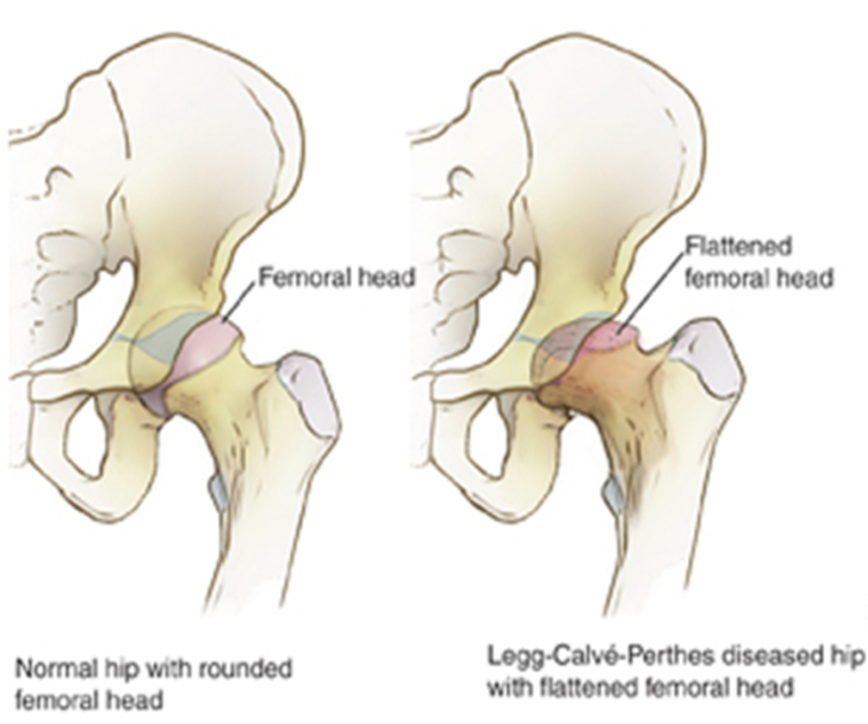
If the head of the femur (the ball) has become flattened there is a danger that it will not develop well if it is not completely within the socket. The aim of the surgical treatment is to keep the head of the femur within the socket, and there are different operations that can be used to achieve this. If an operation is required, the surgeon will discuss the best options for your child.
Ongoing care
Your child will have regular appointments in the outpatient until they are better. Many primary schools are aware of Perthe’s and can help with the practical needs during school hours. A copy of the clinic letter that is sent to the GP can be sent to you and you can discuss this with the school teachers. This will help them to understand how long the treatment will take and which sports to avoid, and also to be aware that it will benefit your child to have a chair to sit on rather than using the floor.
Contact us
If you have any queries relating to this information, please contact the Orthopaedics service.
About this information
Service:
Orthopaedics
Reference:
N/035
Approval date:
27 February 2024
Review date:
1 February 2027
Click ‘show accessibility tools’ at the bottom of the page

Then click ‘select language’

Alternative formats
You can use the accessibility toolbar at the bottom of your screen to:
-
Change the text size
-
Adjust the font
-
Modify the colour contrast
-
Use the translate function
If you would like this information in another format, such as Braille, audio, or easy read, please speak to a member of staff.
You can also print as well as download as PDF using the “Print this page” button at the end of the page.
Staff will print a copy for you on request
Important note
This page provides general information only. It is developed by clinical staff and is reviewed regularly every 3 years for accuracy. For personal advice about your health, or if you have any concerns, please speak to your doctor.