

Advice after your nerve block for surgery
On this page…
What is a Partial Knee Replacement?
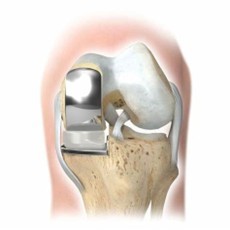
This is an operation to treat osteoarthritis of your knee. Osteoarthritis can often affect just one side of your knee, most commonly the inside (or medial aspect). Unicompartmental Knee Replacement (UKR) surgery is designed to treat the pain of the arthritis in the damaged section of your knee, whilst preserving the remaining native joint surfaces, therefore improving knee function with a more natural knee joint movement.
Risks of Surgery
As with every operation performed, there is an element of risk. These are the risks you should be aware of before and after your operation.
- Infection - if you get a deep infection within the knee it may lead to further surgeries. Precautions are undertaken to prevent infection during this type of surgery. They include the use of antibiotics as well as performing the surgery under strict sterile conditions in the operating theatres. The risk of infection is very low (1 in 500).
- Blood clots - if this occurs in your leg (Deep Vein Thrombosis, DVT) it can result in pain and swelling for a short while or in some cases, long term swelling. If a clot travels to your lungs (Pulmonary Embolism, PE) it causes shortness of breath and can threaten your life. The risk of a clot on the lung ending your life is around 1 in 25,000. To reduce this risk, you will be prescribed blood thinning medication post-surgery.
- Damage to blood vessels/nerves - very rarely an important blood vessel can be damaged during surgery. This would require urgent assessment and possible further surgery with the vascular surgeons (1 in 100,000).
- Numbness - next to the scar is a very common occurrence after any type of knee surgery. These symptoms can be short lived or long lasting (more than 1 in 10). Very rarely you may need further treatment due to nerve pain.
- Fracture around the components - this occurs very rarely. Care will be taken for this not to happen. If this does occur it can be treated with simply using a pair of crutches and reducing the amount of weight you put through your leg or in extreme cases may require further surgery (1in 100,000).
- Pain/stiffness - this is very rare following UKR surgery. Ongoing pain can be treated with tablets. Stiffness may require further surgery in the form of a manipulation of your knee under anaesthesia (1 in 100,000).
- Mobile plastic spacer dislocation - there is a very small risk of dislocation. If this was to occur it would give you locking symptoms and you may require further surgery to replace the spacer.
Admission
Why Day Case Surgery?
Time spent in hospital following surgery has reduced significantly over the last few years. Changes in surgery technique and support allow patients to go home the same day. The advantages are being in your own environment, reducing the risk of complications and being in control of your own recovery.
Who is suitable for day case surgery?
Not every patient having a partial knee is suitable for day case surgery. Patients must be medically fit and well, have friends and family to support them, have transport to and from the hospital and have the motivation to succeed.
If your surgeon has discussed day case surgery with you, it is important that you are prepared for this and follow the advice given to you.
What does day case surgery involve?
Day surgery means going home the afternoon/evening after your surgery. Your surgery will take place in the morning/early afternoon to allow time to recover before going home.
The surgery is performed under a spinal anaesthetic. This involves a needle into your lower back to numb your legs. You may be awake or have mild sedation during the operation. You should bring some headphones with you and listen to your favourite music/podcast. There will be a large screen so you will not be able to see the surgery. The spinal anaesthetic wears off quickly and allows you to recover and walk sooner after your operation. Your anaesthetist will explain more about the anaesthetic on the day of your surgery.
You will be assessed by the Therapy team after your surgery. They will teach you how to walk with crutches and will give you an exercise programme to do at home. If required, they will also complete a stair assessment.
You will only be discharged home if it is medically safe to do so, you have someone at home with you and can manage safely. If there are any concerns, you will stay in hospital overnight and go home the following morning.
What happens when I go home?
You will be contacted by the ward the day after your discharge to see how you are managing at home. You will also be given the ward telephone numbers to contact 24/7 should you have any questions or concerns.
What happens before your admission to hospital?
You will be seen in the pre operative assessment clinic prior to your operation. This is to assess your fitness for surgery. You will be given information regarding your surgery and you will be able to ask questions.
You will also be contacted by the Therapy Team prior to admission. They will assess your social circumstances, discuss your home environment and help you plan your discharge home from hospital. This helps to pre-empt any problems prior to your surgery and facilitate your discharge after your operation.
Coming in to hospital
You will be admitted to hospital on the day of your surgery. Admissions times vary but are typically 7am or 12pm. You will not be allowed to eat anything for 6 hours prior to your surgery. You can drink tea/coffee with a small amount of milk up to 2 hours before your surgery. Clear fluid (water/black tea/coffee) is allowed until you are called to theatre. You may also receive a carbohydrate drink 2 hours prior to your surgery.
After your operation
The operation takes approximately one and a half hours, which includes anaesthetic time. You will wake up in the recovery room where you will remain until you are awake. It is very important that you alert the nurse if you are experiencing pain.
Your knee will be dressed in a compression bandage. This usually stays on for 24 hours but is dependent upon your surgeons post-op instructions and you will be told when to take it off. You can bend and straighten your knee immediately after surgery. Do not force the movement, but you can flex the knee as much as pain allows. Pain relief will be prescribed, make sure you ask for it regularly and speak to the nurses if you are uncomfortable.
Your wound will be covered with a waterproof dressing and there will be a large pressure dressing over the top. This should not be changed until you are reviewed by the hospital team. Your clips/stitches are removed by your GP practice nurse at two weeks. It is normal to see blood stained fluid on the dressing.
If the fluid leaks outside of the dressing or you have any concerns about the wound, please contact the ward for advice.
Getting moving after the operation
You will be assessed by the Therapy team when you return to the ward. Early mobilisation is actively encouraged. The therapy team will teach you:
- Exercises to increase the range of movement and muscle control of your knee.
- How to get in and out of bed
- How to walk with elbow crutches
- How to climb stairs.
A check x-ray of your new knee will be taken prior to your discharge.
Once you have been discharged from the ward you can gradually increase your activity levels as pain allows. You can go for a walk outside but it is advisable to go with someone the first time and always make sure that you do not go too far.
You will have outpatient physiotherapy following your discharge from hospital. You will be contacted once you are at home to arrange this. You can increase the repetitions of each exercise as they become easy, e.g., from x10 up to x15 and then up to x20. You should continue your exercises for 6-12 weeks.
It is essential that you follow the advice given to you by the therapy team. If you are not medically fit to go home, you will stay overnight. The therapy team will assess you the following morning and you will be discharged home.
If there are any concerns surrounding your discharge and we are not able to send you home within 24 hours of your surgery, we will keep you in hospital and continue with your rehabilitation.
General Information
Pain Relief
It is normal for your knee to be painful after surgery. You will be given medication to control pain and reduce nausea/vomiting. You will have access to strong pain relief medication which is started before your surgery. It is important that you take your pain relief regularly and speak to the nursing team if you are in a lot of pain.
You will be given an ice pack on the ward to help manage pain and swelling. You are encourage to continue with ice therapy at home 5-6 times a day to help reduce swelling.
Where to get help/advice on discharge
Before discharge home, you will be given a contact number to ring should you have any concerns, questions or problems regarding your new knee joint.
If you have concerns regarding your wound, please contact the Joint Specialist Nurse at Heatherwood or the ward you had your surgery. Do not contact your GP or attend A&E unless it is a medical emergency.
It is not uncommon to experience pain for many weeks following your surgery. You will be discharged home with 7 days supply of pain relief medication, but please be aware that you may require a further prescription from your GP.
We advise that you do not go on a long haul flight for 12 weeks short haul flight for 6 weeks following your operation. This is due to the increased risk of Deep Vein Thrombosis.
Post operative knee swelling and bruising is common following your partial knee replacement It is not uncommon for this to increase following discharge from hospital. You will be advised about ice therapy which will help alleviate this. If, however, you experience pain in your calf or thigh, you must seek medical advice.
Useful Contacts
Heatherwood Hospital:
- Orthopaedic pre assessment 0300 614 7778 / 0300 614 7147
- Arthroplasty Nurse Heatherwood 07789927177
- Nurses Station Treetops Heatherwood 0300 614 4175
- Physio/OT Office Treetops Heatherwood 0300 614 4178
Frimley Park Hospital:
- Frimley Park Physiotherapy 07570 974390
- S2 Elective Ward Frimley 0300 613 3781 / 0300 613 3783
- Elective Helpline Frimley 0300 613 2556
Wexham Park Hospital:
- Ward 1 Wexham Park 0300 615 3010 / 0300615 3012
- Outpatient Physio Wexham 0300 615 3501 / 0300615 3500
- Wexham Park Physiotherapy 07717 199851
Contact us
If you have any queries relating to this information, please contact the Orthopaedics service.
About this information
Service:
Orthopaedics
Reference:
N/060
Approval date:
24 June 2025
Review date:
24 June 2028
Click ‘show accessibility tools’ at the bottom of the page

Then click ‘select language’

Alternative formats
You can use the accessibility toolbar at the bottom of your screen to:
-
Change the text size
-
Adjust the font
-
Modify the colour contrast
-
Use the translate function
If you would like this information in another format, such as Braille, audio, or easy read, please speak to a member of staff.
You can also print as well as download as PDF using the “Print this page” button at the end of the page.
Staff will print a copy for you on request
Important note
This page provides general information only. It is developed by clinical staff and is reviewed regularly every 3 years for accuracy. For personal advice about your health, or if you have any concerns, please speak to your doctor.