

Advice after your nerve block for surgery
On this page…
How Does The Urinary System Work?
What Is The Urinary System?
Kidneys – these two bean shaped organs work around the clock. They have various functions, including filtering waste products from the blood and producing urine (wee). They also balance a variety of electrolytes, as well as release hormones to control blood pressure and control red blood cell production. Furthermore, the kidneys help with bone health by controlling calcium.
Ureters – these are two thin tubes that take the urine (wee) from the kidneys to the bladder.
Bladder – this is the hollow, balloon shaped organ that holds urine (wee) until it is time to go to the bathroom. This sac gets bigger as it fills with urine (wee).
Urethra – this is a tube that carries urine from the bladder out of the body when you wee.
Nerves in the bladder – the nerves warn a person when it is time to empty the bladder.
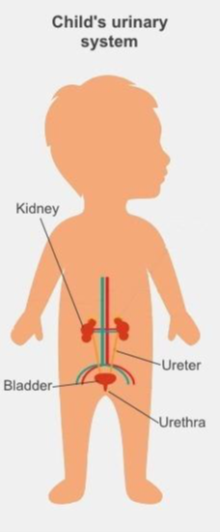
How Does The Urinary System Work?
- The body extracts nutrients from your diet and coverts it into energy.
- Waste products are then left behind in the bowel and blood.
- The urinary system helps to remove urea from the body (liquid waste!). Urea is carried in the blood down into the kidneys where it is eliminated from the body with other waste products in the form of urine.
Enuresis
What Is ‘Enuresis’?
The medical term for the inability to control urine in individuals who are already toilet trained. Such accidents commonly occur at night, when the individual is sleeping, but wetting can occur during the daytime as well. Daytime wetting occurs in roughly 3.5% of healthy children, with 67% of
these children experiencing night time wetting.
Enuresis Signs/Symptoms Include…
Damp underwear, urine accidents during the day and irritation and/or redness around the genitals.
What Is ‘Nocturnal Enuresis’?
The medical term for the involuntary wetting during sleep. Bedwetting is considered as a medical difficulty when a child older than seven years of age has one or more episodes per month. Whilst the causes are not fully understood, help with this has a positive effect on the self-esteem of
children and young people.
Nocturnal Enuresis Signs/Symptoms Include…
Many parents/carers observe wet bedding or nightclothes in children and young people with bedwetting.
If there is a urinary tract infection, then the child may experience painful/burning urination, increased frequency of urination, or a fever.
Causes of Daytime Wetting
Dysfunctional Voiding
Many children who experience daytime wetting feel the urge to urinate at the last minute, and may ‘curtsey’ using their heel to stop the flow of urine. When the child/young person does go to the toilet, the outlet valve may not relax fully. This means that the bladder does not empty fully. This means that when the child returns back to what they were doing, the outlet valve will relax and urine leaks out. The child becomes at risk of urinary tract infections (UTI) when the bladder does not empty fully. UTI’s also increase the risk of bedwetting; indicators of UTIs include smelly and cloudy urine, pain or burning during urination, and stomach aches.
Weak Outlet Valve
The outlet valve opens and closes to control the flow of urine. A weak outlet valve may lead to a child/young person wetting themselves when they laugh, cough, or strain.
Structural Abnormalities
Structural abnormalities in the bladder or the kidney tubes can also cause daytime wetting. This can result in pain while weeing, a poor wee stream or continuous trickling wee.
Nerves
The brain and bladder are connected by nerves; messages are sent from the bladder to the brain via these nerves. Sometimes these messages get confused and the warning of urgency, sent from the bladder, is not received by the brain. The child then may not realise they need a wee.
Functional Causes
Enuresis can also be described as a functional disorder, meaning that it has a physical impact of the body without any apparent visible, organic, biological cause. Psychological factors contribute in the progress of functional disorders.
Constipation
A bowel that is full of stools presses against the bladder. The bladder then becomes squashed and struggles to expand to hold large amounts of urine. As a result, the child/young person feels the urge to urinate frequently, and has to do lots of little wees.
Causes of Bedwetting
Bladder Size
Some bladders do not stretch enough to hold all of the urine made during the night.
Urine Production
Some people produce too much urine at night, the bladder cannot hold this extra urine.
Sleep
Some children/young people do not wake up when their bladder signals to their brain that it is full.
Constipation
A bowel that is full of stools presses against the bladder. The bladder then becomes squashed and struggles to expand to hold large amounts of urine. As a result, the child/young person feels the urge to urinate frequently, and has to do lots of little wees.
Type 1 Diabetes & Diabetes Insipidus
Symptoms of Type 1 Diabetes include more than typical urination, fatigue, weight loss, and thirst. People with Diabetes Insipidus experience excessive urination and increased thirst. If you are concerned you/your child may have diabetes please see your GP urgently.
Bedwetting is nobody’s fault, it does not happen because of laziness or bad behaviour. It is an accident! Children/young people should not be punished for accidents.
Modelling Enuresis and Nocturnal Enuresis
Nocturnal Enuresis
Under consumption of fluids during the day, over consumption of fluid in the evening.

Insufficient production of the hormone involved in stopping urine production overnight.
Overstretched bladder/ loss of sensitivity
Sleeping child does not feel the urge to urinate when they are sleeping (nocturnal enuresis).
Bedwetting
Sometimes a child may not drink enough during the day, and then drink more in the evening, filling the bladder before bed. The sleeping child may then not feel the urge to urinate resulting in bedwetting.
Some children do not produce enough of the hormone that stops urine production overnight, therefore too much urine is produced. For other children the signals from the bladder to brain are not working as they should. This means the bladder overfills and stretches, and the signals between
the brain and bladder become more confused. Finally, a child may withhold urination due to a fear of using the toilet, or because they do not like using the toilet in certain environments.
Enuresis
Withholding urination
Overstretched bladder/loss of sensitivity confusing the signals between the brain and bladder
Dysfunctional Voiding
Possible development of UTIs.
Daytime wetting
A child who experiences daytime wetting may feel the urge to urinate at the last minute, and may ‘curtsey’ using their heel to stop the flow of urine. When the child/young person does go to the toilet, the outlet valve may not relax fully. This means that the bladder does not empty fully. When the child returns back to what they were doing, the outlet valve will relax and urine can leak out. The child becomes at risk of urinary tract infections (UTI) when the bladder does not empty fully. The bladder can continue to fill and become overstretched. This results in a loss of sensitivity and confusion of the signals between the brain and bladder.
Physiological Support
Did you know?
You can see if you are drinking enough water based fluid by looking at the colour of your wee. Hydrated, healthy wee is a light yellow colour (almost like water).
Dehydrated, unhealthy wee is a dark yellow colour, and means you need to drink more water!
Water
Drink the recommended amount of water (information provided in the table below) based fluid throughout the day to help your bladder fill and stretch. This helps the bladder to hold more urine and stay healthy.
Drinking also helps to keep your bowels moving too! By drinking lots of water and keeping your bowels moving healthily, there is less pressure on the bladder, increasing its capacity. Drinking less fluid is more likely to result in constipation, worsening day and night time wetting.
Drinks with caffeine in them can make an overactive bladder misbehave. These drinks include some fizzy-pop, coffee, tea, and hot chocolate. Try to do most of your drinking in the daytime and just drink a small cup of water an hour before bed, if you are thirsty.
| Age (years) | Total drink intake per day |
| 1-3 | 1 litre |
| 4-8 | 1.2 litres |
| 9-13 | 1.5 litres |
| 14-16 | 2 litres |
Diet
One of the causes of enuresis is constipation. It is important to eat a diet high in fibre, fruit, and vegetables (e.g. whole wheat products, peas, broccoli, carrots, sweetcorn and oranges, apples)
to enable healthy bowel movements.
During episodes of constipation, the bowel presses against the bladder, limiting its capacity, meaning the child/young person urinates much more frequently. By having healthy bowel movements, the bladder has a larger capacity meaning urination will be less frequent.
Tip: Add more vegetables to soups and stews, have baked and boiled potatoes and keep the skins on, swap white bread for brown bread.
Toilet Routine
Try to have a regular toileting routine. Go to the toilet every 1.5 – 2 hours, even when you are busy doing something, it is important to listen to your bladder. Setting alarms might remind you to use the toilet. Try doing a wee before brushing your teeth and then another one just before you get into bed, so that your bladder is fully emptied before going to sleep.
When you do use the toilet, try to empty all of the wee out of your bladder. Sit down, relax, and take your time. Wee doesn’t need the same amount of force to push out like poo.
Bedwetting Alarms
Bedwetting alarms are attached to a sensor on the young person’s underpants, if the sensor gets wet the alarm goes off. This then wakes the young person up. Over time this should help the young person learn when they need to wee and wake up to go to the toilet.
A key element in the success of bedwetting alarms is the young person’s motivation and understanding that waking to the sound of the alarm is the treatment that will help to eliminate their night-time wetting. It is also important to start the treatment with realistic expectations. It can take an average of 2-3 months for a young person to be consistently dry at night, others can take longer. Furthermore, it is important that the child knows what to do when the alarm goes off
(go to the bathroom, change their pjs, and strip the wet bedding).
More information about bedwetting alarms can be found at: https://
Bladder Training
The aim of bladder training is to help your bladder get bigger and stronger. During this process you should drink a water-based drink every 1-2 hours, and try and wee 10 minutes after every drink. It will help if you are sitting on the toilet properly; girls should have their feet supported on a step, and boys might find it better to sit down to wee once or twice a day to help make sure the bladder is emptied properly.
It is important to not rush when trying to wee, take time to empty your
bladder completely. Try sitting on the toilet for 10-20 seconds when trying to wee; when finished, wait for 20-30 seconds and attempt to wee again to ensure the bladder is empty.
Toileting Reward Chart
An example of a toileting reward chart, from ERIC: https://
Advice for Parents and Children Using Toilet Charts…
- Children and young people with bladder problems do not always know they need to go to the toilet. Effective toileting programmes can help to develop the child’s ability to urinate in the toilet.
- Use the chart above to plan when the child should aim to sit on the toilet. Fill in the times that suit your child e.g. ‘waking up’, ‘after breakfast’ rather than having to go by hours on the clock. This will help them get in the habit of sitting on the toilet at regular points in the day. You may not need to use all of the time boxes provided.
- It is important that children stick to their toilet routine whilst at school. Talk to their teachers to implement your toileting schedule whilst in school. You can provide schools with the following information: https://
www. eric.org.uk/ Pages/ Category/ help-at-school - When the child is sat on the toilet, they should be encouraged to sit for a few minutes at each specified time. Try using toys, games, or books to distract them. It will help if you can make it fun!
- Increase goals gradually to help build stronger long term toileting habits. For example, agree with how many stickers the young person should aim for each week. Make it achievable. Gradually increase this over time.
Information for Parents/Carers and Teachers
Understand What Enuresis Is
To understand the young person, you must first need to know what enuresis is, and what causes it. There are many potential causes of enuresis and nocturnal enuresis as described on pages 5 and 6 in this pack.
Normalise The Toilet
It is important to talk openly and honestly about going to the toilet.
This allows those close to the child to intervene at an early stage with simple measures to help them use the toilet.
Allowing your child to observe normal toileting behaviour, such as seeing parents use the toilet frequently, shows the child that the toilet does not need to be feared.
‘Toilet Area’
Sometimes it is necessary to build up confidence to sit on the toilet and relax before the child can comfortably pass urine on the toilet. Suggest that children who insist on using a nappy to urinate do so in the toilet area. Adopt a gradual exposure approach; encourage the child to sit on the toilet with the nappy on, and over time gradually remove it. It is important to create an environment without anxiety and pressure.
Teacher Support
Education settings should be aware of bladder and bowel conditions in their role in supporting affected young people. Education settings should also be aware of how to promote healthy bladders and bowels by encouraging students to remain hydrated, and ensuring all young people have access to clean, well stocked toilets at intervals appropriate to the need of the individual child. Parents/carers should also not be expected to come to school to change the young person, a care plan should be in place to ensure their individual needs are met in school. For younger children, it might be helpful for the teacher to have a spare change of their clothes available incase of any accidents during the school day. Older children may prefer to carry their own spare clothes, and clean themselves up.
Be Positive, Encouraging, Patient, and Understanding.
Evidence of your support, encouragement, and understanding will help your child to relax and eventually move forward in their journey to overcoming enuresis. Your support and understanding is VITAL – they can do it if you think they can. It is important to understand bedwetting is a medical condition, and is not the young persons fault.
Supporting Those With Autism and Development Disabilities
Many children with autism are visual learners: they understand and learn more easily if pictures are used to help explain what is required. Social Stories and Picture Exchange Communication Systems can be used to give the child an understanding of the toileting process.
It is important that you make it clear you are not annoyed or cross with the young person, you are just trying to help.
Progressive Muscle Relaxation
| 1 | Get comfortable in a distraction free environment. You can either lay down or sit upright in a chair. Closing your eyes will help you focus on the different muscle groups, but you do not have to if you don’t want to! For all steps, hold the tense position for a couple of deep breaths, or however long is comfortable for you, then relax. Repeat each step three times. |
| 2 | Draw a deep breath in through your nose and feel your abdomen rise as you fill your body with air. Then slowly exhale from your mouth, pulling your belly-button towards your spine. |
| 3 | Start with your feet. Clench your toes with your heel pressing towards the ground. Squeeze tightly for a couple of breaths and then release. It may help to say ‘relax’ whilst you release the tension. Next, flex your feet with your toes pointing towards your head. |
| 4 | Next move to your legs. Stretch your leg out, with your toes pointing towards the sky, feel the back of your leg tightening. Hold this for a couple of deep breaths and then release. Then, point your toes down into the ground with your leg straight for a couple of deep breaths. |
| 5 | Now move onto your glutes. Squeeze your buttocks muscles for a couple of deep breaths. Remember, you should only feel tension and not pain. |
| 6 | To tense your stomach and chest, pull your belly button in towards your naval as tight as you can. Breath in deeply, filling up your chest and lungs with air. |
| 7 | Next, tense your shoulder blades and back. Push your shoulder blades backwards, as if you are trying to get them to touch. This will push your chest forwards. |
| 8 | Now tense the muscles in your shoulders as you bring your shoulders up towards your ears. |
| 9 | Be careful when tensing your neck muscles! Face forward, and SLOWLY pull your head back to look up at the ceiling. |
| 10 | Open your mouth as wide as you can, as if you are yawning, to tense your mouth and jaw. |
| 11 | To tense your eyes and cheeks, squeeze your eyes tight shut. |
| 12 | Raise your eyebrows as high as they will go, as if you were surprised, to tense your forehead. |
| 13 | To tense your upper arms, bring your forearms up to your shoulder to ‘make a muscle’. |
| 14 | Finally, to tense your hand and forearm, make fists with both of your hands. |
Practice means progress. Only through practice can you become more aware of how your muscles respond to tensions and relaxation. Training your body to respond differently to stress is like any training – practice is the key!
Calming The Body: Deep Breathing
During periods of anxiety, the body triggers the Fight or Flight Response. Breathing is shallow, uncontrolled, and muscles become tense. Deep breathing triggers the Relaxation Response, whereby breathing becomes deeper, controlled, slower, and the symptoms of anxiety reduce.
| Sit or lie down comfortably. Close your eyes if it makes you feel more comfortable. Place your hand on your stomach, if you breathe deeply enough, you should notice your hand rising and falling with each inhalation and exhalation. Imagine a balloon blowing up in your stomach as you breath in, and deflating as you breath out. |
 |
|
 |
2. Pause. Hold the air in your lungs for 4-8 seconds (however long is most comfortable for you). |
 |
3. Exhale. Breathe out slowly through your mouth for 4-8 seconds. |
|
Repeat. Practice for at least 2 minutes. As your technique improves, practice for 5-10 minutes. |
Tips
- Slow down. The most common mistake is breathing too quickly. Count each step slowly as you do so.
- Counting your breaths takes your mind off of the source of anxiety. Counting acts as a distraction, whenever you catch your mind wandering, return to counting.
Guided Visual Imagery Relaxation: The Beach
Lay down, or sit comfortably in a quiet room. Use the deep breathing techniques you learnt earlier in this pack, close your eyes and listen to somebody read you the following script. You can also read this script to yourself. You may find it more relaxing to play an audio track of crashing waves on the beach; this can be sourced on YouTube, Spotify, and most other online music platforms.
You’re walking down a long wooden stairway to a big, beautiful beach. It is very quiet and stretches off into the distance as far as you can see. As you look down you notice that the sunlight is reflecting off of the golden sand. You step into the sand, it feels warm so you wriggle your toes. You notice the warmth from the sand between your toes and around your feet. You notice the sounds of the waves crashing and chasing you up the shore, the water sparkles like a diamond as it retreats back. The roaring sound of the waves is so soothing that you can just let go of any worries.
The ocean is a beautiful light blue, with patches of darker sapphire in the deep. As you look at these deep blue areas you notice a small sailboat on the horizon. All of these sights help you to let go of any worries and relax even more.
As you continue walking along the beach, you become aware of the fresh salty sea air. You look up take a slow deep breath in, and breath out. This breath makes you feel refreshed and relaxed. As you look up you notice two seagulls, the wind gusts and they appear to dance in graceful circles above you. It makes you wonder how it would feel if you could fly under the warm sun.
You find yourself settling into a deep state of relaxation as you walk further down the beach. You feel the sun wrap its warm arms around you, the warmth relaxes all of your muscles. You notice a beach chair as you walk down the beach, once you reach it you take a seat. Laying back in this comfortable chair makes you reflect on everything you have felt, seen and thought at this beach.
You drift into a deeper state of relaxation.
Now, feeling relaxed and at peace, you slowly rise from the beach chair and step into the warm sand to walk home. As you walk, you remember how relaxing this beach has been, and you know that you can come back to this place anytime you like. You start to climb the wooden stairs and gradually bring yourself back into the room. When you are ready, you can open your eyes.
Relaxing Safe Place Imagery
All visualisations can be strengthened by engaging all of your senses in creating your ‘Safe Place’. If you any negative thoughts enter your positive imagery, discard that image and create another one.
Get comfortable in a quiet place where you won’t be disturbed. Sit, or lie, comfortably. Take a few minutes to practice some deep breathing, become aware of any tension in your body, and release it with each breath.
Imagine a place where you can feel safe and relaxed. Your safe place can be somewhere you have been on holiday, somewhere you have seen a picture of, or a completely new place you create. Avoid using your home as your safe place.
Look around your safe place, pay attention all the colours and shapes around you. Describe what you see aloud.
Now focus on what you can hear. Listen to the sounds far away from you, and those close to you. Perhaps you hear is silence. You may hear the sound of running water, or the crunch of leaves under your feet.
Now focus on any skin sensations. Notice the feel of the ground beneath your feet, or whatever is supporting you in this place. Pay attention to the temperature and direction of the wind, and anything else you can feel.
Take a deep breath in. Place your hand on your stomach, and imagine a balloon inflating in your stomach. Can you notice any smells there? Maybe you can taste the salty sea air as you inhale?
Pay attention to all of these sensations whilst you spend time relaxing in your safe place.
Whilst you’re in your safe place, give it a name that you can use to bring that image back at any time.
You can choose to stay for a while, enjoying the calmness and tranquillity. You can leave when you are ready by slowly opening your eyes and bringing yourself back to alertness in the present.
Changing How I Cope With Toileting Difficulties:
The Ladder Hierarchy
Toileting difficulties can prevent us from doing things we like, such as going to the cinema, swimming, or spending time with friends. However, you cannot let these difficulties stop you! Ultimately, you need to face your fears if you want to overcome your anxiety around toileting. It may seem overwhelming in the beginning, however, it is much easier if you break the process down into smaller steps.
Construct a ladder of places or situations that you avoid because of anxiety around your toileting difficulties. At the top of the ladder, state the situation that you are most anxious about. At the bottom of the ladder, put places or situations you avoid , but don’t bother you as much. Give each item a rating of 0-10 according to how anxiety provoking the situation is.
Overcome the anxiety caused by your toileting problems by approaching these situations, starting from the bottom of the ladder. Make sure you write down what you think will happen, before approaching the task, and compare this with what actually happened.
| Situation | Anxiety (0-10) |
| Example: Going to a sleepover | 10 |
| Example: Going to school | 4 |
Develop Coping Thoughts/Positive Self-Talk
Positive statement encourage us and help us cope through distressing times. We can use these statements to replace the negative thoughts we experience during these distressing times. We can act as our own coach by saying these encouraging thigs to ourselves. Some examples include:
“I can do this.”
“I can cope.”
“Keep calm and carry on.”
“Thoughts are just thoughts – they are not necessarily fact.”
“It is okay to feel this way, it is a normal reaction.”
“This is difficult, but it is only temporary.”
“This wont last forever.”
Activity:
| Situation | Coping Thought/Positive Statement |
| Example: I have started in a new school. I do not know anybody here yet. I am worried about wetting myself around them. | It is okay, I have spare clothes and wet-wipes so I can clean myself up. It is normal to worry about this situation, but I know I can clean up quickly and quietly. |
| I have exams in the next couple of weeks, they are really important. I am worried I will have an accident during the exam. | |
| My friend has invited people over to her house for a sleep over. I am scared I will have an accident. | |
| I am starting a new school. I do not know where the toilets are, and I am worried I will not find them when I need them. |
Online Support
Websites:
ERIC, the Bladder and Bowel Charity website: https:/
There is a free downloadable Guide to Children’s Toileting Problems. ERIC have also created Poo and Wee characters and a range of videos for children and parents.
Bladder and Bowel UK website : https://
National Institute for Health and Care Excellence (NICE) Guidelines: www.
Books:
Bedwetting In Children and Young People: A Simple Guide For Parents – Dr C Yemula
Apps:
Mindfulness and Sleep:https:/
Meditation and Sleep:https:/
Meditation: https://
General resources:
Free Online Counselling for Young People: https://www.kooth.com/
Stress and Anxiety: https://
Relaxation Techniques: www.getselfhelp.co.uk/relax.htm
Relaxing Imagery: www.getselfhelp.co.uk/imagery.htm
Thought Distancing: www.getselfhelp.co.uk/cbtsetp6.htm
When accessing online resources and communities, it is important that children and young adults are supervised, and are aware of online safety.
Number 22
*must be aged between 12-25 and live in Windsor, Maidenhead or Slough*
27 Church Street, Slough, SL1 1PL
Tel: 01628 636661
Email: info@number22.org
Self Referral Link:
https://
Telephone support line, aged 11+, bookable 25- minute telephone appointment.
Link to book telephone appointment: https:/
Time to Talk
*Must be aged 11-25 and live in West Berkshire.*
Up to 12 free counselling sessions. Face-to-face, online or telephone sessions.
Broadway House, 4-8 The Broadway, Newbury, RG14 2BA
Tel: 01635 760 331
Email: office@t2twb.org
Self Referral Link: https://
Child and Adolescent Mental Health Service (CAHMS)
*Must be age 0-17 and live in Berkshire*.
For more serious concerns about your child's mental health.
Tel: 0300 365 1234 (for non-urgent enquiries)
For urgent mental health concerns about a young person: Call the mental health access team on 0300 247 0000.
Link to Refer: https://
For lower level mental health concerns, search for the Getting Help Team in Buckinghamshire, which can be accessed via Early Help.
Youthline
*Must be aged 12-25 and live in Bracknell Forest.*
Counselling sessions in person, online and by telephone.
Tel: 01344 311200
Email: ask
Self Referral Link: https:/
ARC Youth Counselling
*must be aged 11+ and live in Wokingham*
Counselling sessions face-to-face or online.
Tel: 0118 977 6710
Email: Office
Self Referral Link: https://arcweb.org.uk/get-in-touch/
Berkshire Talking Therapies
*must be aged 17+ and live in Berkshire*
Talking therapy for anxiety, low mood & stress.
Tel: 0300 365 2000
Email: talkingtherapies
Self Referral Link: https://
Bucks Mind
*Must be aged 13-21 and live in Buckinghamshire*
Face-to-face and online appointments.
Tel: 01494 463364.
Email: ypcounselling
Referral link: https://www.bucksmind.org.uk/young-peoples-counselling-referral-form/
Youth Enquiry Service (YES Wycombe)
*Must be aged between 13-35 and live in High Wycombe*
52 Frogmoor, High Wycombe, HP13 5DG
Tel: 01494 437373
Email: info
Referral link: https://yeswycombe.org/how-to-reach-us/
Youth Concern
*must be aged between 13-25 and live in Aylesbury Vale, Buckinghamshire*
Offer 20 free counselling sessions face-to-face, by phone or virtual.
The Uptown Coffee Bar, Whitehill Lane, Aylesbury, HP19 8FL.
Tel: 01296 431183
Text or WhatsApp: 07470 833500
Email: admin
Self Referral:
You can ask for counselling by contacting Margaret: counselling@youthconcern.org.uk
Child and Adolescent Mental Health Service (CAHMS)
*Must be age 0-17 and live in Buckinghamshire*.
For more serious concerns about your child's mental health.
Tel: 01865 901 951
Email: BucksCAMHSSPA@oxfordhealth.nhs.uk
Link to Refer: https://
For lower level mental health concerns, search for the Getting Help Team in Buckinghamshire, which can be accessed via Early Help https://
Buckinghamshire Talking Therapies
*must be aged 17+ and live in Buckinghamshire*
Talking therapy for anxiety and depression.
Tel: 01865 901 600
Text: Text TALK and your name to - 07798 667 169
Self Referral Link:
https://
Mindworks Surrey
*Must be age 0-17 and live in Surrey or Northeast Hampshire*.
Emotional wellbeing and mental health service
Early Support
Self-referral and lots of helpful resources at www.mindworks-surrey.org
Tel: 0300 222 5850
Community Mental Health Teams (CAMHS)
These services are for more serious concerns about your child's mental health. Referrals must be made by a professional.
Crisis line (6+ years): 0800 915 4644
Hampshire Youth Access
*must be aged between 5-17 (or 24 for care leavers and SEND) and live in Hampshire*
Counselling, mental health and emotional wellbeing advice and support.
Tel: 02382 147 755
Text: text 'HANTS' to 85258
Email: enquiries@hampshireyouthaccess.org.uk
Website: www.hampshireyouthaccess.org.uk
Hampshire Child and Adolescent Mental Health Service (CAMHS)
*Must be aged between 8-18 and live in Hampshire, n.b. for Northeast Hampshire see Mindworks Surrey*
Support for a range of emotional and mental health difficulties
Tel: 02382 317 912
Email: hantscamhsspa@southernhealth.nhs.uk
Referral Link: www.portal.hampshirecamhs.nhs.uk
Healthy Surrey Talking Therapies
*must be aged 17+ and registered with a GP in Surrey*
Talking therapy for anxiety and depression.
Organisations within Healthy Surrey:
Centre for Psychology: www.centreforpsychology.co.uk
DHC Talking Therapies: www.
IESO digital health: www.
Mind Matters: www.
With you: www.
A wealth of general health and wellbeing resources: www.
Emergency Services
If you feel like you may attempt suicide, have injured yourself, taken an overdose, or are worried about immediate safety call 999
Call the NHS on 111 and select option 2.
Contact your GP.
Call HOPELINEUK on 0800 068 4141
Call Samaritans on 116 123
Text SHOUT to Shout's textline on 85258
The Mix
*Ages 11-25*
Telephone or webchat counselling.
Contact Link:
https://
Self Referral Link:
https://
Fleet Phoenix
*young people and families living in Hart district*
Music projects, youth clubs and mentoring projects, anxiety workshops, and community outreach programmes
Website link- www.
Berkshire Youth Support Service
*Youth clubs for those living in Berkshire*
Website link - https:/
Action4Youth
*For young people living in Buckinghamshire*
Youth groups
Website link - https://
Contact us
If you have any queries relating to this information, please contact the Paediatrics service.
About this information
Service:
Paediatrics
Reference:
P/105
Approval date:
1 July 2025
Review date:
1 July 2028
Click ‘show accessibility tools’ at the bottom of the page

Then click ‘select language’

Alternative formats
You can use the accessibility toolbar at the bottom of your screen to:
-
Change the text size
-
Adjust the font
-
Modify the colour contrast
-
Use the translate function
If you would like this information in another format, such as Braille, audio, or easy read, please speak to a member of staff.
You can also print as well as download as PDF using the “Print this page” button at the end of the page.
Staff will print a copy for you on request
Important note
This page provides general information only. It is developed by clinical staff and is reviewed regularly every 3 years for accuracy. For personal advice about your health, or if you have any concerns, please speak to your doctor.