

Advice after your nerve block for surgery
On this page…
This information aims to give you some helpful advice on preparing yourself and your home environment for your discharge from hospital following emergency surgery / planned surgery where you are non-weight bearing on one leg.
You have been advised that you are / will be non-weight bearing on your operated leg. The time you will be non-weight bearing varies, but is usually between 2 and 6 weeks. You will be advised on how long you will be non-weight bearing by your consultant. Over the first 2 to 6 weeks after your operation, you should spend as little time as possible with your leg down. You can then gradually build up your activity levels, being guided by pain and swelling.
Non-weight bearing means you will not be able to put weight through your operated leg when walking or moving from one place to another. You will need to hop on your un-operated leg when walking. This will affect many daily activities and can cause fatigue, so it is a good idea to plan ahead as you will need some support at home.
During your hospital stay you will be seen by a physiotherapist who will advise you on walking and managing the stairs while non-weight bearing. You may also be referred to an occupational therapist by another healthcare professional if they or you have any specific concerns regarding how you will manage at home.
The following is general advice and may not be applicable for everyone:
Walking while non-weight bearing
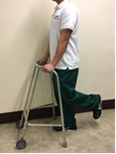
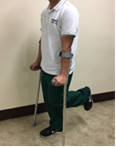
You will be seen by a physiotherapist who will advise you on hopping. Where appropriate they will teach you how to hop non-weight bearing with an appropriate walking aid. If you are unable to hop with a walking aid you will need to hire a wheelchair to enable you get around at home. If you feel that you will not be able to hop post operatively please tell a member of the medical team who will refer you onto the occupational therapist.
Beware of hazards such as pets, slippery floors and loose rugs that could cause you to trip when hopping.
Stairs
Where appropriate the physiotherapist will show you how to manage stairs while non weight bearing with crutches, alternatively you could try to manage it by bottom shuffling with chair in place on top of the stairs. If you are unable to manage the stairs you will need to organise a bed downstairs with an armchair, commode and foot stool set up close together so you limit hopping distance.
Standing from Chairs, Toilets and Beds
It can be quite difficult to stand from low furniture with the use of only one leg, especially if your unaffected leg is weak. If you feel that you will struggle with this post operatively it is advisable to have a chair with arms; your bed is at a good height; and you may require toilet equipment.
Washing and Dressing
It is important to follow the advice given to you by the medical team with regard to keeping your wound / dressing dry and, if applicable, the cast. You will need to complete washing and dressing while sitting. You can either place a chair in your bathroom to help with strip washing or sit on your toilet to reach the sink.
It may be possible to have a bath or shower if you have a walk in shower with a seat in it or have a bathboard over the bath; you will need to hire this equipment yourself and purchase waterproof protection for casts.
Preparing Drinks and Meals
You will be unable to carry items post op whilst using a walking aid. We recommend that you organise somewhere in the kitchen where you can sit while preparing drinks and meals; and to sit and eat. We also advise you to cook extra meals and stock up with freezer food.
Domestic tasks
If you live alone we advise you to stay with someone, or arrange for someone to come in and help you with household tasks, shopping and looking after pets. A rucksack may be useful to carry small items. Social services will not provide support with domestic tasks.
Driving
You must not drive until your consultant advises you it is safe to do so. Driving too soon invalidates your insurance.
Discharge
It is your responsibility to set up your home environment and organise the support you will need post operatively, do not assume we will provide any help at home.
Wheelchair Hire
From your local Red Cross http://
Wheelfreedom – http:/
Other Information
Knee walker - https://
Limbo Waterproof protections – http:/
Living made easy http:/
Complete Care shop http:/
Contact us
If you have any queries relating to this information, please contact the Occupational therapy service.
About this information
Service:
Occupational therapy
Reference:
UU/018
Approval date:
23 June 2025
Review date:
23 June 2028
Click ‘show accessibility tools’ at the bottom of the page

Then click ‘select language’

Alternative formats
You can use the accessibility toolbar at the bottom of your screen to:
-
Change the text size
-
Adjust the font
-
Modify the colour contrast
-
Use the translate function
If you would like this information in another format, such as Braille, audio, or easy read, please speak to a member of staff.
You can also print as well as download as PDF using the “Print this page” button at the end of the page.
Staff will print a copy for you on request
Important note
This page provides general information only. It is developed by clinical staff and is reviewed regularly every 3 years for accuracy. For personal advice about your health, or if you have any concerns, please speak to your doctor.